
Table Of Contents
- What Is Signage?
- What Are the Main Types of Signage?
- How Does Digital Signage Differ From Traditional Signage?
- What Technical Components Make Up a Digital Signage System?
- How to Choose the Right Display Technology for Signage?
- Why Does Content Matter More Than Hardware in Signage?
- How to Structure a Content Management Strategy for Signage?
- What Are the Psychological Effects of Signage on Viewers?
- How to Quantify ROI of Signage Deployments?
- How to Install and Deploy a Signage System Effectively?
- Which Hardware Considerations Are Most Critical for Digital Signage?
- How to Select the Best Content Management System (CMS) for Signage?
- How Do Different Industries Use Signage for Impact?
- What Are Common Mistakes in Digital Signage Deployment?
- How to Integrate Analytics and Real-Time Data Into Signage?
- Which Security Risks Affect Digital Signage Networks?
- How Does Digital Signage Compare Across Industry Case Studies?
- What Are the Future Trends in Digital Signage Technology?
- How Does Artificial Intelligence Improve Digital Signage?
- What Role Does Programmatic Advertising Play in Signage?
- How Can Augmented Reality (AR) and Virtual Reality (VR) Enhance Signage?
- How Does Sustainability Influence the Future of Signage?
- What Long-Term Strategy Should Businesses Adopt for Signage?
- Which Emerging Display Technologies Will Redefine Signage?
- Why Will Digital Signage Become Central to Smart Cities?
- How to Future-Proof a Digital Signage Investment?
- Conclusion: Why Signage Is No Longer Optional
What Is Signage?
Signage is any visual display that communicates information, persuades behavior, or enhances an environment through structured design and strategic placement. In technical contexts, signage includes both static media, such as printed boards, and dynamic media, such as digital signage screens controlled by software. Unlike casual posters or informal notices, true signage systems are designed for durability, visibility, and functional clarity across diverse contexts like retail, transportation, healthcare, and education.
According to the International Sign Association, over 60% of consumers have made a purchase decision based on a business’s signage quality and visibility. This statistic demonstrates that signage is not merely decorative but a revenue-driving operational tool. By combining design, hardware, and software, modern signage ecosystems create measurable business value through engagement, recall, and conversion.
What Are the Main Types of Signage?

The spectrum of signage can be organized into static and digital categories, each serving distinct roles depending on cost, environment, and communication goals. Static signage still dominates in low-tech or outdoor scenarios where power supply and software control are impractical, but digital signage is rapidly overtaking it due to programmability and interactivity.
The primary categories of signage include:
- Static print signage – banners, vinyl boards, billboards, and engraved signs
- Wayfinding signage – directional signs in airports, hospitals, malls, and campuses
- Regulatory signage – safety notices, traffic signals, hazard warnings
- Retail signage – in-store promotions, menu boards, shelf-edge tags
- Digital signage – LED walls, LCD/LED screens, kiosks, and video walls
- Transit signage – bus stop displays, metro information screens, roadside digital billboards
- Architectural signage – branded installations integrated into a building’s design
- Interactive signage – touchscreens, QR-based boards, AR-enhanced signage
Each type must meet technical thresholds for durability, luminance, visibility distance, and information hierarchy. For example, roadside signage often requires brightness between 2,500–4,000 nits for visibility under direct sunlight, while indoor retail signage can function effectively at 500–700 nits.
How Does Digital Signage Differ From Traditional Signage?

The main difference between traditional signage and digital signage lies in programmability and dynamic control. Digital signage uses display hardware connected to media players and cloud software to show scheduled, data-driven, and often interactive content. Traditional signage relies on static print or paint, requiring physical reinstallation for content updates.
Key differentiators include:
- Content flexibility – digital signage allows instant updates, while static requires reprinting
- Operational efficiency – centralized software control replaces manual labor
- Engagement potential – video, motion graphics, and interactivity outperform static attention spans
- Cost dynamics – static signage has lower upfront cost but higher replacement cost; digital signage has higher upfront investment but lower lifetime cost per update
According to a 2023 study in the Journal of Visual Communication Design, businesses adopting digital signage reported a 32% increase in customer dwell time and a 19% improvement in brand recall compared to static alternatives.
What Technical Components Make Up a Digital Signage System?
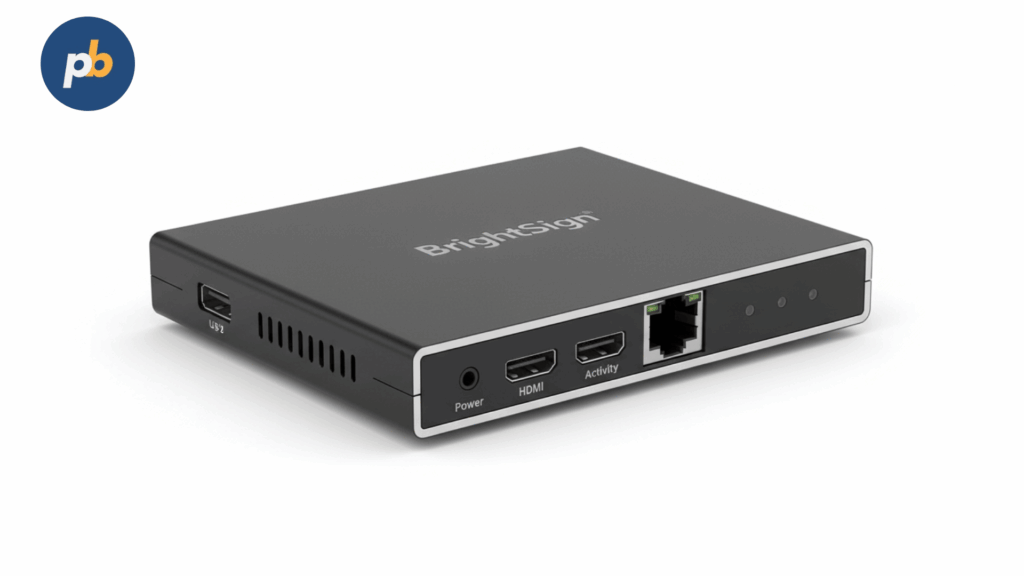
Digital signage system is not just a screen with a looping video. It is an integrated system requiring precise orchestration of hardware and software. The essential components include:
- Display hardware – LCD, LED, OLED panels, projectors, or video walls
- Media players – small-form devices (often Raspberry Pi, Intel NUC, or Android boxes) that process content and connect to displays
- Content management system (CMS) – software that schedules, organizes, and distributes media assets
- Network infrastructure – wired Ethernet or Wi-Fi to deliver cloud updates
- Mounting and enclosures – secure housings that protect hardware against weather, theft, or tampering
- Sensors and inputs – touchscreens, motion detectors, cameras, QR scanners for interactivity
A practical example is PosterBooking, which transforms any display with a connected device into a fully managed digital signage network for free. Instead of requiring proprietary hardware, it leverages common devices like Android sticks or Windows PCs, reducing setup costs and complexity.
How to Choose the Right Display Technology for Signage?
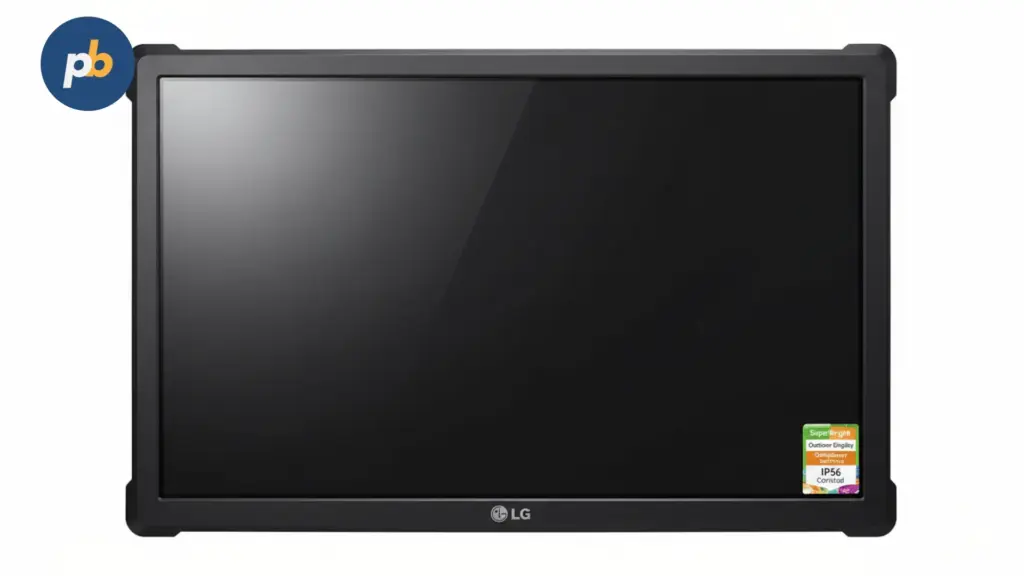
The choice of display depends on environment, viewing distance, and brightness requirements. Indoor retail may favor LCD screens due to affordability and color accuracy, while outdoor billboards require high-brightness LED modules for visibility across daylight conditions.
The comparison between common display technologies is as follows:
| Display Technology | Brightness Range | Power Consumption | Best Use Case |
|---|---|---|---|
| LCD | 300–700 nits | Moderate | Indoor retail, menu boards |
| LED | 2,500–10,000 nits | High | Outdoor billboards, stadiums |
| OLED | 400–1,000 nits | Moderate | Premium indoor displays, luxury retail |
| Projection | Variable (500–5,000 lumens) | Moderate–High | Events, museums, immersive environments |
According to LG Display research, LED signage has surpassed LCD in outdoor deployments by over 40% since 2021 due to superior brightness and modular scalability. However, OLED remains niche due to high cost despite its ultra-thin form factor and deep contrast advantages.
Why Does Content Matter More Than Hardware in Signage?
Even the brightest and most durable screen cannot achieve business impact if the content is irrelevant, cluttered, or poorly timed. Content determines whether signage is merely decorative or strategically persuasive. According to Nielsen, 55% of people recall a message displayed on digital signage even after a week, compared to only 19% for static posters.
Effective digital signage content design typically balances three principles:
- Clarity of message – minimal words, strong visuals, clear hierarchy
- Timeliness of update – promotions, announcements, or schedules displayed at relevant times
- Audience relevance – content adapted to location, demographics, and context
For example, a quick-service restaurant may display breakfast menu items until 11 a.m., automatically switch to lunch specials afterward, and highlight promotions during peak footfall hours. Without a CMS like PosterBooking, managing such transitions would be time-consuming and error-prone.
How to Structure a Content Management Strategy for Signage?
An effective content management strategy ensures the right message appears on the right screen at the right time. Unlike static posters, which depend on manual replacement, digital signage allows rule-based automation.
A recommended 5-step checklist for structuring a content management strategy is:
- Define objectives – brand awareness, conversions, safety compliance, or information delivery
- Segment audiences – categorize by location, demographics, or behavior patterns
- Schedule intelligently – align content with time of day, week, or seasonal campaigns
- Integrate data sources – pull real-time feeds such as weather, inventory, or social media
- Measure and optimize – track engagement, sales lift, or dwell time using analytics
For example, a clothing retailer can automate digital signage to highlight rain jackets when weather APIs predict rain, boosting contextual relevance and conversion rates.
What Are the Psychological Effects of Signage on Viewers?
Signage does not just transmit information; it influences perception and behavior through psychological cues. According to a 2022 study in Applied Cognitive Psychology, dynamic digital signage increased compliance with directional instructions by 23% compared to static equivalents in public transport stations.
The effects can be grouped into:
- Attention capture – movement, contrast, and brightness draw the human eye
- Memory reinforcement – repetition and strategic positioning improve recall
- Behavior nudging – limited-time offers, countdown timers, or directional prompts drive action
- Emotional resonance – color schemes, imagery, and typography shape mood and brand impression
A practical case is London Underground’s use of dynamic signage to guide commuters during service disruptions. Animated directional signs reduced congestion in high-traffic corridors by visibly cueing alternative exits.
How to Quantify ROI of Signage Deployments?
Return on investment for signage must be quantified across operational savings, revenue impact, and brand equity. Unlike static boards where ROI is hard to isolate, digital signage allows measurable metrics through analytics integration.
Key ROI indicators include:
- Sales uplift percentage – comparing sales during campaigns with and without signage
- Footfall conversion rates – tracking how many passersby engage or enter a store
- Operational savings – reduction in printing, shipping, and labor costs for static signage replacement
- Engagement metrics – dwell time, click-through (for interactive signage), and content playback frequency
According to Journal of Retail and Consumer Services, retailers reported a 24% revenue uplift when introducing digital signage, compared to only 9% from static signage refresh campaigns. PosterBooking amplifies ROI by eliminating recurring license fees, ensuring cost-efficiency without sacrificing functionality.
How to Install and Deploy a Signage System Effectively?
Deploying a signage system requires careful alignment of hardware, environment, and technical infrastructure. Unlike home TVs, commercial signage installations demand higher durability, continuous uptime, and robust network control. Mistakes in this phase often lead to unnecessary downtime, costly retrofits, or poor viewer experience.
Installation of signage systems typically involves:
- Site survey – measuring ambient light, viewing angles, and power/network access points
- Hardware selection – choosing the right display technology, brightness, and size based on the environment
- Mounting design – ensuring secure and ergonomic placement, often at eye level or directional alignment
- Connectivity planning – defining whether the signage will use wired Ethernet, Wi-Fi, or cellular failover
- Power redundancy – adding surge protection or UPS systems for critical environments
- Content deployment test – running pilot loops to check visibility, playback stability, and content scaling
For example, an airport digital signage installation must account for strong ambient lighting, multilingual audiences, and 24/7 uptime. This requires LED walls with 3,000–5,000 nits brightness, redundant media players, and centralized monitoring. In contrast, a small café may succeed with two 43-inch LCD displays mounted at ordering points, controlled by a single PosterBooking account.
Which Hardware Considerations Are Most Critical for Digital Signage?
Hardware choices define longevity, energy costs, and maintenance frequency. Commercial-grade displays are engineered for continuous operation, unlike consumer TVs that are optimized for a few hours of daily use.
The most critical hardware considerations for digital signage include:
- Display brightness – outdoor signage requires ≥2,500 nits; indoor ranges between 350–700 nits
- Resolution and aspect ratio – 1080p suffices for small screens; 4K is preferred for video walls or premium retail
- Durability rating – IP65-certified enclosures are necessary for outdoor environments
- Viewing angle – wide angles (≥178°) ensure visibility across crowded or open spaces
- Media player capacity – CPU, GPU, and RAM specifications affect video smoothness and real-time updates
- Thermal management – high-usage environments require active cooling or ventilated enclosures
- Mounting structure – certified mounts prevent tilt sag, vibration, or accidental dislodging
According to Display Daily, failure rates of consumer TVs used as signage were 300% higher than commercial signage displays in a three-year test, largely due to overheating and image burn-in. This evidence underscores why businesses must avoid consumer-grade shortcuts.
How to Select the Best Content Management System (CMS) for Signage?
The CMS is the brain of a digital signage system. It governs how content is uploaded, scheduled, distributed, and monitored. A poor CMS creates bottlenecks, while a strong CMS enables scalable automation.
When evaluating a CMS, the following criteria are essential:
- Cloud-based accessibility – remote management of multiple screens across locations
- Scheduling flexibility – daily, weekly, seasonal, or ad-hoc content automation
- Multi-format support – images, videos, HTML5, live data feeds
- User roles and permissions – enabling centralized control but local autonomy where needed
- Analytics dashboard – reporting dwell time, playback frequency, or campaign performance
- Integration capabilities – connecting to APIs, inventory systems, or social media feeds
- Scalability – from a single café display to a nationwide retail chain
PosterBooking is one of the best free signage CMS platforms because it eliminates recurring licensing fees, supports common devices, and offers drag-and-drop simplicity. Compared to expensive alternatives like Scala or BrightSign, PosterBooking provides the same core scheduling and remote management functions without a steep cost barrier, making it particularly attractive for SMEs.
How Do Different Industries Use Signage for Impact?
Signage strategies vary significantly by industry, with each sector requiring customized content, hardware, and deployment scale.
The most common industry applications of signage include:
- Retail – digital menu boards, shelf-edge displays, promotional signage, and interactive kiosks
- Healthcare – patient queue systems, hospital wayfinding, wellness campaigns, digital waiting room boards
- Education – campus-wide announcements, event schedules, emergency notifications, interactive wayfinding
- Transportation – bus stop displays, train arrival boards, airport flight information systems
- Hospitality – hotel check-in kiosks, digital concierge boards, event signage in conference halls
- Corporate offices – digital dashboards, internal communication screens, meeting room availability panels
- Outdoor advertising (OOH) – large-format LED billboards, roadside screens, and programmatic ad slots
For instance, McDonald’s famously shifted from static menu boards to digital menu displays across North America. This allowed real-time updates to reflect local promotions, calorie disclosure laws, and dayparting menus. According to a Harvard Business Review case study, McDonald’s saw a 3–5% increase in upsell conversion after adopting digital signage, attributed to dynamic visual prompts.
What Are Common Mistakes in Digital Signage Deployment?
While digital signage offers high ROI, poor deployment often reduces effectiveness. Many businesses underestimate the technical and strategic aspects, resulting in wasted investments.
The most common mistakes in digital signage deployment include:
- Using consumer TVs instead of commercial signage displays
- Overloading screens with too much text or irrelevant content
- Failing to calibrate brightness and contrast for the environment
- Not testing Wi-Fi coverage or network stability
- Skipping content updates, leaving outdated promotions running
- Ignoring accessibility needs such as font legibility or multi-language support
- Underestimating long-term maintenance costs for outdoor hardware
According to Sign Research Foundation, nearly 50% of small business signage deployments fail to meet initial ROI expectations due to content neglect and hardware mismatch. This highlights the need for proper planning and ongoing management.
How to Integrate Analytics and Real-Time Data Into Signage?
Modern signage is shifting from static broadcasting to data-driven personalization. By integrating real-time data sources, businesses can adapt messages dynamically, improving relevance and responsiveness.
Common real-time data integrations in signage include:
- Weather feeds – show umbrella promotions when rain is forecast
- Traffic data – adjust roadside ads based on congestion patterns
- Inventory feeds – automatically remove out-of-stock products from promotional screens
- Social media feeds – stream live Instagram posts or Twitter hashtags
- Queue management systems – display waiting times in hospitals or service centers
- IoT sensors – trigger messages based on footfall or dwell-time tracking
According to a 2021 Journal of Business Research study, real-time signage campaigns generated 28% higher engagement rates compared to static-scheduled campaigns, showing the effectiveness of contextual adaptation.
Which Security Risks Affect Digital Signage Networks?
Since digital signage relies on connected devices, cybersecurity becomes a major concern. A poorly secured signage system can be hijacked, resulting in embarrassing or malicious content display.
The primary security risks for digital signage networks include:
- Unauthorized access to CMS – weak passwords or lack of two-factor authentication
- Compromised media players – malware injection via USB or unsecured ports
- Unencrypted network traffic – allowing interception of content feeds
- Outdated firmware or OS vulnerabilities – unpatched devices becoming attack vectors
- Physical tampering – unsecured enclosures allowing device theft or sabotage
Best practices to mitigate risks include enforcing encrypted connections (HTTPS, VPN), deploying strong authentication policies, segmenting signage networks from core IT infrastructure, and performing routine firmware updates. PosterBooking mitigates many risks by providing secure cloud hosting and automated updates, reducing IT overhead for small businesses.
How Does Digital Signage Compare Across Industry Case Studies?
The comparative impact of digital signage becomes clearer when mapped against real-world use cases.
| Industry | Deployment Example | Observed Impact |
|---|---|---|
| Retail | McDonald’s dynamic menus | 3–5% upsell conversion increase |
| Healthcare | NHS hospital wayfinding screens | 17% reduction in missed appointments |
| Education | University digital boards | 21% increase in event attendance |
| Transportation | London Underground dynamic signage | 23% improvement in passenger flow compliance |
| Hospitality | Marriott digital lobby boards | 15% higher satisfaction in guest surveys |
According to Deloitte’s 2022 retail insights, customer experience gains from digital signage often outweigh direct revenue lift, as increased satisfaction drives repeat visits and long-term brand loyalty.
What Are the Future Trends in Digital Signage Technology?
The future of signage is driven by interactivity, automation, and intelligence. While traditional signage was static and reactive, next-generation systems combine AI, AR, and IoT to create highly adaptive, personalized experiences.
According to MarketsandMarkets, the global digital signage market is projected to grow from $23.5 billion in 2021 to $35.4 billion by 2026, at a CAGR of 8.4%. This growth is fueled by new display technologies, falling hardware costs, and demand for real-time content.
The most important future trends in digital signage technology include:
- AI-driven personalization – tailoring content to demographics, time, and behavioral data
- Programmatic signage advertising – automated buying and placement of digital ad slots based on audience analytics
- AR and VR integration – blending real-world spaces with digital overlays for immersive experiences
- Touchless interaction – gesture, voice, and mobile-triggered signage interfaces replacing physical touchscreens
- Sustainability focus – energy-efficient LED modules, solar-powered signage, and e-paper displays
- 5G connectivity – enabling ultra-low-latency video streaming and edge-based data processing for signage networks
- Holographic displays – early-stage tech creating 3D projections without glasses
For example, Coca-Cola’s AR-enabled signage in shopping malls lets customers point smartphones at a display to unlock personalized promotions. Similarly, airports are piloting AI-based signage that automatically adjusts languages displayed based on the dominant passenger demographics passing a checkpoint.
How Does Artificial Intelligence Improve Digital Signage?
Artificial intelligence enhances signage by making it adaptive and predictive rather than static. By analyzing real-time data from cameras, sensors, or customer interactions, AI systems and tools can determine what content to show and when.
AI applications in signage include:
- Audience analytics – detecting age, gender, or dwell time to optimize content
- Predictive scheduling – AI models predicting peak store hours and auto-adjusting signage campaigns
- Dynamic pricing – retail signage adjusting prices based on inventory and demand levels
- Sentiment-based interaction – signage adapting responses based on viewer facial expressions
- Automated creative testing – AI analyzing which visuals or messages perform better and auto-optimizing campaigns
According to a 2022 study in the Journal of Marketing Technology, AI-optimized signage improved customer engagement by 29% compared to manually scheduled campaigns, proving the value of intelligent automation.
PosterBooking integrates AI-driven scheduling through API connections, allowing businesses to automate content updates based on triggers like weather, sales data, or traffic flows without manual intervention.
What Role Does Programmatic Advertising Play in Signage?
Programmatic advertising in signage refers to automated, data-driven ad buying for digital screens, similar to online display ads. Instead of pre-booking static slots, advertisers can bid in real time for signage space, ensuring higher relevance and targeting accuracy.
Programmatic signage delivers three main benefits:
- Dynamic audience targeting – ads adapt based on who is present in front of a screen
- Efficiency in media buying – automated systems reduce wasted spend and increase ROI
- Revenue generation for screen owners – businesses can monetize idle screen time by selling ad slots
For example, Clear Channel Outdoor uses programmatic platforms to dynamically fill billboard slots with campaigns tailored to local weather, traffic, and audience demographics. According to AdExchanger, programmatic DOOH (Digital Out of Home) grew by 35% YoY in 2022, making it one of the fastest-growing segments of advertising.
How Can Augmented Reality (AR) and Virtual Reality (VR) Enhance Signage?
AR and VR move signage beyond passive viewing into immersive interaction. While VR is typically confined to headsets, AR signage overlays digital elements onto real-world environments via smartphones or AR glasses.
Applications of AR and VR in signage include:
- Virtual try-ons – apparel or cosmetic brands enabling customers to see products digitally on themselves
- Gamified experiences – interactive AR signage offering rewards for participation
- Immersive environments – VR-powered retail kiosks letting customers explore digital showrooms
- Wayfinding overlays – AR arrows guiding users through airports or shopping malls
- Brand storytelling – immersive campaigns blending signage with mobile AR for stronger engagement
A real-world example is IKEA’s AR signage integration, which lets customers visualize furniture in their homes by scanning signage-linked QR codes. According to Forbes, AR-enabled signage experiences increase dwell time by up to 40% compared to traditional digital displays.
How Does Sustainability Influence the Future of Signage?
Sustainability is now a central concern in signage deployment. Businesses are under pressure to reduce energy consumption, limit e-waste, and adopt greener practices.
Key sustainability strategies in signage include:
- Energy-efficient displays – LED and e-paper consume significantly less power than legacy plasma screens
- Automated brightness adjustment – sensors dim screens during low ambient light, cutting energy costs by up to 30%
- Solar-powered signage – standalone systems using photovoltaic panels, especially in remote outdoor locations
- Recyclable materials – enclosures and mounts made from aluminum or recycled plastics
- Longer lifecycle hardware – modular LED panels replace damaged parts without discarding full units
According to a 2021 Journal of Environmental Design study, e-paper signage reduced power consumption by 73% compared to LCD equivalents for low-motion content like schedules or menus. This makes e-paper a promising option for eco-conscious businesses.
What Long-Term Strategy Should Businesses Adopt for Signage?
To maximize ROI, businesses should not treat signage as a one-off installation but as an evolving communication platform. Long-term strategy must align signage deployments with broader digital transformation goals.
A recommended framework for long-term signage strategy includes:
- Scalability planning – choosing CMS platforms that can expand from a handful of screens to nationwide networks
- Content governance – establishing processes for regular updates, quality checks, and brand consistency
- Data integration – connecting signage with CRM, ERP, or POS systems for contextual relevance
- Continuous training – ensuring staff are educated on using signage tools effectively
- Lifecycle management – planning hardware replacement cycles (typically 5–7 years) and secure disposal
PosterBooking is well-suited for such strategies because it offers lifetime-free digital signage management, eliminating recurring costs and ensuring scalability without financial bottlenecks.
Which Emerging Display Technologies Will Redefine Signage?
Emerging display technologies are set to transform how signage looks, functions, and integrates into physical spaces.
The most promising new display technologies for signage include:
- MicroLED – offering ultra-high brightness, infinite contrast ratios, and long lifespans
- Transparent OLED – enabling see-through displays for retail showcases and automotive applications
- Holographic projection – creating 3D visuals without the need for glasses or screens
- Flexible displays – bendable signage that conforms to architecture or product packaging
- Laser projection mapping – turning buildings and structures into dynamic content canvases
For example, Samsung’s “The Wall” MicroLED signage is being adopted in luxury retail environments, where the seamless, bezel-free display enhances brand aesthetics. According to Display Technology Review, MicroLED adoption is expected to grow by 48% CAGR through 2028 due to superior performance over LCD and OLED.
Why Will Digital Signage Become Central to Smart Cities?
Smart cities rely on data-driven infrastructure, and signage plays a critical role in delivering real-time information to citizens. Instead of static boards, dynamic signage can distribute alerts, transit data, and community updates across urban environments.
Smart city signage applications include:
- Traffic management – adaptive signs rerouting vehicles during congestion
- Public safety alerts – instant notifications of weather hazards or emergencies
- Environmental monitoring – signage displaying air quality or energy consumption data
- Citizen engagement – interactive kiosks providing government services and local event updates
- Tourism enhancement – AR-enabled signage guiding visitors through cultural sites
According to a 2022 Smart Cities Journal study, cities that deployed dynamic digital signage saw 22% higher compliance with public safety instructions during emergencies compared to static alternatives.
How to Future-Proof a Digital Signage Investment?
Future-proofing signage requires anticipating technological shifts and avoiding vendor lock-in. Businesses should prioritize flexible, standards-based platforms that evolve with industry advancements.
Best practices for future-proofing digital signage include:
- Choose cloud-first CMS platforms that provide ongoing updates and API integration
- Invest in modular hardware like LED panels or media players with upgradable components
- Adopt open standards (HTML5, Android, or Linux-based systems) to avoid proprietary traps
- Plan for 5G integration as connectivity becomes critical for real-time, high-resolution streaming
- Balance experimentation with stability by piloting new technologies before scaling deployment
PosterBooking is future-proof because it is device-agnostic, cloud-managed, and regularly updated, ensuring businesses can adapt without switching platforms.
Conclusion: Why Signage Is No Longer Optional
Signage has evolved from painted boards to AI-powered, interactive ecosystems that inform, persuade, and enhance environments. The difference between businesses that thrive with signage and those that merely install it lies in strategy: choosing the right hardware, leveraging a robust CMS, maintaining content quality, and aligning deployments with broader goals like sustainability and digital transformation.
According to Deloitte, 68% of businesses that adopted digital signage as part of their digital strategy reported higher customer satisfaction scores, while only 22% of those using static signage saw measurable gains. With cost-effective tools like PosterBooking lowering barriers, digital signage is no longer reserved for multinational corporations; it is an accessible, scalable solution for businesses of all sizes.
The implication is clear: signage is not just communication infrastructure but a competitive differentiator. Businesses that invest today in intelligent, sustainable, and adaptable signage will lead in customer engagement, operational efficiency, and brand presence tomorrow.