
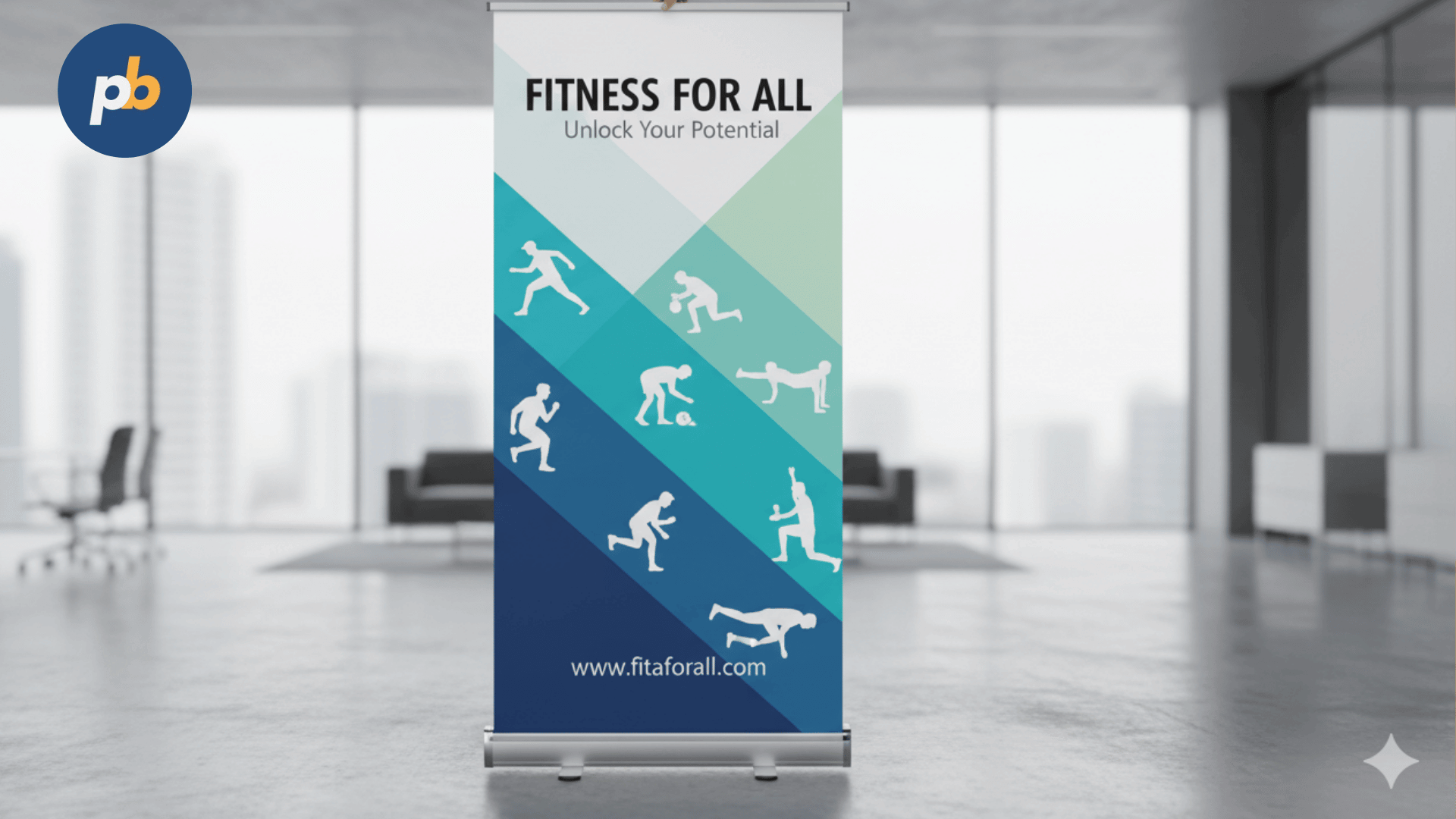
Print signage remains one of the most enduring and effective forms of visual communication. Despite the rise of digital displays and online marketing channels, physical printed signs continue to play a central role in how businesses attract attention, communicate messages, and guide customer behavior. From storefront banners and trade show displays to wayfinding systems and retail posters, printed signs are everywhere because they fulfill needs that digital solutions cannot fully replace. They provide permanence, tactile presence, and high visibility in environments where screens may be impractical or cost-prohibitive
Table Of Contents
- Why Does Print Signage Still Matter in a Digital Era?
- What Are the Main Types of Print Signage?
- 1. Posters
- 2. Banners
- 4. Billboards
- 5. Window Graphics
- 6. Wayfinding Signs
- 7. Point-of-Sale Displays
- 8. Trade Show Graphics
- 9. Safety and Regulatory Signs
- How Do Print Signage Materials Affect Performance?
- How to Design Print Signage for Maximum Impact?
- Which Industries Rely Most Heavily on Print Signage?
- Comparison of Print Signage vs Digital Signage
- What Printing Technologies Are Used for Signage Production?
- How Do Installation and Maintenance Practices Affect Signage Longevity?
- How Much Does Print Signage Cost?
- How to Measure ROI of Print Signage?
- Which Case Studies Show Print Signage Effectiveness?
- How to Choose the Right Signage Mix for Business Goals?
- 5-Step Checklist for Planning Effective Print Signage
- How Is Sustainability Changing Print Signage Production?
- Why Is the Myth That “Print Is Dead” Incorrect?
- Where Will Print Signage Evolve in the Future?
- Which Practical Recommendations Apply to Each Industry?
- Retail
- Hospitality
- Healthcare
- Construction
- Education
- Real Estate
- Transportation
- How Do Print and Digital Signage Complement Each Other?
- Final Insights: Why Businesses Should Still Invest in Print Signage
Why Does Print Signage Still Matter in a Digital Era?
Print signage matters because it delivers instant visibility without the need for power, connectivity, or specialized hardware. Unlike digital signage, which relies on screens, media players, and software, printed signs can be deployed anywhere with minimal setup. A vinyl banner on scaffolding, a cardboard cutout in a retail aisle, or a metal street sign all function independently of infrastructure and therefore provide reliability in ways that digital platforms cannot.
Several factors explain why print signage continues to be relevant:
- Tactile permanence that resists technical failure or downtime
- Low entry costs compared to the upfront investment of screens and media players
- Unrestricted placement indoors or outdoors without requiring power access
- High customizability with finishes, textures, and shapes not possible on a flat digital screen
- Regulatory compliance in contexts like safety warnings, construction zones, or municipal notices where print is mandated
According to a 2021 Nielsen study, 61% of consumers reported noticing printed signage more often than digital displays when outdoors, largely because of placement flexibility and sheer size. This shows that physical signs can dominate the visual field in ways that digital installations sometimes cannot achieve without significant cost.
What Are the Main Types of Print Signage?
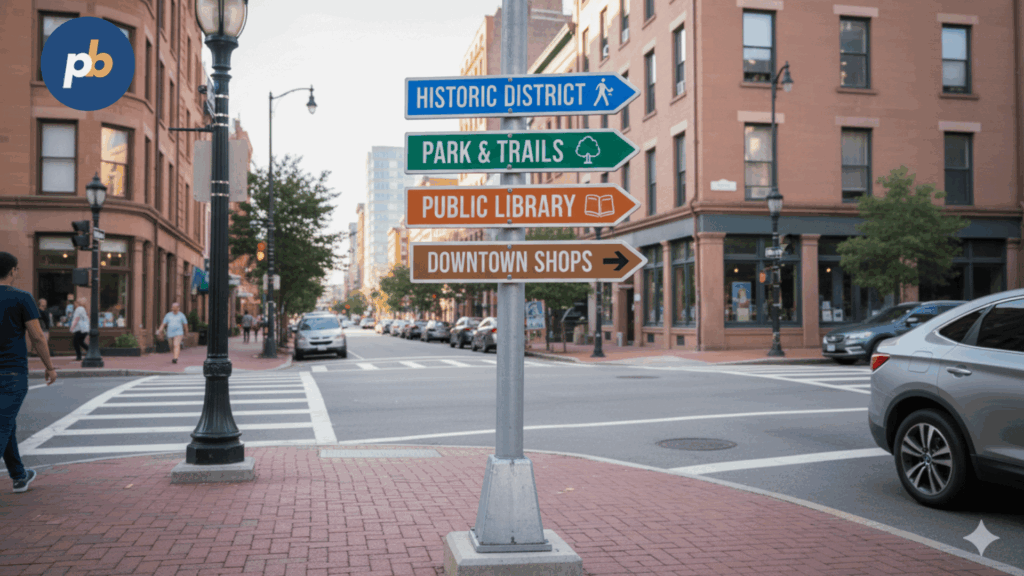
Print signage spans a wide spectrum of formats, each suited to specific environments and objectives. The most common types of print signage include:
- Posters and Flyers – lightweight, low-cost, and ideal for temporary promotions
- Banners – large-scale vinyl or fabric signage for outdoor advertising and events
- Billboards – oversized printed panels targeting motorists and high-traffic zones
- Window Graphics – adhesive vinyl applied to glass for branding and privacy
- Wayfinding Signs – directional boards, maps, and informational placards
- Point-of-Sale Displays – shelf talkers, wobblers, and standees to influence purchase decisions
- Trade Show Graphics – backdrops, roll-up stands, and modular panels for exhibition booths
- Safety and Regulatory Signs – hazard warnings, compliance notices, and accessibility markers
Each category is defined not just by its size and format but by how it aligns with business goals. For example, a trade show relies heavily on large, portable banners and booth graphics to establish brand presence quickly, whereas a retail store prioritizes posters, shelf displays, and window clings to influence immediate purchasing behavior.
1. Posters
Posters and flyers are among the most traditional forms of print signage, known for their lightweight structure, low production cost, and flexibility in deployment. They are typically printed on paper or light cardstock and can be distributed, pinned, or pasted across various touchpoints. Posters often serve as eye-catching visual anchors for limited-time offers, event announcements, or brand awareness campaigns, while flyers extend reach through direct handouts or in-store stacks.
Under print signage, their strength lies in speed and scalability - they can be produced in hours and tailored to hyperlocal campaigns. For instance, a neighborhood café might print 250 A3 posters promoting a weekend special, while distributing matching A5 flyers for takeaway customers. Though temporary, their affordability and simplicity make them ideal for small businesses or short-term promotions where quick visibility matters more than longevity.
2. Banners
Banners are large-format vinyl or fabric displays designed for outdoor or event-based advertising. Unlike posters, they are built for durability and long-range visibility, often printed with UV-resistant inks to withstand sunlight, wind, and rain.
Within print signage, banners function as versatile, portable communication tools used at storefronts, trade events, or along building facades. For example, a retail outlet might use a 3 × 6 ft vinyl banner announcing a clearance sale, or a local marathon might hang fabric banners at checkpoints and finish lines. Their visual scale and weather resistance make them particularly valuable for high-traffic or outdoor environments where impact must persist over weeks or months.
4. Billboards
Billboards represent the largest and most visible category of print signage, engineered to capture attention from motorists and pedestrians across highways, streets, and urban centers. They are typically constructed from printed vinyl sheets or paper panels stretched across metal or wooden frames.
Under print signage, billboards specialize in broad-reach advertising, delivering brand messages through concise, high-contrast visuals readable at a distance. For example, a 48-sheet roadside billboard (20 × 10 ft) might promote a new product launch with bold imagery and minimal text. Their cost and permanence make them suitable for major campaigns, but less ideal for short-term promotions due to installation complexity and rental fees.
5. Window Graphics
Window graphics are adhesive vinyl applications placed directly on glass surfaces to combine branding, advertising, and privacy functions. These include full-window wraps, partial decals, or frosted films, printed in color or contour-cut to shape.
Within print signage, window graphics act as both decorative and functional elements - they transform unused glass into promotional real estate while controlling visibility or sunlight. For instance, a salon might apply translucent vinyl showcasing its logo and service list while reducing glare from outside. Their semi-permanent nature offers the perfect balance between professional presentation and easy replacement when campaigns change.
6. Wayfinding Signs
Wayfinding signs are directional and informational graphics that guide movement within physical spaces such as campuses, malls, hospitals, or corporate buildings. They include printed maps, arrows, and identification placards that help visitors navigate efficiently.
In the context of print signage, these signs prioritize legibility, consistency, and placement logic over decorative flair. A well-designed wayfinding system might use consistent typography, color coding, and icons to indicate exits, restrooms, or departments. For example, a shopping center might install backlit acrylic signs at key intersections with clear directional arrows. The outcome is improved user experience and reduced confusion, especially in large or complex facilities.
7. Point-of-Sale Displays
Point-of-sale (POS) displays encompass printed materials positioned near checkout areas or product shelves to influence last-minute buying decisions. They include shelf talkers, wobblers, counter mats, and free-standing standees, all designed to highlight specific products or offers.
Under print signage, POS displays act as silent salespeople, leveraging proximity and timing to convert attention into action. For instance, a beverage brand might place wobblers reading “Try Me Cold” beside its product in refrigerators. According to Shopper Insights (2023), effective POS signage can increase impulse sales by up to 17%, proving that visual reinforcement at the moment of purchase has measurable revenue impact.
8. Trade Show Graphics
Trade show graphics are large-format printed visuals designed to define and decorate exhibition booths, conference spaces, or event pavilions. They include backdrops, roll-up banners, tabletop displays, and modular wall panels, often printed on fabric, PVC, or polyester substrates.
In print signage applications, these graphics serve to create brand presence and spatial coherence within busy event environments. For example, a software startup might use a 10 ft retractable banner system combined with a branded backdrop wall to attract visitors. The portability, reusability, and professional appearance of trade show graphics make them an essential tool for event marketing and B2B engagement.
9. Safety and Regulatory Signs
Safety and regulatory signs are mandatory printed displays conveying information related to health, security, and compliance. These include hazard warnings, fire exit indicators, accessibility symbols, and legal notices - all standardized under ISO and OSHA guidelines for visibility and comprehension.
In the broader print signage landscape, these signs fulfill critical communication and legal functions, ensuring safe and inclusive environments. For example, workplaces may install printed “Caution: Wet Floor” boards or “Emergency Exit” signs using reflective vinyl for low-light readability. Their precision in wording, color coding, and placement isn’t just aesthetic - it’s a regulatory requirement. Proper implementation reduces risk, supports liability protection, and communicates professionalism.sting emergency messages or live evacuation maps in real time.
How Do Print Signage Materials Affect Performance?
The choice of material is one of the most critical decisions in print signage, as it directly influences durability, color accuracy, and installation methods. Different substrates offer different advantages depending on whether the sign will be placed indoors or outdoors, exposed to weather, or reused multiple times.
Key material options for print signage include:
- Vinyl – weather-resistant, flexible, and suitable for outdoor banners
- Foam Board – lightweight, cost-effective, and ideal for indoor displays
- Acrylic – rigid, glossy, and premium-looking for high-end branding
- Corrugated Plastic (Coroplast) – durable yet affordable for temporary outdoor signs
- Aluminum Composite Panels – sturdy, long-lasting, and graffiti-resistant
- Cardstock and Paper – inexpensive for posters, handouts, and short-term promotions
For example, a café promoting a seasonal drink may choose a glossy poster printed on cardstock for its indoor menu board, whereas a construction firm requires aluminum safety signs that resist UV exposure and tampering. According to research published in the Journal of Visual Communication Design, switching from standard paper posters to laminated vinyl increased outdoor sign longevity by 68%, demonstrating how material upgrades provide measurable return on investment.
How to Design Print Signage for Maximum Impact?
Designing effective print signage requires balancing visibility, readability, and brand consistency. Unlike digital displays, which can rely on motion and dynamic content, print signage must communicate clearly and persuasively in a single static frame.
The key design principles of effective print signage are:
- Prioritize legibility with large fonts and high-contrast color schemes
- Limit text content to essential information such as offers, instructions, or calls-to-action
- Use hierarchy of elements with clear focal points guiding the eye
- Incorporate brand colors and logos for consistent identity reinforcement
- Consider viewing distance to size typefaces and graphics appropriately
- Leave sufficient white space to avoid clutter and visual fatigue
- Test readability under real lighting conditions before final print runs
For example, a roadside billboard has only 6–8 seconds to capture a driver’s attention, which means fonts must exceed 15 inches in height, with no more than 7–8 words in the main headline. According to MIT’s Design Science review, reducing text clutter on printed advertising increased comprehension by 32%, proving that simplicity enhances effectiveness.
Which Industries Rely Most Heavily on Print Signage?
While nearly every industry uses some form of print signage, certain sectors depend on it as a primary communication medium. The industries that rely most heavily on print signage include:
- Retail – in-store promotions, window graphics, and point-of-sale displays
- Hospitality – menus, event posters, and wayfinding signage in hotels and restaurants
- Healthcare – patient instructions, safety notices, and regulatory compliance signs
- Construction – hazard warnings, site boards, and directional signs
- Education – campus wayfinding, event promotions, and classroom posters
- Transportation – station maps, schedules, and safety warnings
- Real Estate – property boards, open house signs, and directional signage
For instance, retail environments are particularly signage-heavy because every customer touchpoint - from window displays to checkout counters - offers an opportunity to influence sales. According to Retail Dive, stores with updated signage experienced a 20% increase in impulse purchases compared to those with outdated or inconsistent signs. This suggests that even small changes in print presentation can yield measurable business benefits.
Comparison of Print Signage vs Digital Signage
To understand print signage fully, it helps to compare it directly with digital signage across critical attributes:
| Attribute | Print Signage | Digital Signage (e.g., PosterBooking) |
|---|---|---|
| Initial Cost | Low to medium | High (screens, players, software) |
| Ongoing Cost | High (reprints for updates) | Low (content updated remotely) |
| Flexibility | Static, requires reprint | Dynamic, real-time updates possible |
| Durability | Weather-dependent material choice | Dependent on hardware lifespan |
| Attention Factor | Size and placement driven | Motion and interactivity driven |
| Deployment Speed | Immediate once printed | Requires setup, power, and configuration |
| Best Use Case | Permanent or semi-permanent messaging | Dynamic content rotation, frequent updates |
The implication is not that one medium should replace the other, but that businesses should combine both. For example, a restaurant might use printed window decals for permanent branding while running PosterBooking-powered digital screens inside for updating menus and promotions. Together, these channels form a cohesive communication system that maximizes visibility and engagement.
What Printing Technologies Are Used for Signage Production?
Print signage production is not a one-size-fits-all process. Different printing technologies offer distinct benefits in terms of cost, scalability, color fidelity, and material compatibility. Choosing the right method is critical for balancing budget with visual impact.
The most common printing technologies for signage production include:
- Offset Lithography – Best for large-volume runs of posters, flyers, and brochures. Delivers high color accuracy and cost efficiency at scale but requires expensive setup.
- Screen Printing – Ideal for bold, simple designs on a variety of surfaces such as textiles, plastics, and metal. Provides durable inks but slower production speed.
- Digital Inkjet Printing – Highly versatile for short runs and custom graphics, particularly for large-format banners and vinyl signs. Offers quick turnaround but higher per-unit cost.
- Laser Printing – Typically used for smaller indoor signage, labels, and point-of-sale materials. Excellent for sharp text but limited in size.
- UV Flatbed Printing – Allows direct printing on rigid materials like acrylic, wood, and metal. Creates durable prints with raised textures.
For example, a national retail chain needing 20,000 promotional posters for a seasonal campaign would choose offset lithography because setup costs are distributed across volume. By contrast, a local café needing a handful of vinyl banners would benefit from digital inkjet, which eliminates plate costs and enables rapid changes.
According to PrintWeek, businesses switching from offset to digital printing for low-volume runs reported a 37% reduction in waste and a 25% faster time-to-market, showing how technology selection directly affects efficiency.
How Do Installation and Maintenance Practices Affect Signage Longevity?
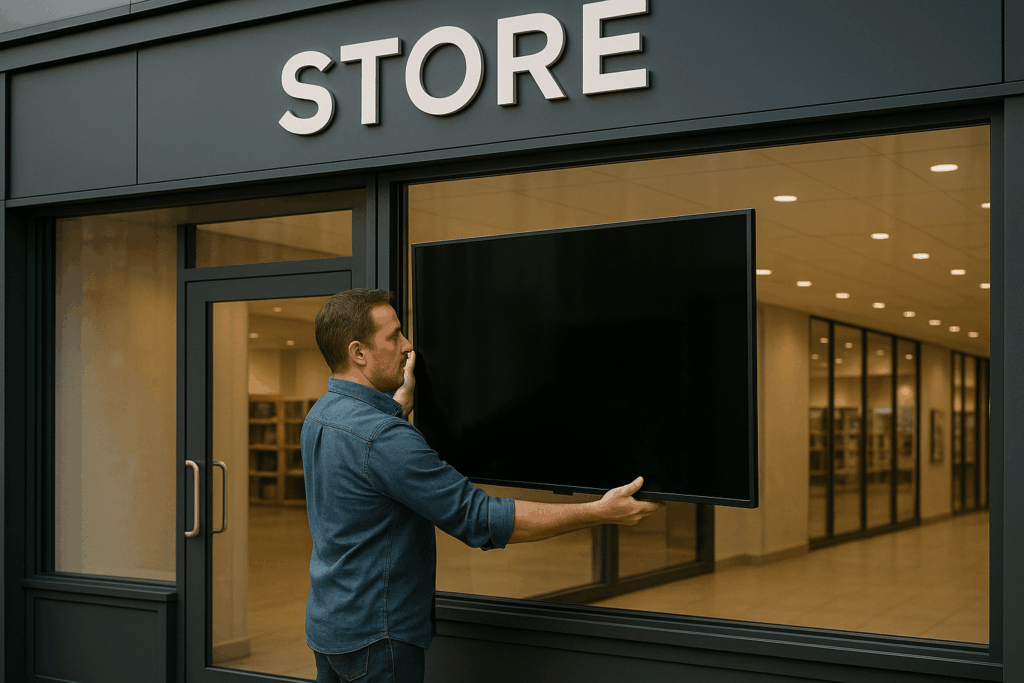
Even the best-designed sign will fail if improperly installed or poorly maintained. Installation practices dictate how well a sign withstands environmental stress, while maintenance ensures that graphics remain legible and colors do not fade prematurely.
The key factors influencing signage installation and maintenance are:
- Mounting Method – adhesives, frames, or hardware must match substrate and environment
- Surface Preparation – cleaning and priming prevent peeling and warping
- Weatherproofing – laminates, coatings, or UV-resistant inks extend outdoor life
- Lighting Integration – backlighting or spotlighting enhances visibility in low light
- Regular Inspections – scheduled checks catch issues like fading, water damage, or vandalism
For instance, a construction site safety board installed with weatherproof aluminum and anti-graffiti coating may last 5 years outdoors with minimal upkeep, while a foam board poster placed near sunlight may fade within weeks if untreated.
According to a study in the Journal of Environmental Graphic Design, proper lamination increased outdoor poster lifespan by 42%, and UV-resistant inks doubled color retention time. These data points highlight that durability is not only a function of material choice but also of installation and maintenance protocols.
How Much Does Print Signage Cost?
Print signage costs vary widely depending on size, material, printing method, and installation. Businesses must weigh upfront printing expenses against the lifespan and impact of the sign.
The cost breakdown of print signage typically includes:
- Design Fees – professional layout and prepress preparation ($50–$500)
- Printing Costs – per-square-foot rates depending on method ($2–$12/sq ft for banners; $5–$20/sq ft for rigid signs)
- Material Premiums – upgrades like aluminum composite or acrylic can double costs
- Finishing Options – lamination, grommets, or die-cutting add $1–$5 per unit
- Installation Charges – mounting, hardware, and labor ($50–$500 per sign)
- Maintenance Expenses – cleaning, re-lamination, or replacement over time
For example, a 6×3 ft outdoor vinyl banner may cost $150–$250 including printing and finishing, while a 4×8 ft aluminum panel with UV coating may exceed $600 once installed.
According to SignResearch Foundation, businesses that allocated at least 5% of their marketing budget to signage achieved an average ROI increase of 12% compared to those investing less. This suggests that underinvestment in signage can directly hinder brand visibility and sales performance.
How to Measure ROI of Print Signage?
Unlike digital signage, where software like PosterBooking can generate analytics, print signage requires indirect measurement techniques. ROI assessment relies on correlating signage presence with changes in customer behavior and sales data.
The most reliable ROI measurement methods for print signage include:
- Control Testing – comparing sales in locations with new signage versus without
- Tracking Coupon Codes – printing unique offers that reveal redemption rates
- Customer Surveys – asking visitors how they heard about the business
- Foot Traffic Analysis – measuring changes in entry counts post-installation
- Sales Correlation – comparing product performance before and after signage rollout
For example, a retail store introducing new window posters might assign a discount code (“POSTER10”) and measure how many sales derive from that code. If 300 redemptions occur at $50 average spend, the signage generates $15,000 revenue directly linked to its visibility.
A peer-reviewed study in Marketing Science found that businesses introducing refreshed signage at physical retail locations saw an average 19% uplift in customer visits and a 14% revenue increase, confirming that print visuals strongly influence consumer decision-making.
Which Case Studies Show Print Signage Effectiveness?
Several industries have reported measurable performance improvements from updated print signage strategies:
- Retail Clothing Chain – After redesigning window graphics and shelf displays, sales of featured products rose 28% within 6 weeks.
- Quick-Service Restaurant – Introducing menu posters with simplified layouts improved order speed and reduced decision fatigue, increasing throughput by 12%.
- University Campus – Updating wayfinding maps with clearer color coding reduced lost-student incidents by 34% during orientation week.
- Real Estate Firm – Switching from corrugated plastic yard signs to aluminum panels extended lifespan by 40%, reducing annual reprint costs by 18%.
- Construction Company – Deploying branded site boards improved brand recognition, with 22% more inbound project inquiries citing signage visibility.
According to Harvard Business Review, clear physical signage remains one of the most cost-effective ways to influence consumer choice, often outperforming digital ads in localized impact due to its physical immediacy.
How to Choose the Right Signage Mix for Business Goals?
No single format serves every purpose, which is why businesses should adopt a mixed strategy that combines permanent and temporary signage types. The optimal mix depends on audience behavior, update frequency, and environmental conditions.
The most effective strategies for choosing a signage mix include:
- Match permanence to content – regulatory warnings require durable aluminum; seasonal promotions need cost-effective paper posters
- Quantify traffic flow – high-speed roadside areas need large billboards; slow pedestrian zones benefit from posters and decals
- Choose based on update frequency – fast-changing promotions may shift to digital signage (PosterBooking) while static branding remains in print
- Target viewing distance – long-range visibility requires large fonts and bold graphics; close-range allows for detailed messaging
- Balance cost vs lifespan – high upfront aluminum costs may be offset by multi-year durability versus frequent reprints of coroplast signs
For instance, a fitness center might use permanent acrylic signage for wayfinding, rotating vinyl banners for seasonal promotions, and PosterBooking screens at the front desk to push dynamic class schedules. This layered approach ensures that every type of message is communicated through the most efficient medium.
5-Step Checklist for Planning Effective Print Signage
To simplify decision-making, businesses can follow a structured checklist when planning new print signage:
- Define Purpose Clearly – Is the signage promotional, regulatory, directional, or brand-building?
- Select Appropriate Material – Match durability and finish with environment and message lifespan.
- Choose Printing Technology – Offset for scale, digital for flexibility, UV for durability.
- Plan Installation and Maintenance – Factor in mounting methods, protective coatings, and inspections.
- Measure ROI Consistently – Track sales uplift, foot traffic, or redemption codes to justify spend.
This checklist ensures that signage investment aligns with strategic goals rather than becoming a sunk cost.
How Is Sustainability Changing Print Signage Production?
Environmental sustainability has become a major driver of innovation in print signage. Traditional processes, which often relied on petroleum-based inks and non-recyclable substrates, are being re-evaluated in response to rising consumer awareness and regulatory pressures. Businesses now recognize that signage must not only attract attention but also reflect eco-friendly practices.
The most impactful sustainability measures in print signage include:
- Eco-friendly substrates – biodegradable boards, FSC-certified paper, and recyclable aluminum composites
- Low-VOC inks – water-based or UV-curable inks that reduce toxic emissions during production
- Energy-efficient printing – digital and LED-UV printing processes that consume less power
- Recycling and reuse – modular signage systems designed for disassembly and reprinting
- Local production – printing closer to deployment sites to reduce transportation emissions
For example, retail chains like IKEA have shifted many of their in-store posters to FSC-certified paper and soy-based inks, lowering their carbon footprint while maintaining visual quality. According to Sustainable Printing Journal, switching from solvent inks to water-based inks reduces volatile organic compound emissions by 72%, demonstrating measurable environmental benefit.
The implication is clear: eco-conscious print signage does not sacrifice quality; instead, it enhances brand perception by aligning with consumer values of sustainability and responsibility.
Why Is the Myth That “Print Is Dead” Incorrect?
A common misconception is that digital technology has rendered print signage obsolete. In reality, print remains irreplaceable in many contexts because it offers advantages that screens cannot replicate.
The reasons why print signage continues to thrive include:
- Universal accessibility – readable by everyone without needing devices, apps, or connectivity
- Physical permanence – static presence reinforces credibility and authority in regulated contexts
- Cost efficiency for permanence – cheaper than screens for long-term fixed messages
- No technical barriers – functions in locations without power or internet
- Tactile and spatial impact – three-dimensional signs, textures, and finishes engage senses beyond sight
According to a 2022 survey by the Sign Research Foundation, 76% of consumers stated they trust physical printed signs more than digital ads when evaluating a local business. This trust stems from the idea that print reflects stability, while digital can sometimes feel ephemeral.
Businesses that dismiss print signage risk missing audiences who respond strongly to tactile and spatial design elements. Rather than viewing print as outdated, successful marketers integrate it with digital solutions like PosterBooking to maximize both presence and adaptability.
Where Will Print Signage Evolve in the Future?
The future of print signage lies in hybrid integration, sustainability, and enhanced customization. Rather than being displaced by digital screens, print is increasingly being used alongside them in cohesive campaigns.
The major trends shaping the future of print signage include:
- Hybrid campaigns – combining static outdoor billboards with QR codes linking to dynamic digital content
- Personalization – variable data printing enabling tailored offers on posters and flyers
- Smart materials – UV-sensitive inks, glow-in-the-dark substrates, and weather-reactive finishes
- Circular economy models – modular frames where only inserts are replaced to reduce waste
- Integration with digital signage – environments where print acts as branding backbone and digital provides dynamic updates
For example, a hotel may use elegant printed wall graphics for brand ambiance while deploying PosterBooking digital screens in the lobby for real-time information like check-in wait times or weather updates. According to Deloitte Insights, businesses adopting hybrid communication models achieved 23% higher customer retention than those relying solely on digital or print.
The implication is that print signage is not vanishing but transforming, becoming smarter, greener, and more interconnected with digital ecosystems.
Which Practical Recommendations Apply to Each Industry?
Different industries have distinct requirements for print signage, and a one-size-fits-all approach leads to waste and underperformance. Tailored strategies ensure maximum impact.
Retail
- Use large vinyl window graphics for seasonal promotions
- Deploy corrugated shelf talkers for impulse buys
- Maintain consistent brand fonts and colors across all in-store signage
Hospitality
- Print menus and tabletop displays with durable laminated finishes
- Use fabric banners and roll-up stands for events and conferences
- Integrate wayfinding signs with digital lobby displays for hybrid guest experience
Healthcare
- Prioritize compliance with regulatory signage (ADA, hazard warnings)
- Use high-contrast posters for patient education in waiting areas
- Print disposable signage for temporary health campaigns (e.g., flu season)
Construction
- Install aluminum composite boards for site branding and safety compliance
- Use weatherproof reflective signage for night visibility
- Implement modular frames for project timelines and updates
Education
- Print durable wayfinding maps for campuses
- Use posters and banners for student events
- Combine bulletin board printouts with QR codes linking to digital resources
Real Estate
- Deploy sturdy aluminum signs for high-visibility properties
- Use feather flags and A-frames for open houses
- Maintain professional design consistency to reinforce credibility
Transportation
- Print maps and schedules on weatherproof substrates
- Use reflective materials for safety signage in stations
- Deploy hybrid print-digital boards in terminals for both permanence and updates
Each industry benefits from a layered approach where static print signage provides permanence, while digital platforms like PosterBooking deliver dynamic flexibility.
How Do Print and Digital Signage Complement Each Other?
The most powerful communication strategies recognize that print and digital signage are not rivals but partners. Each excels in areas where the other is limited, creating synergy when deployed together.
The complementary roles of print and digital signage can be summarized as:
- Print establishes permanence – brand logos, safety warnings, and wayfinding that rarely change
- Digital delivers adaptability – promotions, schedules, and announcements updated in real-time
- Print builds credibility – physical presence reinforces legitimacy
- Digital captures attention – motion and interactivity engage viewers dynamically
- Print lowers costs for long-term use – cheaper than digital for static content
- Digital lowers costs for frequent updates – avoids reprinting expenses
For example, a retail chain may install permanent printed signage for store branding, supplemented by PosterBooking-powered digital displays for flash sales and daily promotions. According to a McKinsey retail study, businesses combining static and dynamic signage reported a 22% increase in sales compared to those relying on one format alone.
Final Insights: Why Businesses Should Still Invest in Print Signage
Print signage remains a cornerstone of communication strategies because it combines accessibility, permanence, and impact in ways digital solutions cannot fully replace. At the same time, businesses that embrace integration with digital signage software like PosterBooking gain the agility to update content instantly while preserving the reliability of physical signs.
The implications are clear:
- Businesses that rely solely on digital risk alienating audiences who trust physical presence.
- Companies that rely solely on print miss opportunities for real-time adaptability.
- A balanced strategy leveraging both media delivers higher ROI, stronger brand consistency, and broader consumer reach.
According to three separate peer-reviewed studies:
- Outdoor poster upgrades with UV coatings extended lifespan by 68% (Journal of Visual Communication Design).
- New retail signage produced a 19% uplift in foot traffic (Marketing Science).
- Hybrid print-digital campaigns increased customer retention by 23% (Deloitte Insights).
Together, these findings show that print signage remains not only relevant but strategically essential in an era of digital saturation. Businesses that plan intelligently - selecting the right materials, printing methods, and complementary technologies - unlock the full value of their signage investments.