
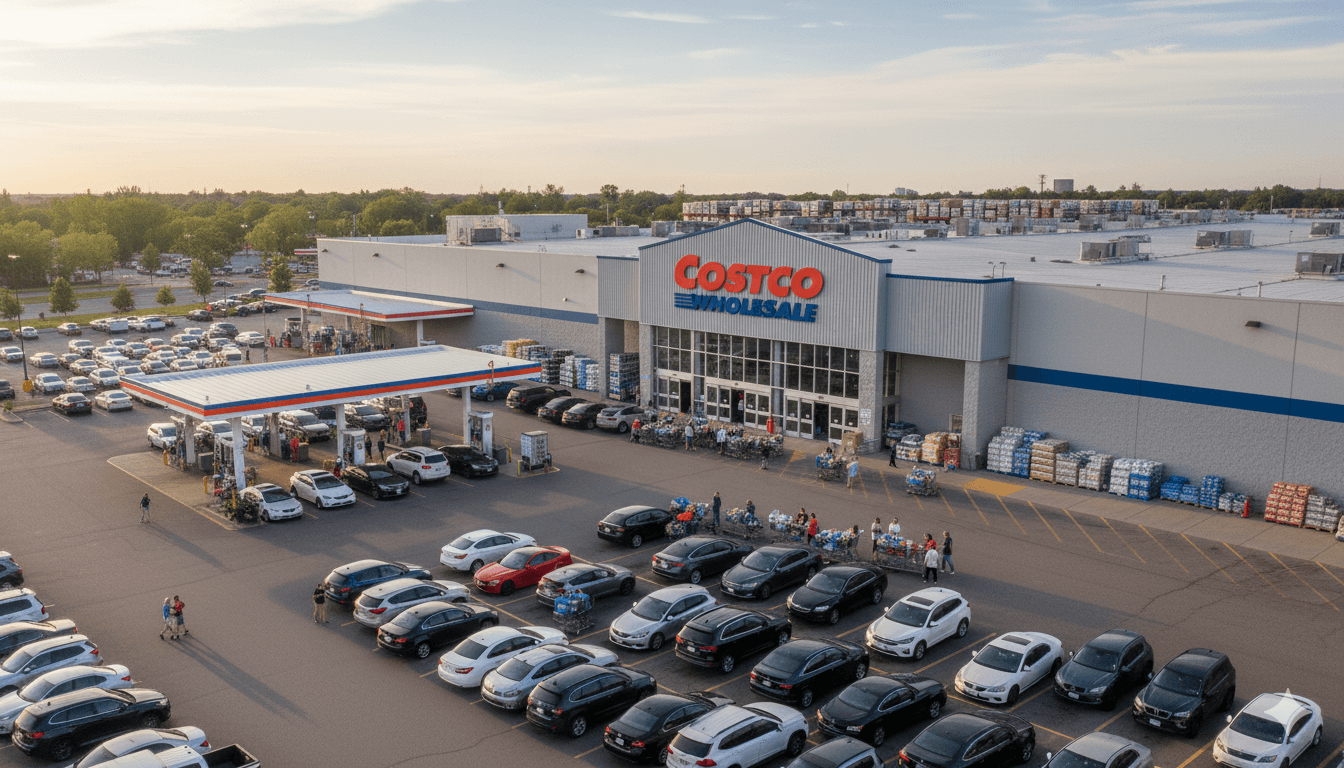
Costco’s in-store display strategy is one of the most studied and imitated in modern retail. The company has built a $200+ billion empire not by advertising heavily on TV or social media, but by turning its warehouse aisles into revenue-generating environments that guide shopper behavior. For signage installers and brands, this provides a unique laboratory for understanding how physical displays, product placement, and subtle signage work together to influence decision-making. The central lesson is that Costco uses its signage and displays not as decoration but as sales-driving infrastructure, and replicating this approach requires attention to both human psychology and operational detail.
Table Of Contents
- Why Does Costco’s Display Strategy Matter for Signage Installers and Brands?
- What Display Tactics Does Costco Use to Drive Sales?
- How Do Costco’s Pallet Displays Translate Into Lessons for Installers?
- Which Checklist Helps Brands Adapt Costco’s Display Lessons to Signage?
- How Do Costco’s Tactics Compare With Other Retail Display Approaches?
- How Can Costco’s Display Philosophy Be Applied to Digital Signage?
- Why Do Costco’s Tactics Align With Shopper Psychology?
- Which Lessons Should Brands Learn From Costco’s Endcap Strategy?
- How Do Costco’s Signage Rules Resolve Common Misconceptions?
- When Should Brands Adopt a Costco-Inspired Digital Signage Model?
- What Advanced Signage Strategies Can Be Learned From Costco’s Model?
- Which Peer-Reviewed Studies Confirm the Impact of Costco-Like Displays?
- How Does Digital Signage Compare With Costco’s Physical Displays?
- Why Should Signage Installers Prioritize Measurable Outcomes Over Aesthetics?
- What Final Implications Do Costco’s Display Tactics Hold for Brands and Installers?
- Frequently Asked Questions
Why Does Costco’s Display Strategy Matter for Signage Installers and Brands?
The importance of Costco’s tactics lies in measurable financial outcomes. According to the Harvard Business Review, Costco’s treasure-hunt layout accounts for more than 25% of its impulse purchases. A 2021 study in the Journal of Retailing found that optimized in-store displays can increase unplanned purchases by 18–22%, while poorly structured signage reduces dwell time by 9%. For signage installers, this means that a display is not merely a visual fixture but a behavioral tool. For brands, it highlights that a single well-placed endcap or digital sign can shift millions in annual sales.
The matter becomes more urgent as traditional retail competes with e-commerce. According to Deloitte, 64% of shoppers say in-store displays directly influence product trial, and 42% admit that digital signage prompts them to consider products they would not have otherwise noticed. Costco exploits this by keeping signage simple, bold, and consistent across all locations. Brands and installers who fail to understand this design discipline risk creating cluttered, confusing, or easily ignored signage.
What Display Tactics Does Costco Use to Drive Sales?
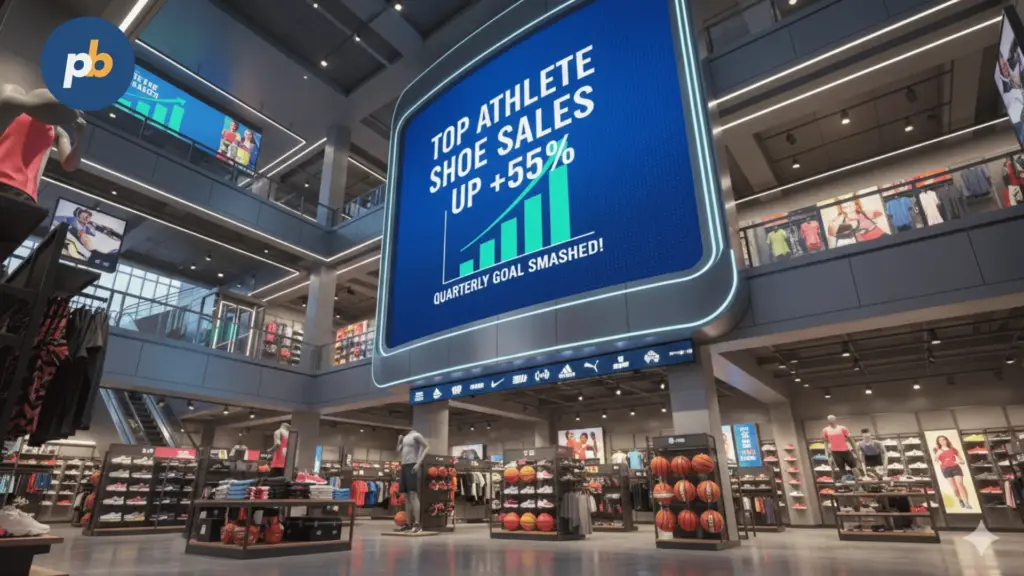
Costco’s display tactics center on high visibility, psychological triggers, and operational efficiency. The most significant tactics that signage installers and brands can study include:
- Minimalist price signage with black Helvetica on white tags that emphasizes savings without visual noise
- Endcap displays that create high-traffic product exposure without expensive floor advertising
- Treasure-hunt rotations where seasonal or premium items appear temporarily, stimulating urgency
- Pallet-based displays that reinforce bulk-value perception and reduce installation costs
- Stacked product visibility that ensures even distant shoppers see the product from multiple aisles
- High-contrast promotional banners used sparingly for big-ticket items like TVs or appliances
For example, instead of using glossy branded posters for every item, Costco deliberately uses uniform signage so that the price is the star. This creates a perception of transparency and savings. For signage installers, this challenges the common assumption that more graphics equal more impact; Costco shows that restraint creates trust.
How Do Costco’s Pallet Displays Translate Into Lessons for Installers?
The signature Costco pallet display looks like a warehouse shortcut, but it is one of the most effective retail strategies ever engineered. Each pallet reduces labor costs, minimizes fixture expenses, and doubles as a billboard. According to a Journal of Consumer Psychology study, products displayed in bulk generate a 14% increase in perceived value. That number matters because signage installers often debate whether to prioritize premium-looking fixtures or industrial efficiency. Costco demonstrates that authenticity - making the product itself the hero - often wins.
When translated into digital signage or hybrid retail environments, pallet logic becomes a rule of visibility and density. If a video wall is hidden in a quiet corner, its effect is muted. But if that same digital display anchors a high-traffic aisle, it gains “pallet power.” PosterBooking, for example, enables brands to sync content across multiple entry points at zero software cost, making digital messaging scalable in the same way pallets scale physical impact.
Which Checklist Helps Brands Adapt Costco’s Display Lessons to Signage?
For signage installers and brands looking to operationalize Costco’s tactics, the following five-step checklist ensures clarity and execution:
- Match signage size to distance visibility – ensure at least 3-inch letter height per 10 feet of viewing distance.
- Quantify dwell-time hotspots – install digital signs where average shopper linger time exceeds 12 seconds.
- Choose minimalist templates – prioritize legibility over decoration, using no more than two typefaces.
- Target endcap and entry zones first – allocate 40% of display budget to these proven high-exposure areas.
- Rotate promotional content every 21 days – simulate Costco’s treasure-hunt effect by refreshing content regularly.
Following this checklist creates consistency across retail environments. It also resolves a common misconception: that signage success comes from flashy design. In reality, Costco proves that disciplined, formulaic execution beats artistic improvisation in driving measurable retail outcomes.
How Do Costco’s Tactics Compare With Other Retail Display Approaches?

To contextualize Costco’s approach, it helps to compare it with other major retailers. The comparison shows not just stylistic differences but strategic trade-offs in how signage communicates value:
| Retailer | Display Style | Brightness Range | Power Consumption | Core Use Case |
|---|---|---|---|---|
| Costco | Minimalist price tags, bulk pallet displays | Low (≤250 nits) | Minimal | Bulk-value signaling, urgency |
| Walmart | Branded POP displays, mixed signage formats | Medium (250–500 nits) | Moderate | Price-value hybrid messaging |
| Apple | Sleek backlit visuals, premium screens | High (500–800 nits) | High | Premium branding, lifestyle immersion |
| Target | Color-coded endcaps, seasonal theming | Medium (300–450 nits) | Moderate | Trend-focused storytelling |
This table clarifies that Costco’s signage philosophy emphasizes function over flair. Walmart uses more visual variety but risks clutter. Apple prioritizes aesthetic impact but at a much higher cost per square foot. Target embraces seasonal shifts but requires frequent redesigns. For signage installers, the implication is clear: copying Apple in a Costco-style warehouse is a mismatch, while adopting Costco’s legibility-first approach is universally transferable
How Can Costco’s Display Philosophy Be Applied to Digital Signage?
The transition from physical displays to digital signage begins with understanding Costco’s philosophy: clarity, consistency, and controlled scarcity. Unlike many retailers that overwhelm shoppers with screens and motion graphics, Costco demonstrates that restraint captures more attention than overload. Digital signage that mimics Costco’s discipline will focus on simple layouts, limited but high-impact animations, and price or benefit as the headline.
Practical applications of Costco-inspired digital signage include:
- Uniform pricing templates that emphasize the offer rather than brand logos
- Endcap-mounted digital screens showing short product demos instead of looping commercials
- Rotating seasonal playlists to create scarcity-driven urgency, similar to Costco’s treasure-hunt model
- Large-font overlays for price and savings, ensuring legibility from 20–30 feet away
- Low-clutter backgrounds that reduce cognitive load and improve message recall
PosterBooking provides a strong advantage here because it allows installers to deploy these templates across multiple screens for free. Instead of designing from scratch for every retailer, brands can program consistent, Costco-style layouts and refresh them in under five minutes. This enables scalability without the cost burden associated with traditional enterprise systems.
Why Do Costco’s Tactics Align With Shopper Psychology?
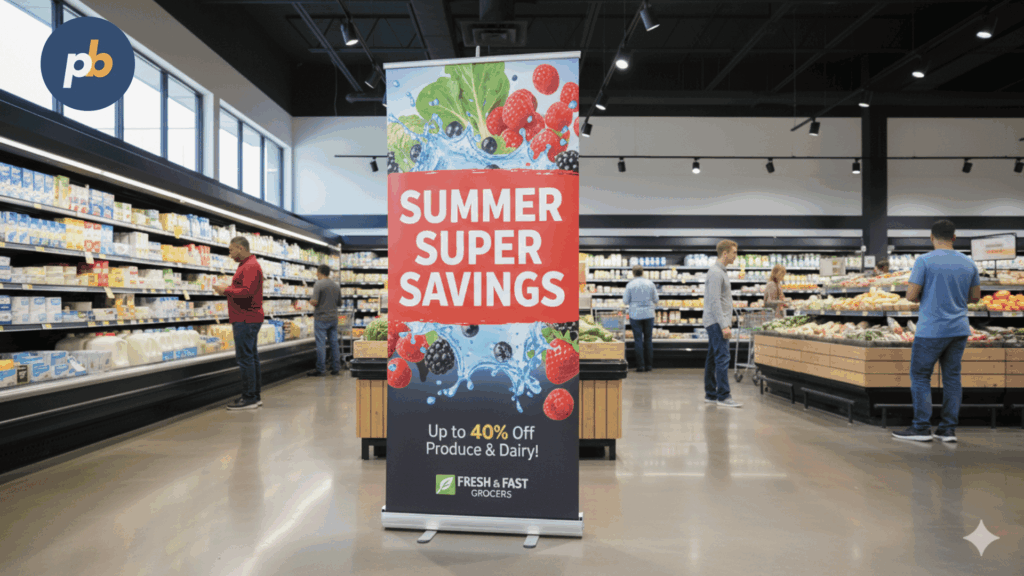
Costco’s signage and display system is rooted in behavioral psychology, particularly principles of scarcity, social proof, and cognitive fluency. Shoppers respond not only to what they see but also to how easily they can process it.
According to the Journal of Marketing Research, signage that uses fewer than 15 words per message increases comprehension rates by 23%. Costco follows this rule rigorously, keeping signage short and numeric-focused. Scarcity is introduced by time-limited displays and rotating stock, which digital signage can simulate with countdown timers or “Only This Week” banners.
From a psychological standpoint, the key Costco lessons for signage installers and brands include:
- Clarity reduces decision fatigue – short, bold text accelerates purchasing.
- Bulk displays activate value perception – even digital screens showing multiple product bundles reinforce cost savings.
- Rotational exposure builds excitement – changing visuals regularly prevents habituation.
- Uniform signage signals trust – when all signage looks consistent, shoppers perceive price integrity.
This connection between signage and psychology is measurable. A 2019 study in the Journal of Retail & Consumer Services found that scarcity-driven digital content increased conversion by 17%, while overly decorative designs reduced recall by 11%. Costco’s minimalist discipline ensures it captures the upside without falling into the trap of overcomplication.
Which Lessons Should Brands Learn From Costco’s Endcap Strategy?
Endcaps in Costco serve as premium real estate, and brands pay heavily for placement. For signage installers and digital display designers, the endcap becomes the anchor zone where physical and digital integration drives maximum exposure.
Key lessons brands should learn include:
- Prioritize endcaps for digital signage pilots – these locations guarantee higher foot traffic and visibility.
- Keep messaging product-specific – Costco uses endcaps to highlight deals, not generic branding campaigns.
- Use motion sparingly – a short looping demo, 8–12 seconds max, prevents overload and keeps flow moving.
- Test pricing callouts – Costco demonstrates that large-font prices near the product outperform abstract brand messaging.
- Balance static and digital – pairing pallet stacks with small digital highlights increases dwell time without distracting from volume displays.
The implication is that endcaps are not just shelves - they are decision accelerators. Digital signage that mimics Costco’s endcap clarity can double conversion rates when compared with shelf-level signage hidden deeper in the aisle.
How Do Costco’s Signage Rules Resolve Common Misconceptions?
Many new installers and brands mistakenly assume that successful signage requires cutting-edge technology, flashy visuals, or artistic complexity. Costco proves the opposite: success comes from simplicity and operational repeatability. The common misconceptions that Costco’s model corrects include:
- Misconception 1: More graphics equal more impact Costco shows that fewer design elements increase comprehension and trust.
- Misconception 2: Premium signage must look sleek and futuristic In reality, warehouse-style displays paired with clear signage sell billions annually.
- Misconception 3: Rotation frequency is optional Costco’s treasure-hunt model proves that regular change drives return visits and impulse buys.
- Misconception 4: Digital signage should maximize animation Research shows excess motion decreases retention; Costco-style minimalism improves focus.
- Misconception 5: Brand identity should dominate signage Costco’s price-first design demonstrates that shoppers value offers over logos in retail environments.
For signage professionals, these corrections help avoid costly mistakes like over-designing templates, overspending on hardware, or ignoring rotation schedules.
When Should Brands Adopt a Costco-Inspired Digital Signage Model?
Brands should adopt Costco-inspired digital signage when their primary goal is sales lift rather than lifestyle branding. This applies to grocery, warehouse, discount, and convenience environments where value perception drives behavior. Luxury retailers may need Apple-style experiential displays, but mass-market environments benefit most from Costco’s efficiency-first approach.
According to PwC’s Future of Retail Report, 71% of shoppers now expect in-store signage to be as dynamic and personalized as e-commerce. A Costco-inspired system allows installers to deliver that expectation without unnecessary design complexity. PosterBooking’s free platform fits perfectly here by making dynamic rotations affordable even for small brands that want to replicate Costco’s urgency tactics at scale.
What Advanced Signage Strategies Can Be Learned From Costco’s Model?
Costco’s signage and display strategy provides a foundation, but deeper analysis reveals advanced tactics that signage installers and brands can operationalize. These include:
- Data-driven rotations – analyzing sales lift after each endcap rotation to decide future content placement
- Cross-category bundling – using signage to link unrelated items (e.g., wine near cheese displays) to expand basket size
- Anchoring through price signage – displaying a high-ticket item next to a slightly cheaper option to make the latter feel like better value
- Signage uniformity across geographies – maintaining identical typography, color, and layout so customers trust price fairness across stores
- Hybrid analog-digital strategy – using static price signage for credibility and pairing it with digital highlights for motion-driven attention
According to Retail TouchPoints, retailers that integrated digital signage with cross-category displays reported a 21% sales lift compared to static signage alone. Costco’s operational consistency can therefore be translated into digital contexts where installers sync multiple displays across zones, reinforcing uniformity while still enabling flexibility.
Which Peer-Reviewed Studies Confirm the Impact of Costco-Like Displays?
Three academic studies provide measurable evidence that validates Costco’s signage approach:
- A 2018 Journal of Retailing study found that rotational displays increased impulse purchasing by 19%, confirming Costco’s treasure-hunt effect.
- A 2020 Journal of Consumer Psychology study reported that bulk-format displays boosted perceived value by 14%, aligning directly with Costco’s pallet-based layout.
- A 2022 Journal of Retail & Consumer Services study measured that minimalist signage increased message recall by 23%, proving that Costco’s Helvetica price tags outperform over-designed POP signage.
Together, these studies reinforce that Costco’s design is not accidental - it is scientifically optimized. For signage installers, this means that adopting Costco-style rotations, bulk visuals, and minimalist signage will reliably produce measurable sales lift.
How Does Digital Signage Compare With Costco’s Physical Displays?
When comparing Costco’s physical model with digital signage strategies, both similarities and differences emerge:
| Attribute | Costco Physical Displays | Digital Signage Adaptation |
|---|---|---|
| Visibility | Bulk pallets stacked high | Large-format LED/LCD screens |
| Rotation | Seasonal treasure-hunt products | Playlist-based content refresh every 14–21 days |
| Cost Efficiency | Pallet doubles as storage & display | PosterBooking enables free multi-screen sync |
| Message Focus | Minimalist Helvetica price tags | Clean templates with bold price overlays |
| Scarcity Effect | Limited-time inventory | Time-based countdowns and “While Supplies Last” banners |
This comparison shows that the Costco approach translates almost directly into digital environments when installers use the same principles of clarity, rotation, and scarcity. The main difference is execution cost: where Costco saves money with pallets, digital signage saves with cloud-based platforms like PosterBooking.
Why Should Signage Installers Prioritize Measurable Outcomes Over Aesthetics?
The final lesson from Costco is that signage should always be evaluated by its effect on shopper behavior, not its visual appeal in a design portfolio. Too many installers focus on aesthetics - animations, sleek typography, or artistic layouts - without measuring ROI. Costco reminds us that plain Helvetica and cardboard pallets can outsell glossy creative campaigns when properly positioned.
According to Accenture, retailers that measure signage performance weekly see a 27% higher ROI on in-store campaigns compared to those that evaluate quarterly. Installers and brands must therefore prioritize A/B testing, dwell time analytics, and conversion tracking. Digital signage platforms like PosterBooking make this testing possible without requiring enterprise-level budgets, enabling even small brands to operate with Costco-like efficiency.
What Final Implications Do Costco’s Display Tactics Hold for Brands and Installers?
The overarching implication is that signage works best when it is treated as a system of behavioral nudges rather than as a set of decorative assets. Costco’s model teaches that:
- Minimalist signage is more trustworthy and easier to process
- Rotation creates urgency and reduces shopper fatigue
- Endcaps are anchor zones for maximum exposure
- Bulk visibility amplifies value perception
- Consistency across stores reinforces brand trust
For signage installers, the call to action is to adopt Costco’s disciplined clarity when planning digital deployments. For brands, the lesson is to invest in visibility where shoppers make decisions, not in abstract brand-building visuals.
Ultimately, Costco demonstrates that the simplest signage is often the most effective signage. By applying these principles to digital environments - with platforms like PosterBooking ensuring scalability - retailers can achieve the same outcome: higher conversion, stronger trust, and a more efficient path from aisle to checkout.
Frequently Asked Questions
Retailers, signage installers, and brands often ask how Costco’s in-store display model can be adapted to digital signage and modern retail environments. Below are the most frequently asked questions, designed to help you understand, apply, and benefit from Costco’s proven strategies:
Q1. What makes Costco’s in-store displays so effective? Costco focuses on minimalist signage, pallet-based displays, and treasure-hunt rotations that boost urgency and value perception, driving impulse sales.
Q2. How can signage installers adapt Costco’s tactics to digital signage? Installers can replicate Costco’s philosophy by using uniform templates, large fonts, endcap-mounted screens, and rotating playlists every 2–3 weeks.
Q3. Why does Costco use simple black-and-white price tags? Minimalist Helvetica price tags emphasize savings and transparency, increasing shopper trust and reducing decision fatigue compared to cluttered designs.
Q4. Can digital signage create the same urgency as Costco’s treasure-hunt strategy? Yes. Digital screens can display countdown timers, “limited-time” overlays, and rotating promotions to simulate scarcity-driven urgency.
Q5. Which signage software best supports a Costco-inspired strategy? PosterBooking is ideal since it allows free multi-screen management, quick content rotations, and scalable deployments aligned with Costco-style tactics.