
Table Of Contents
- What Is Narrowcasting?
- How Narrowcasting Works
- Types of Narrowcasting
- 1. Retail Narrowcasting
- 2. Corporate Narrowcasting
- 3. Educational Narrowcasting
- 4. Healthcare Narrowcasting
- 5. Hospitality and QSR Narrowcasting
- Benefits of Narrowcasting
- 1. Hyper-Targeted Messaging
- 2. Real-Time Updates
- 3. Cost Efficiency
- 4. Audience Segmentation
- 5. Brand Consistency Across Locations
- Narrowcasting vs. Broadcasting
- Real-World Case Studies of Narrowcasting
- Case Study 1: Narrowcasting in Higher Education
- Case Study 2: Retail Narrowcasting by Walgreens
- Case Study 3: Corporate Communications at Siemens
- Setting Up Narrowcasting with PosterBooking
- Step-by-Step Setup:
What Is Narrowcasting?
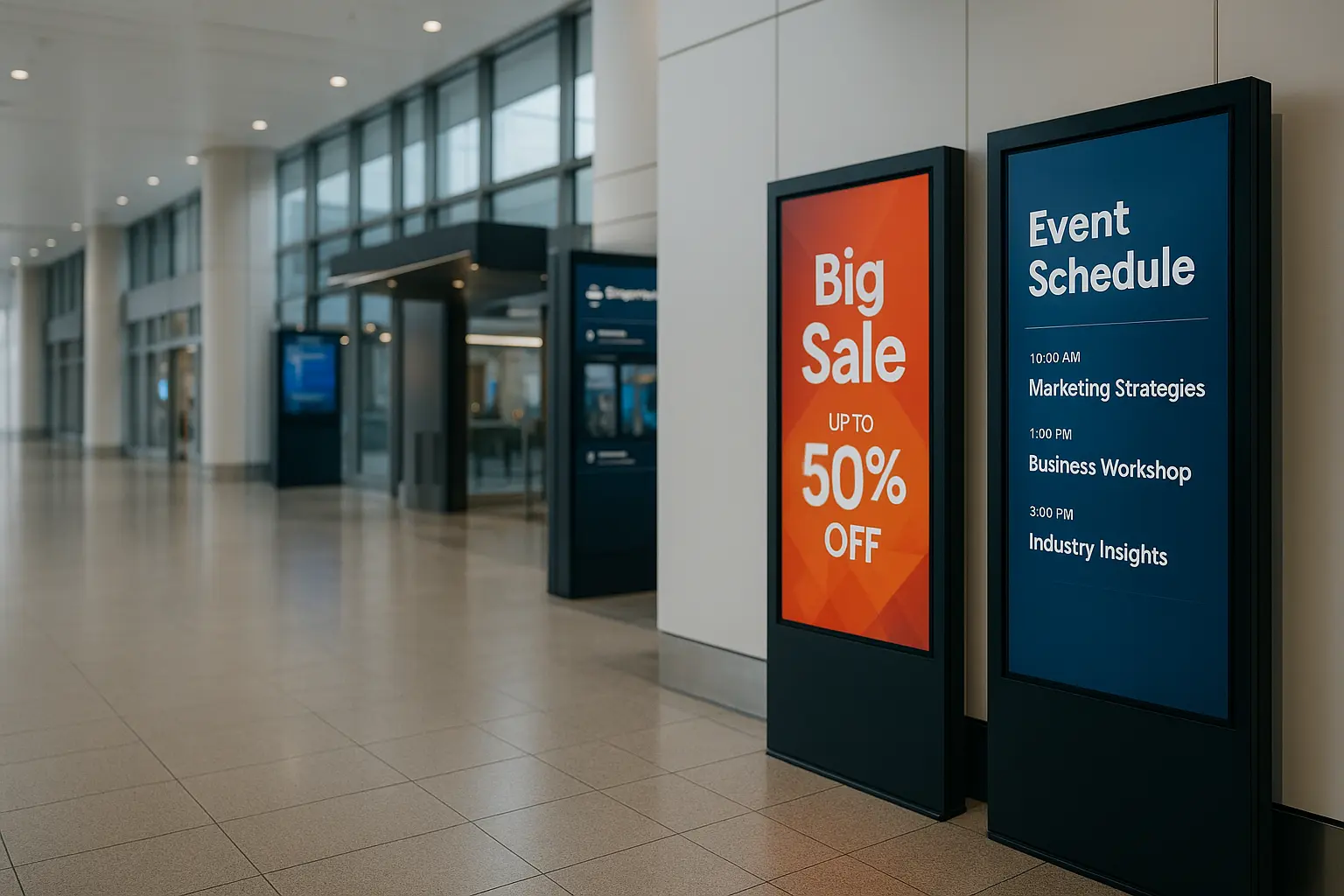
Narrowcasting is a communication strategy that distributes content to a specific, segmented audience, rather than the general public. It uses digital displays, IP networks, or closed-circuit systems to deliver hyper-relevant content based on location, time, audience type, and context.
For example, a digital menu board in a QSR (quick service restaurant) that updates daily specials based on time of day and local inventory is a narrowcast system. So is a hospital waiting room screen showing department-specific updates for patients and visitors. Narrowcasting optimizes message delivery to match the environment and the intended audience.
How Narrowcasting Works
Narrowcasting systems operate using three core components:
- Content Management System (CMS): A web-based or on-premise platform like PosterBooking, ScreenCloud, or Yodeck to schedule, manage, and deploy content.
- Media Player Hardware: Devices such as Amazon Signage Stick, Android TV boxes, or Raspberry Pi units that connect to screens and receive content from the CMS.
- Display Network: A network of LCD, LED, or e-paper screens deployed in physical locations where specific audiences interact with the environment, airports, campuses, retail stores, etc.
The system targets content based on location (e.g., store branch), demographic profile (e.g., student vs. adult shopper), and timing (e.g., lunch hour vs. evening commute).
Types of Narrowcasting
1. Retail Narrowcasting
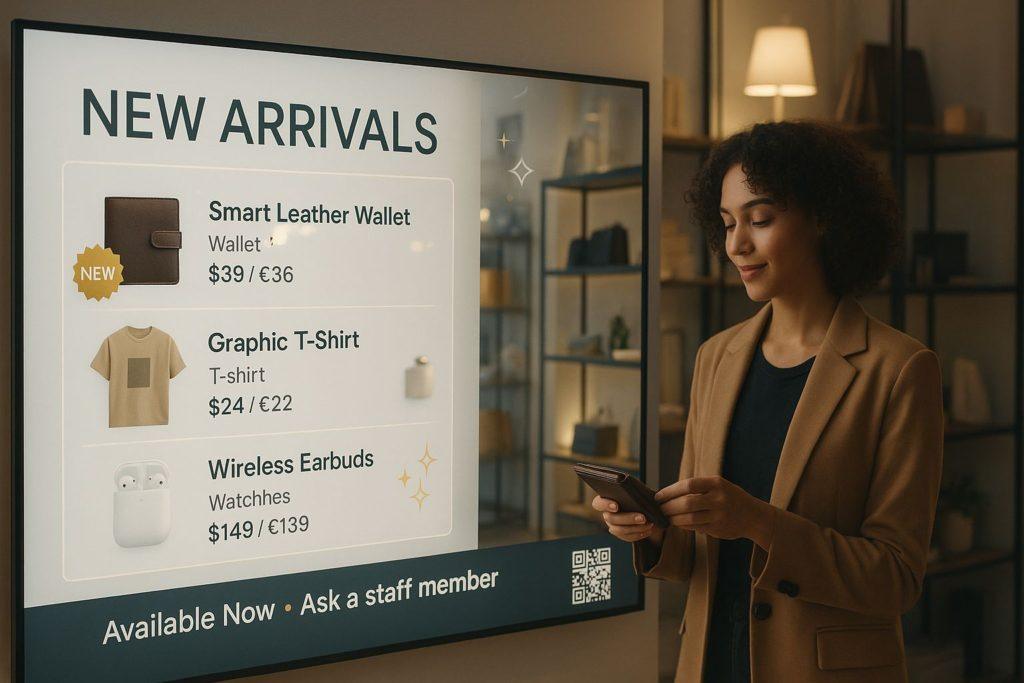
Used to promote localized offers, display product demos, or drive impulse purchases. For example, a case study from Digital Defynd shows that Zara uses digital mirrors and product screens in dressing rooms to upsell accessories based on selected outfits.
2. Corporate Narrowcasting
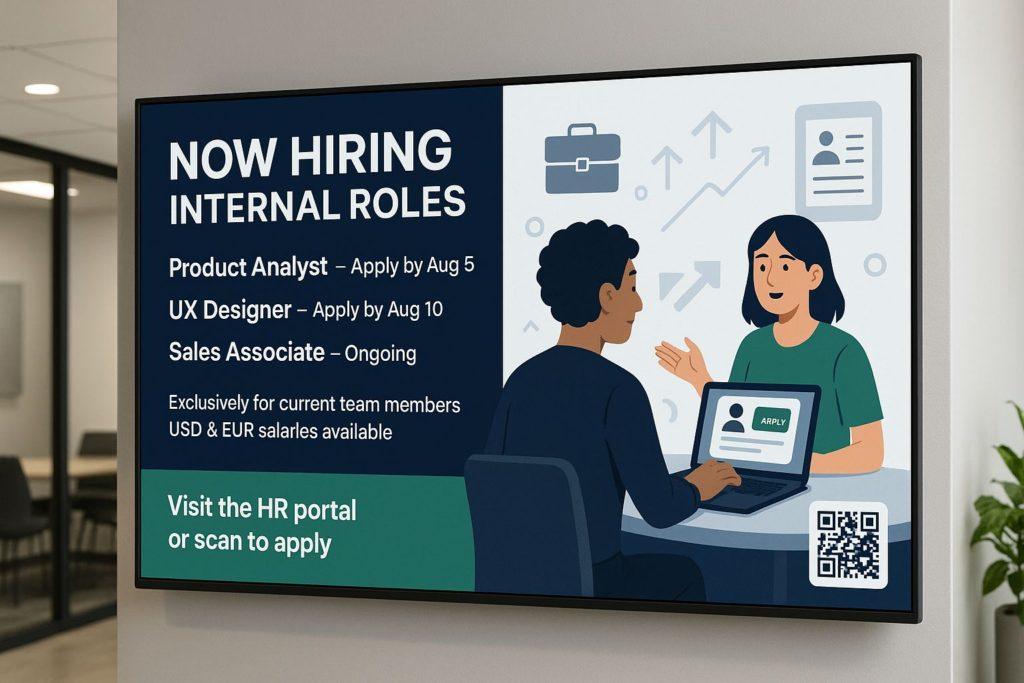
In office environments, it communicates internal updates, meeting schedules, KPIs, and corporate news. Narrowcasting screens in break rooms or near elevators increase engagement with real-time dashboards and event reminders.
3. Educational Narrowcasting
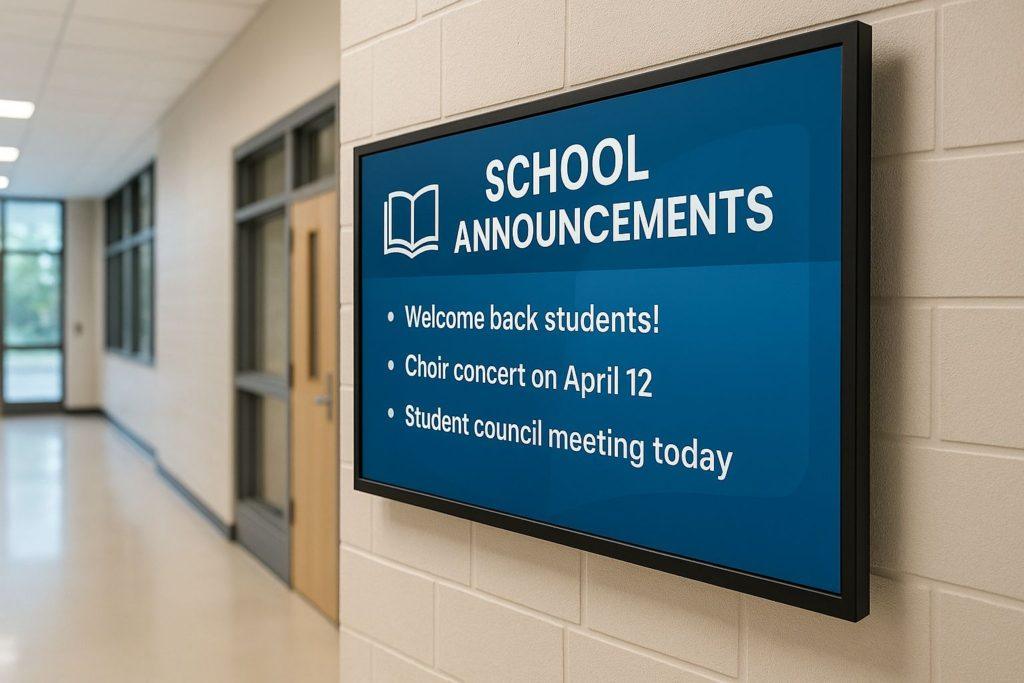
Universities deploy screens across campuses to update students on exam timetables, event changes, or emergency alerts. For instance, 80% of U.S. colleges with 10,000+ students use digital narrowcasting to communicate campus-specific updates.
4. Healthcare Narrowcasting
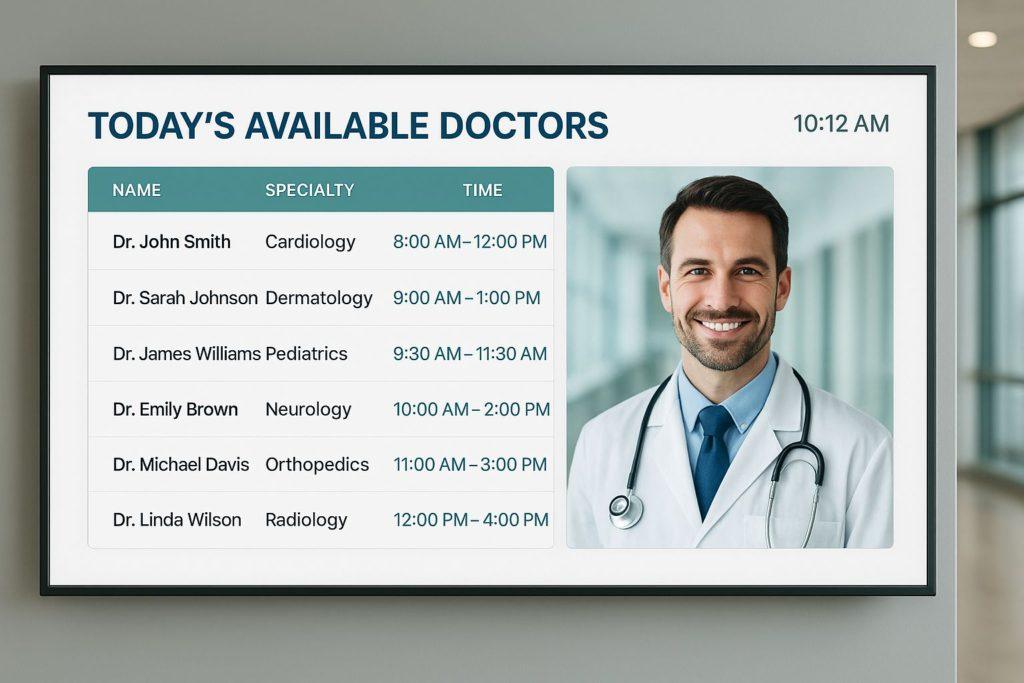
Hospitals use narrowcasting in waiting rooms to inform and distract patients, delivering customized messaging per department, pediatrics, radiology, outpatient, etc. Content may include wait times, health tips, or appointment reminders.
5. Hospitality and QSR Narrowcasting
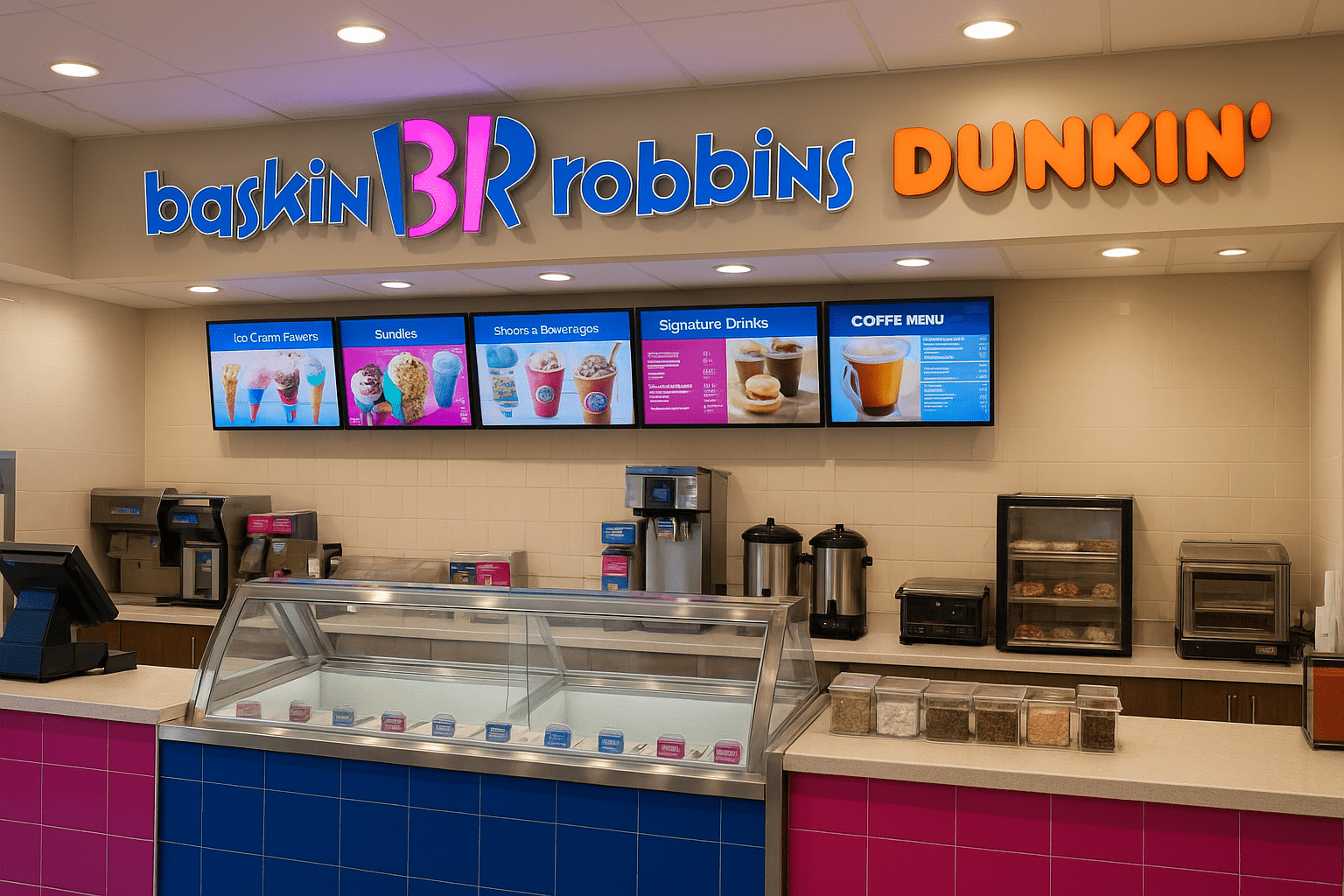
Hotels and quick-service restaurants narrowcast menus, weather, event schedules, or order status to localized screens. McDonald’s uses narrowcasting to deliver hyper-local promotions that change by region and time of day.
Benefits of Narrowcasting
1. Hyper-Targeted Messaging
Narrowcasting maximizes content relevance by focusing only on the audience present at a specific location and time. This increases message retention and response rates.
2. Real-Time Updates
Using cloud-based CMS platforms, businesses can update messaging instantly across thousands of endpoints. This ensures timely delivery of promotions, alerts, or schedule changes.
3. Cost Efficiency
Digital narrowcasting eliminates printing and distribution costs. Once deployed, content can be updated without physical effort, minimizing ongoing operational expense.
4. Audience Segmentation
Messages are tailored based on demographics, behavior, and location. This is ideal for multi-location businesses needing different campaigns in different regions simultaneously.
5. Brand Consistency Across Locations
Multinational brands maintain consistent branding while enabling local variation in language, promotions, or compliance.
Narrowcasting vs. Broadcasting
| Feature | Narrowcasting | Broadcasting |
|---|---|---|
| Audience | Specific, segmented group | General public |
| Distribution Method | Closed or controlled network | Open-air or mass media |
| Content Personalization | High | Low |
| Use Case | Internal comms, targeted marketing | TV, radio, public announcements |
| Cost Efficiency | High in segmented environments | High due to broad reach |
In a nutshell the difference between narrowcasting and broadcasting is that Narrowcasting increases engagement through relevance, while broadcasting prioritizes reach over precision.
Real-World Case Studies of Narrowcasting

Case Study 1: Narrowcasting in Higher Education
University of Central Florida (UCF) deployed over 150 digital screens across its Orlando campus to narrowcast course registration deadlines, emergency alerts, and campus event promotions. After full deployment, student survey response rates rose by 42%, and campus event attendance increased by 28%.
Case Study 2: Retail Narrowcasting by Walgreens
A report from CNN shows that Walgreens installed narrowcasting displays in its stores to promote in-store offers near the point-of-sale and pharmacy counters. A study by Nielsen showed a 33% uplift in promoted product sales where narrowcasting was active.
Case Study 3: Corporate Communications at Siemens
Siemens uses narrowcasting internally to distribute HR updates, corporate milestones, and live KPI dashboards across offices in Europe. Employee engagement metrics improved by 23%, according to their internal analytics reports.
Setting Up Narrowcasting with PosterBooking
PosterBooking simplifies narrowcasting through a plug-and-play, cloud-based CMS with free pricing tiers and zero proprietary hardware. It’s compatible with Fire TV Stick, Amazon Signage Stick, Android, and Raspberry Pi.
Step-by-Step Setup:
- Create a free PosterBooking account at PosterBooking.com.
- Install the player app on any compatible device (e.g., Fire TV).
- Connect the device to your screen and register it using the on-screen code.
- Upload content: videos, images, web URLs, or live HTML dashboards.
- Create playlists and schedules based on location, time, or screen.
- Deploy to screens remotely with real-time updates and content syncing.
PosterBooking supports multi-user control, screen grouping, and QR code-based interactions, making it ideal for scalable narrowcasting in retail, healthcare, and education.
Narrowcasting transforms how organizations communicate by replacing mass messaging with targeted, real-time content delivery. Whether a university pushing alerts to students or a QSR rotating lunch deals by location, narrowcasting increases engagement, reduces waste, and supports smart communication strategies. With platforms like PosterBooking, deployment is cost-effective, fast, and scalable, enabling businesses of any size to implement narrowcasting with measurable ROI.