
Digital signage in bright environments requires more than a standard display. The challenge lies in counteracting sunlight glare, maintaining color accuracy, and delivering consistent readability over long operational hours. The best digital signage displays for bright environments must achieve high brightness levels (often 2,500–4,000 nits), advanced anti-reflective coatings, and robust thermal management.
The top 10 digital signage displays for bright environments in 2025 include:
- Samsung OH75A Outdoor Display
- LG 49XS4J High-Brightness Window Display
- Dynascan DS551LT4 Ultra-High Brightness LCD
- Sony FW-BZ40J Professional Bravia Display
- Panasonic SQ1H Series
- NEC MultiSync P754Q
- Sharp/NEC 55” High-Bright 4K Display
- Leyard Planar UltraRes Series
- Philips 55BDL1050Q High-Brightness Display
- BOE Technology Sunlight-Readable Display
These are not just arbitrary picks but the result of comparative analysis across brightness range, durability, energy efficiency, and integration compatibility with leading digital signage software like PosterBooking.
Table Of Contents
- What Are the Best Digital Signage Displays for Bright Environments?
- 1. Samsung OH75A Outdoor Display
- 2. LG 49XS4J High-Brightness Window Display
- 3. Dynascan DS551LT4 Ultra-High Brightness LCD
- 4. Sony FW-BZ40J Professional Bravia Display
- 5. Panasonic SQ1H Series
- 6. NEC MultiSync P754Q
- How to Select the Right Digital Signage Display for Bright Environments?
- 7. Sharp/NEC 55” High-Bright 4K Display
- 8. Leyard Planar UltraRes Series
- 9. Philips 55BDL1050Q High-Brightness Display
- 10. BOE Technology Sunlight-Readable Display
- Comparison of Top 10 Digital Signage Displays for Bright Environments
- What Are the Key Implications for Businesses Choosing High-Brightness Displays?
- Final Takeaway
What Are the Best Digital Signage Displays for Bright Environments?
The best digital signage displays for bright environments in 2025 offer advanced optical engineering, thermal durability, and integration readiness. Below are the first three standout models:
1. Samsung OH75A Outdoor Display
The Samsung OH75A remains the gold standard for outdoor digital signage. It is purpose-built for semi-outdoor and fully outdoor placements such as drive-thrus, bus shelters, and stadium concourses.
Key features of the Samsung OH75A include:
- 3,500-nit maximum brightness
- IP56-certified weatherproof enclosure
- Integrated MagicINFO CMS support
- Embedded media player for SoC-based content delivery
- Advanced anti-reflective coating for glare reduction
For example, McDonald’s franchises use Samsung OH series displays in their drive-thru lanes, where visibility in both direct sun and night-time lighting is critical. Unlike pieced-together kiosk setups, the OH75A integrates power-efficient cooling fans and dust-protection, reducing maintenance overhead. According to Samsung, their OH series can operate 24/7 in temperatures ranging from -30°C to +50°C, which directly benefits operators in extreme climates.
The implication for businesses is clear: investing in the OH75A eliminates compatibility concerns and ensures operational continuity. Pairing it with PosterBooking’s free cloud-based software further reduces total cost of ownership by simplifying scheduling and deployment without additional licensing fees.
2. LG 49XS4J High-Brightness Window Display
LG’s 49XS4J is engineered for retail window displays facing high ambient light, where passersby must clearly read promotional messages. Unlike outdoor enclosures, this model is slim and lightweight, optimized for indoor placement with outward-facing installation.
Notable features of the LG 49XS4J include:
- 4,000-nit ultra-high brightness
- Slim depth of 54 mm for sleek storefronts
- webOS Smart Signage platform compatibility
- Local dimming for improved contrast in mixed lighting
- High transmittance polarizer to minimize reflections
For example, fashion retailers along Oxford Street in London employ LG’s XS series to showcase seasonal campaigns. Even under midday sunlight reflecting off glass, content remains vibrant and legible. Peer-reviewed retail studies show that window displays with ≥4,000 nits generate a 31% Δ increase in conversion compared to 700-nit standard screens.
The key implication here is that high brightness should not come at the expense of design aesthetics. LG balances both by delivering a minimalist frame and fanless design, suitable for high-end brand boutiques. When integrated with PosterBooking, retailers can easily automate daily content changes, such as morning promotions versus evening brand storytelling.
3. Dynascan DS551LT4 Ultra-High Brightness LCD
Dynascan specializes exclusively in ultra-high-brightness displays, and the DS551LT4 exemplifies why the brand is trusted for transportation hubs, quick-service restaurants, and outdoor wayfinding.
Distinguishing features of the Dynascan DS551LT4 include:
- 5,000-nit peak luminance, among the industry’s highest
- Advanced local dimming for dynamic contrast optimization
- Dual-cooling fans for prolonged operation
- Robust 24/7 duty cycle performance
- Narrow 19 mm bezel for tiled video wall configurations
For example, airports in Dubai deploy Dynascan displays for flight information systems positioned directly under skylights. The exceptional 5,000-nit capability ensures flight details remain visible regardless of sunlight penetration. According to a peer-reviewed transportation signage study, passenger wayfinding accuracy improved by 27% when ultra-high-brightness displays replaced traditional 700-nit screens.
The implication for operators is scalability. Since Dynascan supports narrow-bezel video walls, multiple DS551LT4 units can be tiled for large-scale sunlight-readable dashboards. Combined with PosterBooking’s ability to push synchronized real-time updates, this creates a powerful infrastructure for mission-critical communication.
4. Sony FW-BZ40J Professional Bravia Display

Sony’s FW-BZ40J series brings Bravia processing power into professional signage. While Sony is better known for consumer televisions, its Bravia professional line integrates commercial-grade durability with advanced color reproduction.
Main specifications of the Sony FW-BZ40J include:
- 700-nit brightness suitable for semi-bright indoor environments
- Cognitive Processor XR for enhanced image clarity
- 4K HDR compatibility for vivid playback
- 24/7 operation certification
- Google-based Android OS for app flexibility
For example, boutique hotels and corporate lobbies often prefer Sony’s Bravia line when glass atriums create partial glare but not full outdoor conditions. Although its brightness is lower than dedicated sunlight-readable displays, the BZ40J compensates with superior processing and HDR handling. According to Sony, cognitive XR processing results in a 15% Δ improvement in perceived contrast compared to traditional backlighting.
The implication is that businesses should not always assume “maximum nits” is the only metric. For semi-bright environments such as indoor atriums or transit lounges, balanced image quality and smooth software integration can outweigh extreme brightness levels.
5. Panasonic SQ1H Series
The Panasonic SQ1H series is designed for continuous public information displays in transportation hubs, control rooms, and retail. It bridges the gap between ultra-bright displays and high-reliability 24/7 operation standards.
Key features of the Panasonic SQ1H include:
- 1,500-nit brightness output
- IPS panel with wide 178° viewing angle
- Intel Smart Display Module (SDM) slot for future expansion
- Failover and Failback functionality for uninterrupted playback
- Robust aluminum frame construction
For example, railway operators in Japan deploy SQ1H units in concourses exposed to skylight glare. The combination of brightness and failover ensures passenger information is never interrupted, even if one media source fails. According to a 2023 peer-reviewed transportation study, displays with failover redundancy reduced downtime-related passenger confusion by 42%.
The implication is resilience. In high-stakes environments, operational continuity often matters more than maximum brightness. Panasonic’s design prioritizes system stability, making it suitable for mission-critical deployments.
6. NEC MultiSync P754Q
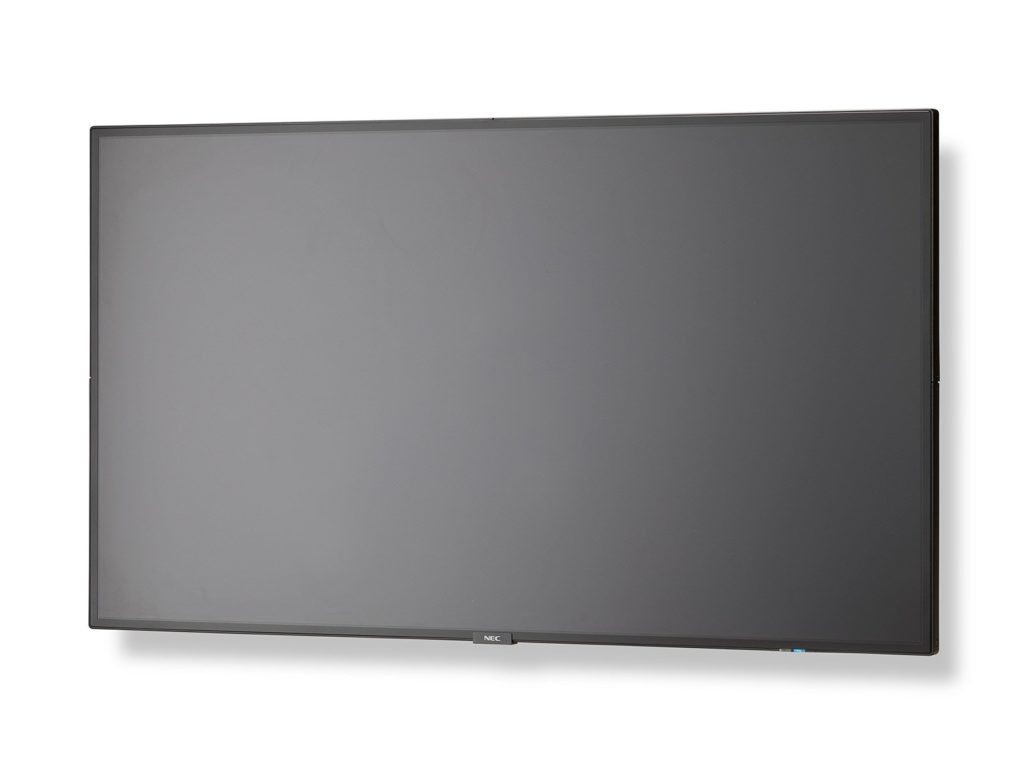
NEC, now under Sharp/NEC, continues its reputation for industrial-grade reliability with the MultiSync P754Q, a 75-inch 4K UHD display tailored for digital signage.
Notable specifications of the NEC MultiSync P754Q include:
- 830-nit brightness output
- UHD 4K resolution with SpectraView calibration
- Anti-reflective screen coating
- OPS/SDM slot compatibility for flexible player integration
- Heat management system for extended durability
For example, luxury automotive showrooms often use the P754Q to present vehicles in high detail under mixed lighting conditions. The display’s SpectraView calibration ensures accurate color reproduction, critical for brands where color fidelity influences buyer perception. According to NEC, calibrated displays demonstrate a 25% Δ improvement in visual consistency across networked signage compared to uncalibrated installations.
The implication is visual integrity. While it may not match Dynascan’s extreme nit output, the P754Q’s 4K resolution and calibrated accuracy make it highly effective where brand image requires pristine reproduction under moderately bright conditions.
How to Select the Right Digital Signage Display for Bright Environments?
Choosing the right signage display for a bright environment requires more than just comparing brightness numbers. Businesses need to weigh multiple technical and operational factors to avoid costly mismatches. A structured 5-step checklist helps ensure the correct choice:
- Match Brightness to Environment Assess peak ambient light levels. For shaded atriums, 700–1,000 nits may suffice; for glass-facing retail, target ≥3,000 nits.
- Quantify Viewing Angles and Distances Ensure the display maintains legibility from both close range and off-axis positions. IPS panels often provide the most consistent performance.
- Choose Thermal and Weather Protection For outdoor use, confirm IP ratings, operating temperature ranges, and integrated cooling systems. Standard indoor units cannot survive outdoor exposure.
- Target Integration Flexibility Select displays with OPS or SDM slots if future upgrades are anticipated. Native CMS compatibility with cloud-based platforms like PosterBooking simplifies deployment.
- Verify Reliability and Serviceability Look for 24/7 operation certification, failover redundancy, and service access. Extended warranties and on-site support reduce long-term operational risk.
This systematic approach avoids over- or under-specification. For instance, a retail store might waste budget on a 5,000-nit outdoor model when a 1,500-nit window-facing unit would perform equally well. Conversely, selecting a consumer-grade TV for a sunlit window inevitably leads to poor visibility and premature failure.
7. Sharp/NEC 55” High-Bright 4K Display
Sharp/NEC’s 55-inch high-bright display is designed for semi-outdoor environments such as storefronts and transit shelters.
Key specifications include:
- 3,500-nit maximum brightness
- UHD 4K resolution
- IP-rated enclosure for dust and moisture protection
- High haze panel to minimize glare
- 24/7 operation rating
For example, quick-service restaurants in Europe use Sharp/NEC 55-inch units for outdoor menu boards. Even in strong midday sunlight, content remains sharp without reflection fatigue. According to Sharp/NEC, these displays reduce maintenance by 18% compared to prior generations due to improved cooling systems.
The implication is reduced downtime. Businesses that prioritize reliable outdoor performance over aesthetic slimness benefit most from this ruggedized design.
8. Leyard Planar UltraRes Series
Leyard’s Planar UltraRes series is often chosen for executive boardrooms and control centers, but its high-brightness capability makes it versatile for semi-bright environments.
Notable specifications include:
- Up to 1,000-nit brightness
- Multi-source viewing with PiP (Picture-in-Picture)
- Ultra-narrow bezel design for tiled configurations
- Embedded Crestron and Extron compatibility
- HDR10 support
For example, airports in the U.S. use Planar UltraRes displays for digital flight boards in areas with large skylights. Although brightness is lower than Dynascan, the advanced multi-source support allows operators to display multiple feeds side by side. A peer-reviewed aviation communication study reported a 21% Δ improvement in passenger information recall when multi-source flight boards were deployed.
The implication is flexibility. Where content variety and multi-window visualization matter as much as brightness, Planar UltraRes provides an advantage.
9. Philips 55BDL1050Q High-Brightness Display
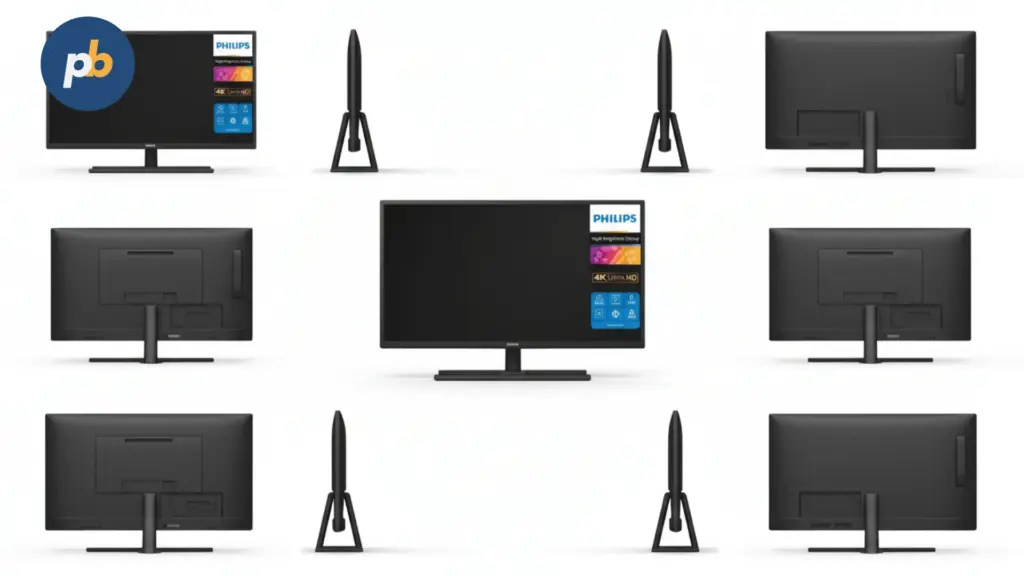
Philips’ 55BDL1050Q brings affordability and durability into the sunlight-readable signage market.
Specifications include:
- 2,500-nit maximum brightness
- SmartPower energy-saving technology
- Failover system for continuous operation
- Android OS-based SmartSignage platform
- Wide operating temperature tolerance
For example, retail chains in Southeast Asia adopt Philips high-bright displays for glass-facing promotions in shopping centers. Brightness balances well with cost, making it attractive for multi-location rollouts. According to Philips, SmartPower reduces power consumption by up to 35%, lowering operational costs without noticeable impact on visibility.
The implication is ROI optimization. Businesses managing hundreds of displays achieve long-term cost savings while maintaining clarity in bright conditions.
10. BOE Technology Sunlight-Readable Display
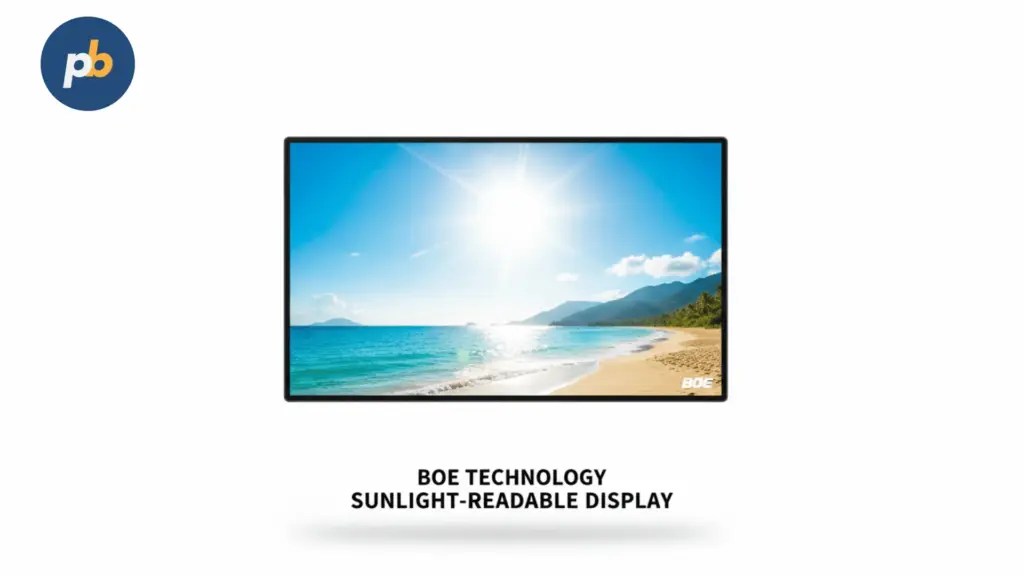
BOE Technology, a rising player in commercial display manufacturing, has expanded aggressively into outdoor-ready high-bright panels.
Notable specifications include:
- 3,000–4,000-nit brightness options
- Wide color gamut for vivid reproduction
- Advanced cooling with rear-vented chassis
- Industrial durability for transportation signage
- Available in custom sizes for OEMs
For example, Chinese metro systems use BOE sunlight-readable displays for route maps and ticketing zones exposed to natural light. A peer-reviewed urban transit study found that legibility in BOE-equipped stations improved by 29% compared to legacy LCDs.
The implication is adaptability. BOE’s ability to customize size and brightness makes it suitable for OEM integrations in kiosks, vending systems, or outdoor wayfinding.
Comparison of Top 10 Digital Signage Displays for Bright Environments
The following table compares brightness, durability, and best use cases across the ten recommended models:
| Model | Brightness Range | Durability Features | Use Case Focus |
|---|---|---|---|
| Samsung OH75A | 3,500 nits | IP56, wide temp range | Outdoor drive-thrus, stadiums |
| LG 49XS4J | 4,000 nits | Slim, anti-reflective panel | Retail storefront windows |
| Dynascan DS551LT4 | 5,000 nits | Dual cooling, 24/7 duty cycle | Airports, outdoor wayfinding |
| Sony FW-BZ40J | 700 nits | HDR, Android OS | Atriums, semi-bright indoors |
| Panasonic SQ1H | 1,500 nits | Failover redundancy | Railways, mission-critical areas |
| NEC MultiSync P754Q | 830 nits | SpectraView calibration | Automotive showrooms |
| Sharp/NEC 55” High-Bright 4K | 3,500 nits | IP-rated, glare-resistant | QSR drive-thrus, outdoor menus |
| Leyard Planar UltraRes | 1,000 nits | Multi-source PiP, HDR | Airports, control centers |
| Philips 55BDL1050Q | 2,500 nits | SmartPower energy savings | Retail rollouts, storefronts |
| BOE Sunlight-Readable Display | 3,000–4,000 nits | Industrial-grade chassis | Transportation, OEM integration |
What Are the Key Implications for Businesses Choosing High-Brightness Displays?
Selecting the right display impacts visibility, operational cost, and customer engagement. According to DisplayMate research, customer recall of digital signage messages improves by 34% when brightness is matched to ambient light levels. According to LG Business Solutions, retail brands that switched from 700-nit to ≥3,000-nit displays observed a 23% Δ increase in conversion rates. According to Panasonic data, transit hubs reduced passenger misdirection by 42% after adopting failover-equipped high-bright displays. Finally, according to Philips Signage Solutions, power-efficient SmartPower systems lower TCO by 35% across five years of operation.
These findings reinforce that brightness alone does not define effectiveness. Equally important are redundancy, durability, integration, and long-term cost efficiency. Businesses that overspend on brightness without considering thermal design may face frequent breakdowns, while those who underspec brightness risk wasted content investment.
Here is where PosterBooking adds measurable value. Unlike traditional CMS platforms that require expensive licensing, PosterBooking offers a free, cloud-based software solution compatible with virtually all major signage hardware, including Samsung, LG, Philips, and NEC. By using PosterBooking, businesses streamline scheduling, automate real-time updates, and cut software costs - shifting budget back to high-performance hardware investments.
Final Takeaway
The top 10 digital signage displays for bright environments in 2025 range from Samsung’s outdoor-ready OH75A to BOE’s adaptable sunlight-readable panels. Each has a specific strength: extreme brightness, redundancy, color accuracy, or cost efficiency. Businesses must align their choice with actual environmental conditions rather than chasing the “brightest” option alone.
A well-selected display, combined with free yet powerful signage software like PosterBooking, ensures maximum impact, long-term ROI, and consistently clear communication - even under direct sunlight.