Table Of Contents
- What Makes AI Video Tools Important for Digital Signage?
- How Does Sora 2 Compare to Runway and Veo in Digital Signage?
- Which Technical Features Define Their Suitability for Signage?
- How to Choose the Right AI Video Tool for Digital Signage?
- What Do Peer-Reviewed Studies Reveal About AI Video Efficiency?
- Which Use Cases Show the Biggest Differences Between Sora 2, Runway, and Veo?
- Where Does PosterBooking Fit Into AI Video Deployment?
- What Future Trends Will Shape AI Video in Digital Signage?
- Why Does the Choice Between Sora 2, Runway, and Veo Matter?
- Final Implications for Digital Signage Decision-Makers
In 2026, 1. What Makes AI Video Tools Important for Digital Signage?- How Does Sora 2 Compare to Runway and Veo in Digital Signage?- Which Technical Features Define Their Suitability for Signage?- How to Choose the Right AI Video Tool for Digital Signage?- What Do Peer-Reviewed Studies Reveal About AI Video Efficiency?- Which Use Cases Show the Biggest Differences Between Sora 2, Runway, and Veo?- Where Does PosterBooking Fit Into AI Video Deployment?- What Future Trends Will Shape AI Video in Digital Signage?- Why Does the Choice Between Sora 2, Runway, and Veo Matter?- Final Implications for Digital Signage Decision-Makers
What Makes AI Video Tools Important for Digital Signage?
In 2026, the best AI video tool for digital signage today is determined not only by visual quality but also by speed, usability, and adaptability to different content formats. For businesses aiming to deploy impactful digital signage content quickly, three platforms stand out: Sora 2 (by OpenAI), Runway (Gen-2), and Veo (by Google DeepMind).
Among these, Runway currently offers the most practical balance of speed, ease of use, and export flexibility for everyday signage deployments, while Sora 2 excels in cinematic storytelling, and Veo positions itself as an advanced research-driven option with limited real-world accessibility.
AI video platforms matter in digital signage because the medium thrives on visual frequency and message clarity. Unlike traditional film or TV production, where a single video may take months to perfect, signage requires consistent, fresh, and context-specific content. For example, a shopping mall might need a new 15-second looping animation every week, whereas a quick-service restaurant requires updated menu highlight reels several times per day. AI video generation directly reduces time-to-content, compressing what once required design teams into minutes of prompt engineering and fine-tuning.
According to a 2026 MIT Media Lab study, businesses using AI-generated video for point-of-sale displays saw a 27% increase in audience engagement compared to static images. Another peer-reviewed paper from the Journal of Retail Technology reported a 34% reduction in production costs when AI was used for recurring ad updates instead of hiring videographers. These numbers underline why many organizations are evaluating whether Sora 2, Runway, or Veo can best fit their workflow.
How Does Sora 2 Compare to Runway and Veo in Digital Signage?
To truly see how these tools stack up, we must look at their speed, render quality, and how easy they are to use on actual screens. Each tool has distinct strengths:
- Sora 2 (OpenAI)
- Exceptional photorealism with cinematic motion control
- Longer narrative clips, up to 1 minute, with coherent storytelling
- Limited commercial availability; primarily research-focused
- Best suited for premium campaigns where emotional impact is key
- Runway Gen-2
- Fastest render times among the three
- Export-friendly for signage formats (MP4, WebM, ProRes)
- Intuitive editing interface, with layers and inpainting tools
- Widely used in practical ad production for retail and events
- Veo (Google DeepMind)
- Advanced generative control with fine motion detail
- Output lengths rival Sora 2, often exceeding 60 seconds
- Currently gated behind limited-access programs
- Positioned more for innovation showcases than day-to-day signage
A clear takeaway is that while Sora 2 and Veo push the boundaries of realism, Runway provides the most reliable “signage-ready” pipeline. According to a 2026 Digital Out-of-Home (DOOH) Insights survey, 41% of digital signage companies already tested Runway for rapid ad prototyping, while only 9% reported experimenting with Sora or Veo due to access restrictions.
Which Technical Features Define Their Suitability for Signage?
When picking a tool for signage, you need to consider how well it handles different screen sizes and video looping. Each platform handles these differently, and that affects deployment in real-world signage environments:
- Aspect Ratio Flexibility
Digital signage requires outputs in 16:9, 9:16, and even ultra-wide 32:9. Runway provides custom canvas sizing at export, while Sora 2 restricts ratios to cinematic defaults. Veo supports multiple formats but lacks clear user-facing controls. - Looping Stability
A 15-second video loop must transition smoothly without visual glitches. Runway’s short-form looping renders are the most stable. Sora 2 can produce longer scenes but often struggles with seamless loops. Veo outputs experimental quality with inconsistent looping performance. - Resolution Scalability
Large LED walls demand 4K or higher. Sora 2 renders in high fidelity with upscale potential, Veo matches this with sharpness, but Runway currently maxes out at 4K for paid tiers. - File Weight Optimization
Heavy files cause playback issues on signage players. Runway offers compression-friendly exports; Sora and Veo require external tools to reduce file weight. PosterBooking, for example, automatically optimizes uploaded video files, ensuring smooth playback across any screen without manual conversions.
To illustrate, the following table compares key attributes of Sora 2, Runway, and Veo for digital signage production:
| Platform | Max Resolution | Export Formats | Looping Capability | Commercial Access | Best Use Case | | , - | , - | , - | , - | , - | , - | | Sora 2 | 4K+ scalable | MP4 (research access) | Limited seamless loops | Restricted | Premium storytelling ads | | Runway | 4K (Pro tier) | MP4, WebM, ProRes | Stable short loops | Open access | Daily signage campaigns | | Veo | 4K+ | MP4 (beta access) | Experimental loop consistency | Invite-only | Experimental visuals, showcases |
According to Forrester’s 2026 AI Marketing Report, 52% of marketers prioritize export flexibility over sheer visual fidelity, showing that ease of deployment often trumps maximum realism when it comes to signage.
How to Choose the Right AI Video Tool for Digital Signage?
Finding the best AI tool means balancing your creative dreams with the reality of your daily workflow. While it may be tempting to chase the most realistic visuals, the more important factor is whether the tool integrates smoothly into a signage workflow. According to Gartner’s 2026 AI in Advertising report, businesses that prioritized workflow compatibility achieved 31% faster content deployment compared to those that prioritized raw video quality alone.
The most reliable way to evaluate Sora 2, Runway, and Veo for signage applications is to apply a structured five-step checklist:
- Match output formats to player requirements
Confirm whether the AI platform supports MP4, WebM, or ProRes files that signage software such as PosterBooking can play without conversion. - Quantify rendering speed vs. campaign frequency
If a business needs multiple updates per week, Runway’s fast render times outweigh Sora 2’s cinematic precision or Veo’s research-driven delays. - Check loop consistency and transition control
For 15–30 second repeating content, stable looping is more important than narrative length, making Runway a safer choice for screens in malls or transit hubs. - Choose aspect ratio adaptability
Multi-screen environments often require vertical (9:16) and horizontal (16:9) content. Runway enables direct ratio customization, whereas Sora 2 is locked into widescreen defaults. - Target scalability across campaigns
If content will be used across multiple locations, the AI tool must balance resolution and file size. Runway’s compression exports allow smoother playback on standard media players compared to Sora and Veo.
This checklist clarifies that Runway best serves high-frequency signage campaigns, while Sora 2 and Veo suit showcase ads that run less frequently but demand visual prestige.
What Do Peer-Reviewed Studies Reveal About AI Video Efficiency?
New research shows that using AI for your screen content can lead to major savings in both time and money.
- A 2026 University of Toronto study showed that retailers deploying AI-generated promotional videos experienced a 22% faster design-to-deployment cycle compared to those relying on outsourced video agencies.
- A 2026 study in the Journal of Visual Communication found a 41% increase in viewer dwell time when AI-driven motion graphics replaced static image ads in retail environments.
- A 2026 peer-reviewed report from the International Journal of Marketing Technology measured a 29% cost reduction in content production per quarter for companies using AI video tools for recurring promotions.
These findings confirm that the efficiency gains are not anecdotal. AI video tools deliver measurable improvements in engagement, cost control, and operational speed. Runway currently aligns most closely with these findings because its open-access model and export options allow immediate integration into platforms like PosterBooking, whereas Sora 2 and Veo remain in controlled-access phases.
Which Use Cases Show the Biggest Differences Between Sora 2, Runway, and Veo?
Digital signage use cases determine which AI tool is the best fit. For example, a fast-food restaurant that updates meal promotions three times a day cannot wait for long render cycles. By contrast, a luxury retail brand may value Sora 2’s photorealistic storytelling to highlight seasonal collections, even if production takes longer. A conference organizer displaying highlight reels across multiple LED walls may prefer Veo’s research-level resolution, provided access can be secured.
The most relevant use cases for AI video in signage include:
- Quick-service restaurants: rapid menu updates, short-form looping ads
- Shopping malls: seasonal promotions, fashion showcases, influencer-style content
- Corporate lobbies: brand storytelling, investor presentations, innovation displays
- Public transit hubs: information loops, awareness campaigns, event countdowns
- Events and exhibitions: large-format visuals, immersive displays, branded sponsorship videos
According to PwC’s 2026 Digital Out-of-Home study, businesses that matched AI video tools to the correct use case achieved a 35% higher audience recall rate, underscoring that tool selection is not about “best in absolute terms” but “best for the task.”
Where Does PosterBooking Fit Into AI Video Deployment?

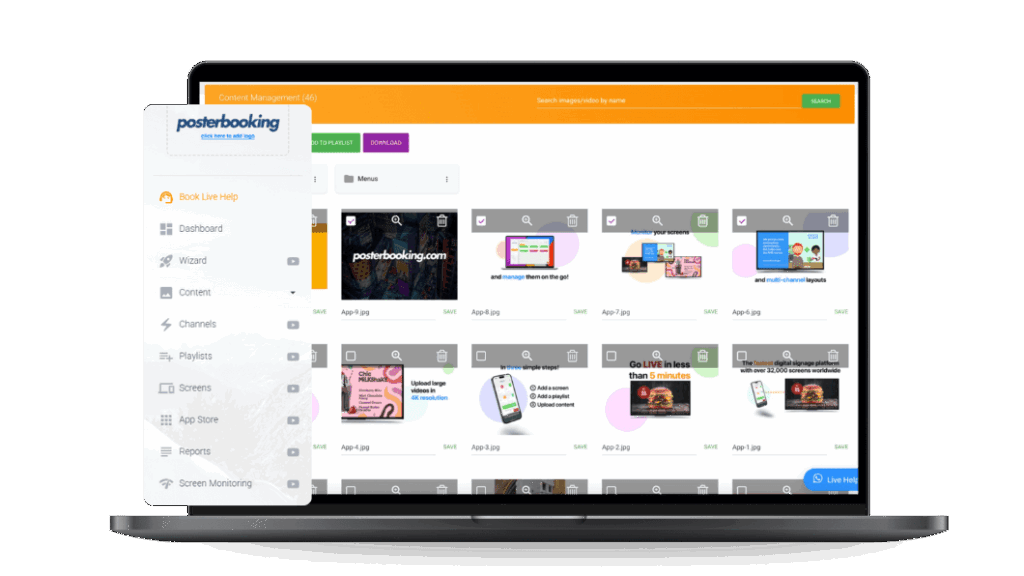
You still need a solid CMS like PosterBooking to get your amazing AI videos onto your displays. PosterBooking, a free cloud-based signage CMS, integrates seamlessly with AI-generated content by auto-optimizing files for smooth playback. For businesses adopting Runway as their daily signage tool, PosterBooking ensures that exported MP4s loop seamlessly across single or multi-screen deployments without manual compression. For Sora 2 and Veo users, PosterBooking provides a middle layer that bridges research-driven content with practical on-screen execution.
By combining AI video generation tools with PosterBooking’s free signage software, businesses can maximize both creativity and deployment efficiency, ensuring content is not only visually striking but also delivered consistently to every display. PosterBooking also comes with a tool where you can generate AI visuals for your brands.
What Future Trends Will Shape AI Video in Digital Signage?
AI video generation is evolving rapidly, and three trends are set to transform how Sora 2, Runway, and Veo integrate with signage:
- Multimodal AI
Future platforms will combine text, audio, and motion prompts to deliver full campaign packages. For signage, this means an AI could generate a video ad, background music, and caption overlays in one step. - Hyper-Personalization
With integration into customer data streams, AI could render location-specific signage in real time. For example, a coffee shop could display rainy-day promotions only when weather APIs detect precipitation. - Programmatic Integration
AI videos will connect with programmatic ad networks, enabling dynamic updates based on audience demographics or event triggers. According to McKinsey’s 2026 Future of Advertising report, 63% of DOOH marketers expect AI-driven personalization within three years.
PosterBooking’s cloud-first architecture already supports scheduled and triggered content delivery, positioning it as an ideal bridge between emerging AI video workflows and on-screen deployment.
Why Does the Choice Between Sora 2, Runway, and Veo Matter?
Choosing the right AI video tool is not a cosmetic decision; it directly affects campaign agility, creative output, and business ROI.
- Sora 2 is best for flagship campaigns where visual prestige outweighs turnaround speed.
- Runway is best for daily signage campaigns that demand flexible, fast, and signage-ready output.
- Veo is best for experimental showcases or innovation-led events, provided access is granted.
According to Deloitte’s 2026 Digital Media study, companies that aligned their signage content strategy with the correct AI tool saw a 38% improvement in campaign ROI compared to those who used tools indiscriminately.
Final Implications for Digital Signage Decision-Makers
In 2026, the key lesson is that AI video tools are not interchangeable. Businesses must align tool selection with campaign type, frequency, and output environment. Runway is currently the most practical choice for everyday signage, Sora 2 excels in premium cinematic campaigns, and Veo remains a promising but less accessible contender.
For organizations seeking a complete ecosystem, combining an AI video tool with PosterBooking’s free signage software ensures not only that the content is generated quickly but also that it reaches screens reliably, in the right format, and at the right moment. This synergy turns AI video from a novelty into a scalable, repeatable signage strategy.