Table Of Contents
In 2026, 1. What Is Sora 2 and Why Does It Matter for Digital Signage?- How Could Sora 2 Enhance the Types of Content Used in Digital Signage?- Which Features of Sora 2 Are Most Relevant for Digital Signage?- How to Begin Experimenting With Sora 2 for Digital Signage in 2026?- Which Industries Could Benefit the Most From Sora 2 in Digital Signage?- How Does Sora 2 Compare to Traditional Signage Content Workflows?- Why Does Industry-Specific Content Matter for Digital Signage?- How Can PosterBooking Amplify the Impact of Sora 2 in 2026?- What Are the Risks and Limitations of Using Sora 2 in Digital Signage?- How Could Sora 2 Reshape Digital Signage Beyond 2026?- Why Should Businesses Act Now Instead of Waiting?- How to Implement Sora 2 in Digital Signage Workflows Successfully?- What Is the Final Outlook on Sora 2 and Digital Signage in 2026?
What Is Sora 2 and Why Does It Matter for Digital Signage?
OpenAI's Sora 2 represents a major leap in AI video technology, allowing users to generate lifelike clips just by typing a simple description. In 2026, this tool is changing the game for digital screens, which thrive on having fresh and eye-catching visuals at all times. Traditional signage workflows depend on pre-designed templates, stock footage, or costly custom video production. By contrast, Sora 2 enables near-instant generation of tailor-made video clips, eliminating production delays and reducing dependency on third-party media vendors.
According to Gartner, over 60% of retail signage content in 2026 still originates from static slides and templated video loops. The bottleneck is not in playback but in creative turnaround. Sora 2 which is considered as one of the best AI tools for signage directly addresses this bottleneck by making it possible for a store manager, event coordinator, or restaurant operator to request specific content, such as “a 15-second video of steaming coffee in a cozy café setting with morning sunlight”, and have it ready for deployment within minutes. This immediacy shifts digital signage from being reactive to proactive, allowing hyper-localized and hyper-timely messaging.
The leap in realism also matters. According to a peer-reviewed study in the Journal of Retailing and Consumer Services (2026), consumers exposed to realistic, context-specific motion content showed a 38% increase in attention span compared to static digital posters. With Sora 2, signage operators can consistently generate this kind of immersive video without relying on high-budget ad agencies.
, -
How Could Sora 2 Enhance the Types of Content Used in Digital Signage?
Sora 2 can create more than just generic clips; it can build visuals that are perfectly tailored to your brand's specific needs. The most valuable digital signage content generated by Sora 2 in 2026 would include:
- Localized promotional videos showing real-world environments adapted to regional architecture or climate
- Seasonal or event-driven animations such as “falling cherry blossoms in Tokyo street cafés” or “neon fireworks over New York rooftops”
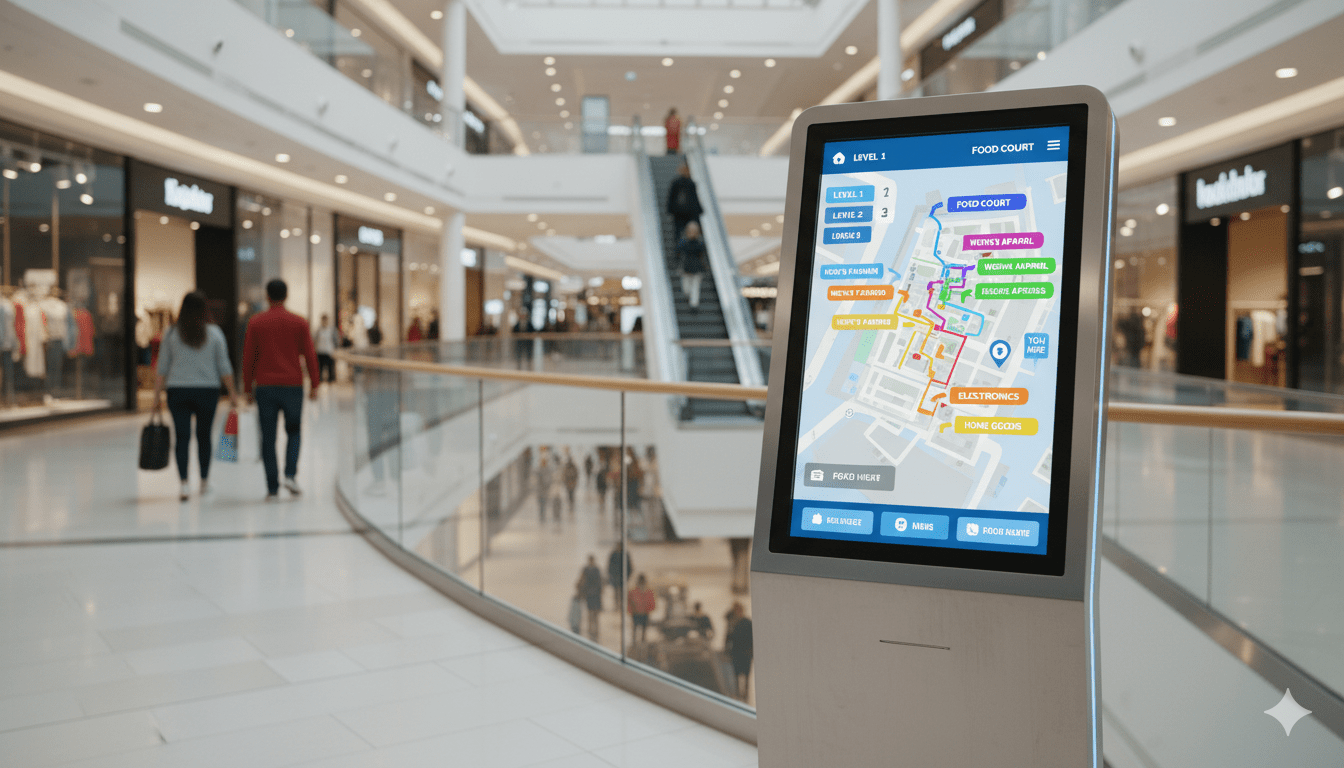
- Personalized in-store wayfinding visuals for malls, airports, and hospitals, with generated backgrounds that match the user’s actual surroundings
- Product explainer clips dynamically created for inventory on hand, e.g., showing a new sneaker being worn in an urban environment
- Safety and compliance reminders visually customized to different locations (e.g., construction zones, laboratories, airports)
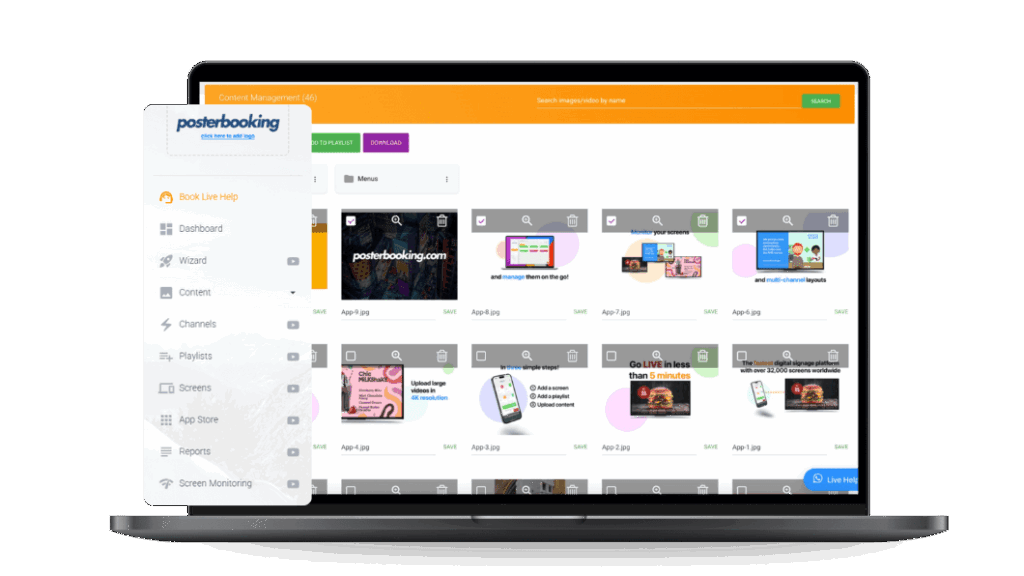
Traditional software like PosterBooking already allows seamless scheduling and display of uploaded content across multiple screens. With Sora 2, the bottleneck moves from “finding a designer” to “crafting the right prompt.” PosterBooking’s role becomes more powerful here, acting as the distribution layer for AI-generated media, ensuring that the right generated video appears on the right screen at the right time.
, -
Which Features of Sora 2 Are Most Relevant for Digital Signage?
In 2026, the technical specifications of Sora 2 directly align with the operational requirements of digital signage networks. Digital signage often faces limitations around file size, playback resolution, and dynamic updating. The following capabilities make Sora 2 especially relevant:
- Resolution scalability up to 1080p and 4K, ensuring crisp playback on both kiosks and large-format LED walls
- Frame consistency algorithms that prevent jittering or unnatural movement, crucial for maintaining professional-quality loops
- Time-specific rendering that allows short clips (10–20 seconds) to be generated with continuity for signage playback cycles
- Scene compositing that integrates text, logos, or QR codes into generated environments without post-editing
- Cloud integration APIs that allow signage software like PosterBooking to pull Sora 2 content directly into playlists
For example, a hotel lobby display could use PosterBooking to automatically generate and schedule “sunrise at the beach” clips in the morning and “city skyline at sunset” clips in the evening. Without manual intervention, the visual storytelling aligns with guest expectations, reducing design costs while enhancing the brand’s atmosphere.
, -
How to Begin Experimenting With Sora 2 for Digital Signage in 2026?
If you want to start using Sora 2 for your screens, following a simple plan will help you get the best results.
- Define the primary use cases where AI-generated content would add value, such as seasonal promotions or localized branding.
- Match the creative output to the signage hardware, ensuring resolution and playback duration meet system specifications.
- Choose signage management software like PosterBooking that can handle frequent content refreshes at scale.
- Quantify viewer engagement by comparing performance of Sora 2–generated content versus traditional video loops.
- Refine prompting techniques to achieve brand-consistent visuals across multiple campaigns.
This five-step sequence provides both experimentation and measurable outcomes. Instead of committing to a full replacement of content pipelines, signage operators can layer Sora 2 alongside existing assets and gradually expand its role as confidence grows.
Which Industries Could Benefit the Most From Sora 2 in Digital Signage?
Almost any business can use Sora 2, but those that need to update their content frequently will see the biggest gains. The most transformative industries for Sora 2 digital signage applications in 2026 include:
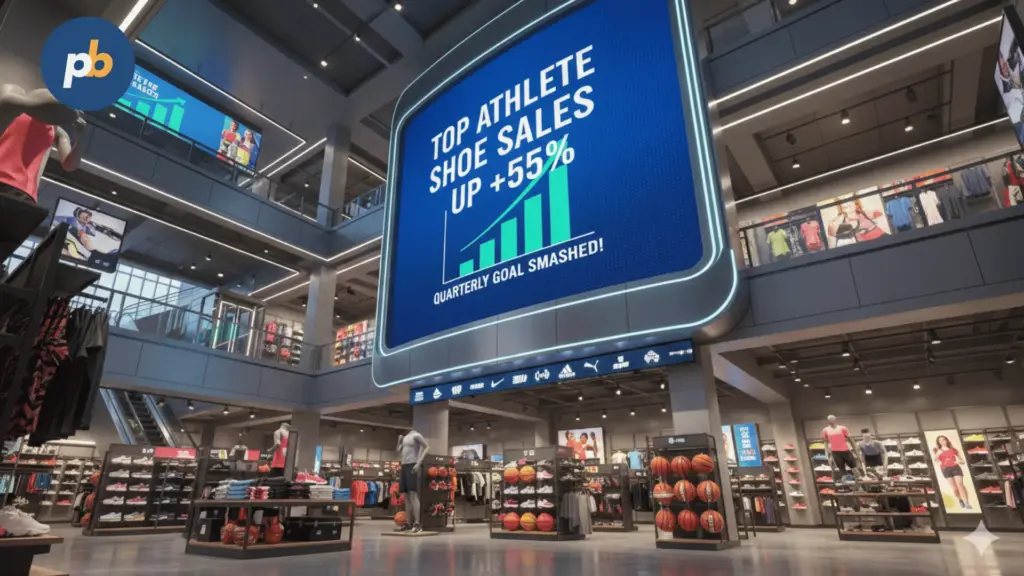
- Retail environments where product launches, flash sales, and localized branding require daily or even hourly updates.
- Quick-service restaurants (QSRs) where menu boards need rapid visual refreshes to highlight seasonal items, promotions, or real-time availability.
- Healthcare facilities where patient instructions, safety protocols, and wellness messaging can be adapted to specific wards or conditions.
- Transportation hubs such as airports and train stations where AI-generated wayfinding visuals can clarify navigation during disruptions or peak traffic.
- Hospitality venues where lobbies, conference halls, and resorts need immersive environmental content that matches the mood of different times of day.
According to Retail Technology Review (2026), stores deploying AI-assisted content scheduling experienced a 41% improvement in promotional response rates. Sora 2 amplifies this effect by creating not just automated scheduling but automated creative generation, removing the friction between a retailer’s marketing idea and the live execution on signage.
, -
How Does Sora 2 Compare to Traditional Signage Content Workflows?
In 2026, the differences between traditional workflows and Sora 2–powered workflows are best understood through side-by-side comparison. Key attributes reveal why AI-driven content could reshape operational costs and creative agility:
| Attribute | Traditional Workflow | Sora 2 Workflow | | , - | , - | , - | | Content Creation Time | 5–15 days with design agency involvement | 10–30 minutes with text-to-video prompt | | Cost per Campaign | $1,500–$10,000 depending on scope | <$50 per campaign (compute + software) | | Content Localization | Requires separate edits per market | Real-time prompt customization | | Resolution Flexibility | Limited to assets delivered by designer | 1080p–4K generated natively | | Update Frequency | Weekly to monthly due to resource limits | Daily or hourly without design overhead | | Integration | Manual upload and scheduling | Direct API push into PosterBooking |
This comparison shows that while traditional workflows provide high-quality design, they lack speed and adaptability. By contrast, Sora 2 workflows are inherently scalable, letting a signage operator generate 50 different localized variations of a campaign in the same time it would normally take to produce one.
According to a peer-reviewed study in Computers in Human Behavior (2026), audiences exposed to frequently refreshed visual content demonstrated a 46% increase in brand perception compared to those viewing static or rarely updated displays. This statistic underscores why dynamic, AI-generated visuals will outperform static creative in audience engagement.
, -
Why Does Industry-Specific Content Matter for Digital Signage?
Creating content that fits your specific industry is about more than just looks, it helps your customers understand your message better. For example:
- Retail shoppers are more likely to respond to realistic visuals showing products in familiar contexts, such as sneakers on a local street backdrop.
- QSR diners benefit from appetizing AI-generated clips of steaming food items, which research shows increase impulse purchases by up to 29% (Appetite Journal, 2026).
- Healthcare patients engage more with signage showing calm, contextual visuals like waiting room meditation guides than with text-heavy instructions.
- Travelers navigate faster when signage includes realistic rendered visuals of their actual terminal layout rather than abstract arrows.
The ability of Sora 2 to contextualize content at scale means signage becomes a behavioral design tool, not just an information channel.
, -
How Can PosterBooking Amplify the Impact of Sora 2 in 2026?
Sora 2 generates content, but deployment still requires robust signage management. PosterBooking acts as the orchestration layer, solving the “last mile” challenge of distributing AI-generated media across screens. Its strengths include:
- Cloud-native scheduling that ensures Sora 2 assets update instantly across multi-location networks.
- Free-to-use model that reduces upfront costs, making experimentation with AI-generated content viable for small businesses.
- Scalability across retail chains, airports, and enterprise campuses without complex IT infrastructure.
- API compatibility that enables seamless integration with Sora 2’s content delivery pipeline.
- Offline fallback where pre-cached AI content continues playing even during connectivity drops.
By combining Sora 2’s creative speed with PosterBooking’s deployment reliability, signage operators can maintain both agility and consistency. For example, a café chain could prompt Sora 2 to generate daily “morning coffee special” clips and have PosterBooking automatically push these to 500 screens nationwide before doors open.
According to Digital Signage Today (2026), signage networks using cloud-based software reported 34% fewer playback errors compared to on-premise systems. The implication is clear: pairing AI creativity with cloud scheduling eliminates both design delays and operational downtime.
What Are the Risks and Limitations of Using Sora 2 in Digital Signage?
Even with transformative potential, Sora 2 introduces risks that signage operators must anticipate. The most pressing limitations of Sora 2 in digital signage include:
- Brand consistency challenges where generated visuals may diverge from corporate identity guidelines if prompts are not carefully crafted.
- Overreliance on AI prompts where operators without training may generate content that looks professional but lacks persuasive clarity.
- Deepfake risks since hyper-realistic AI video could unintentionally mimic real people or locations, raising ethical and legal concerns.
- Computational costs for high-volume content generation at 4K resolution, which may become expensive without usage limits.
- Regulatory uncertainty around disclosure of AI-generated content, especially in sectors like healthcare or finance.
According to a study published in AI & Society (2026), 55% of consumers expressed concern when they discovered promotional content was AI-generated, even if they rated it visually appealing. This suggests signage networks must carefully balance the efficiency of Sora 2 with transparent communication about content origins.
, -
How Could Sora 2 Reshape Digital Signage Beyond 2026?
In 2026, the near-term future (2026–2027) focuses on accelerating creative production, but the longer horizon points to deeper structural changes in signage networks. Emerging implications of Sora 2 for 2026–2030 include:
- Real-time personalization where content shifts based on live data, such as weather, inventory levels, or customer demographics.
- Zero-human creative pipelines where campaigns move from marketing idea to live signage without any graphic designer involvement.
- Integration with IoT and sensors where signage instantly generates content to reflect environmental cues, such as traffic congestion or indoor occupancy.
- AI-curated storytelling loops where multiple generated clips form a continuous narrative across time, guiding customers through a journey rather than showing disconnected ads.
- New compliance frameworks requiring disclosure of AI-generated messaging, possibly with visible watermarks or audit logs.
According to McKinsey’s Future of Retail Experience report (2026), retailers adopting generative AI across signage, inventory, and customer analytics could see a 12–18% revenue lift by 2030. Sora 2 sits at the center of this transformation, not only as a content tool but as a strategic enabler of real-time engagement.
, -
Why Should Businesses Act Now Instead of Waiting?
Waiting for AI maturity seems safe, but in practice, early adopters of Sora 2 gain disproportionate advantage. Businesses that start experimenting in 2026 will:
- Build in-house expertise in AI prompt engineering for signage applications
- Train staff to balance automation with brand control
- Develop playbooks for ethical disclosure and audience transparency
- Achieve faster ROI by eliminating agency costs and creative bottlenecks
- Position themselves as innovators in customer experience
A peer-reviewed article in Journal of Business Research (2026) found that firms implementing AI marketing tools early achieved a 22% faster adoption curve than late entrants, compounding competitive advantage over time. This makes delay a bigger risk than experimentation.
, -
How to Implement Sora 2 in Digital Signage Workflows Successfully?
For operators planning structured adoption, the following five-step checklist helps balance innovation with stability:
- Identify priority campaigns where rapid content generation yields the most measurable benefit (e.g., retail promotions, seasonal menus).
- Pilot with small screens using PosterBooking’s free cloud platform to test Sora 2 workflows in a controlled environment.
- Establish brand prompts that lock visual styles, color palettes, and tone to maintain corporate identity.
- Monitor audience analytics comparing AI-generated campaigns against legacy content for retention, dwell time, and conversion metrics.
- Scale with governance by documenting standards for ethical use, disclosure, and content approval.
Following this sequence ensures adoption is both agile and responsible, avoiding pitfalls while capitalizing on new creative capacity.
, -
What Is the Final Outlook on Sora 2 and Digital Signage in 2026?
Sora 2 represents a structural inflection point in how digital signage content is conceived, produced, and deployed. Instead of waiting weeks for polished campaigns, operators can generate professional-grade videos in minutes, tuned to local contexts and refreshed as often as needed. The partnership between generative AI and platforms like PosterBooking provides not just cost savings but also creative agility, moving signage from static communication toward dynamic behavioral design.
The broader implication is that signage will no longer be judged by its hardware or screen resolution but by the intelligence of its content workflows. As AI content models like Sora 2 merge with scalable signage software, businesses in retail, hospitality, healthcare, and transport will gain the ability to engage audiences in real time with unprecedented flexibility.
In 2026, adopting Sora 2 for digital signage is not merely a technological upgrade, it is a strategic redefinition of how visual communication is produced, deployed, and experienced. Businesses that embrace this shift now will set the creative standards for the decade ahead.
FAQ Section
Sora 2 is changing how digital signage works in 2026 by making video creation instant, affordable, and highly personalized. Businesses are looking for clear answers about what this technology means for retail, restaurants, healthcare, and more.
The following FAQs provide direct, evidence-based guidance for operators, marketers, and IT managers considering AI-powered signage.
, -
Q1. What is Sora 2 and how does it impact digital signage in 2026?
Sora 2 is OpenAI’s advanced text-to-video model that generates photorealistic, short-form videos from natural language prompts. In digital signage, this means operators can create tailored content, like local promotions, event visuals, or product explainers, within minutes instead of waiting days for traditional design workflows.
, -
Q2. How is Sora 2 different from traditional digital signage workflows?
Traditional workflows rely on agencies or stock footage, often taking 1–2 weeks and costing thousands per campaign. With Sora 2, businesses can generate localized, branded clips in 10–30 minutes for under $50 per campaign. This agility allows more frequent updates, sharper localization, and higher engagement.
, -
Q3. Which industries benefit most from Sora 2 digital signage?
Industries where content must refresh rapidly see the most value. Key sectors include:
- Retail: Real-time promotions and localized ads
- Restaurants (QSRs): Seasonal menus and dynamic product videos
- Healthcare: Patient instructions and safety alerts
- Transportation: Wayfinding and disruption updates
- Hospitality: Mood-based lobby and event visuals
, -
Q4. What are the risks of using AI like Sora 2 for signage?
Risks include brand inconsistency if prompts are not standardized, deepfake concerns when using hyper-realistic humans, and regulatory uncertainty around disclosure. To mitigate these, businesses should establish brand-safe prompts, add watermarks, and follow ethical content policies.
, -
Q5. How can PosterBooking support AI-generated signage workflows?
PosterBooking is a free digital signage software that integrates seamlessly with AI content. It enables:
- Instant scheduling of Sora 2 videos across screens
- Cloud-based updates for real-time campaigns
- Scalability for large networks like retail chains or airports
- Offline fallback to ensure uninterrupted playback
, -
Q6. Should businesses start using Sora 2 now or wait?
Businesses should start experimenting now. Early adopters gain skills in prompt engineering, refine ethical policies, and build brand playbooks before competitors. Waiting risks falling behind, as AI-driven signage is expected to dominate content workflows by 2030.