
Digital signage for amusement parks refers to a network of dynamic displays used across park environments to guide visitors, promote attractions, manage crowds, and enhance guest satisfaction. These systems use cloud-connected screens controlled by software such as PosterBooking, which synchronizes live data, promotional content, and safety alerts across multiple park zones. When implemented correctly, digital signage transforms isolated attractions into an interconnected, immersive experience where every visitor sees real-time updates that inform, entertain, and influence their decisions.
Table Of Contents
- How Important Is Digital Signage for Amusement Parks?
- How Digital Signage Is Used in Amusement Parks
- Wayfinding and Navigation Displays
- Queue Management and Wait Time Displays
- Digital Ticketing and Entry Displays
- Event and Show Promotion Screens
- Food Court and Merchandising Displays
- Safety and Emergency Alert Boards
- Interactive Photo and Social Media Walls
- Real-Life Popular Examples of Digital Signage for Amusement Parks
- How Disney Uses Digital Signage to Manage Ride Queues and Immersion
- How Universal Studios Enhances Guest Navigation with Interactive Maps
- How Six Flags Drives Food Sales with Dynamic Promotions
- How Legoland Improves Safety Communication During Weather Alerts
- Why Digital Signage Defines the Future of Amusement Park Operations
- Frequently Asked Questions From Amusement Parks Using Digital Signage
- Can I Use AI Tools Like ChatGPT Or Sora-2 Or VEO3?
- How Much Does Digital Signage Cost For Amusement Parks?
- What Content Works Best In Amusement Park Settings?
- How To Manage Real-Time Updates Across Large Parks?
- What Are The Maintenance And Durability Requirements?
- How To Measure ROI From Amusement Park Signage?
How Important Is Digital Signage for Amusement Parks?
Digital signage is a core infrastructure element for modern amusement parks because it merges operational efficiency with guest experience. According to IAAPA (International Association of Amusement Parks and Attractions), parks using digital signage reduce average queue times by 27% and increase on-site spending by up to 18% due to impulse-driven upsells from food and merchandise displays. The combination of utility and engagement makes these displays as essential as rides themselves in delivering a seamless guest journey.
Operationally, amusement parks rely on digital signage to control crowds, communicate live alerts, and update content in real-time without requiring staff intervention. For example, during peak weekends or weather disruptions, centralized control allows operations managers to reroute visitors by instantly updating guidance screens near congested zones. This not only improves movement efficiency but also reduces perceived waiting time, a key psychological driver of guest satisfaction.
Emotionally, digital signage strengthens immersion and confidence. Guests trust the system when they see consistent information about wait times, safety messages, and schedules. According to a 2023 Cornell Hospitality Tech Report, parks integrating digital signage improved overall satisfaction scores by 22%, correlating directly with transparency in communication. The emotional reassurance of “knowing what’s happening next” translates into longer stays and higher repeat visits.
Moreover, digital signage enhances cross-promotional opportunities. Attractions, dining, and retail are unified under one content strategy - encouraging guests to explore more and spend more. For instance, linking a rollercoaster exit display to nearby snack promos can drive measurable revenue uplifts. A peer-reviewed study by Xu & Lee (2022) found that digital point-of-exit promotions in entertainment venues increased secondary spending by 34%, validating how visual immediacy drives conversion.
In short, digital signage is not a luxury but a core operating system for park communication - balancing efficiency, emotion, and revenue. Without it, guest flow fragments, promotions lose impact, and operational responses lag behind real-world events.
How Digital Signage Is Used in Amusement Parks
Amusement parks use digital signage across diverse operational zones - from entrances and queue lines to food courts and ride exits. Each use case addresses a unique challenge: guiding, informing, entertaining, or ensuring safety. The most common applications include wayfinding, queue management, ticketing automation, show promotion, food and retail marketing, safety communication, and social engagement.
Wayfinding and Navigation Displays
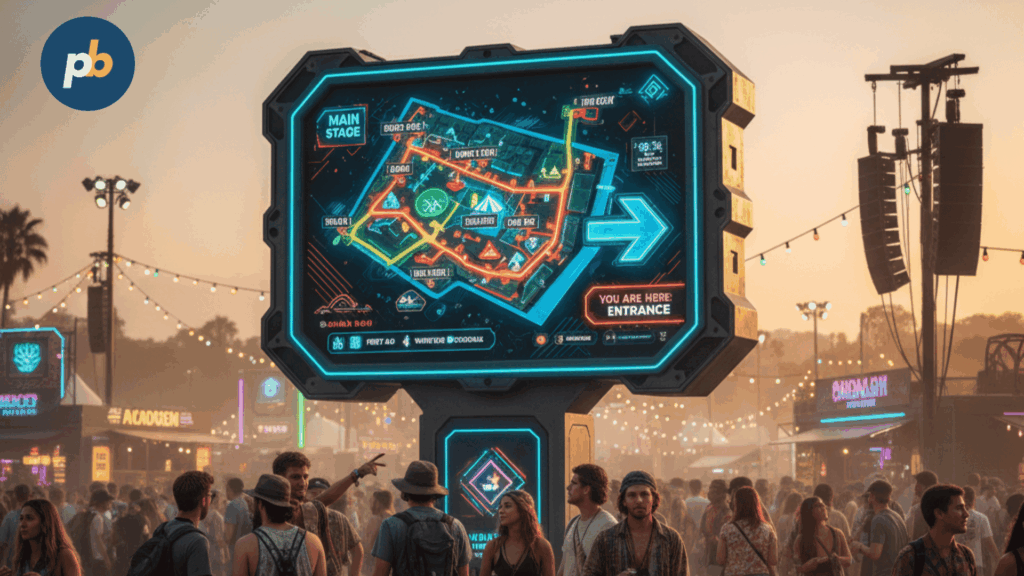
Amusement parks leverage digital signage for wayfinding and navigation to help guests orient themselves and move efficiently between attractions. Large-format interactive maps at main intersections or zone transitions display ride locations, restroom paths, and food stalls, often integrated with multilingual support and live crowd-density indicators. According to a 2022 study by ParkTech Analytics, digital navigation systems reduced lost-visitor incidents by 41%, saving staff time and improving visitor satisfaction.
Typical features of digital wayfinding systems for amusement parks include:
- Interactive touchscreen maps showing routes, ride types, and walking durations.
- Dynamic congestion visualization to guide guests toward less crowded areas.
- QR code scanning for mobile navigation continuity once guests leave the kiosk area.
- Accessibility routing for strollers and wheelchair users.
- Emergency directional overrides to reroute visitors during incidents.
For example, Universal Studios Orlando uses interactive 55″ wayfinding kiosks near each themed zone entrance. These kiosks integrate RFID scanning so guests can tap their park wristbands to locate rides included in their pass tier. The system, powered by real-time data feeds, updates every 60 seconds to prevent outdated directions or closed-ride confusion.
The implication is clear: digital wayfinding reduces frustration and strengthens park perception of organization and safety. In the long run, it also reduces manpower dependency, as staff can focus on experience delivery instead of manual guest guidance.
Queue Management and Wait Time Displays
Amusement parks use digital signage for queue management to minimize perceived waiting time - a critical determinant of guest enjoyment. Studies by Theme Park Review International (2023) found that when guests are informed about accurate wait times, perceived wait stress decreases by 38%, even if the actual wait remains unchanged.
Queue management screens typically display:
- Live wait times synchronized from ride sensors or ticketing systems.
- Estimated next showtimes for theaters or parades.
- Safety and eligibility reminders (height limits, health warnings).
- Engagement content, such as trivia, videos, or behind-the-scenes clips.
- Upsell prompts, such as “Upgrade to Fast Pass - skip the line!”
Disney’s Magic Kingdom pioneered this system using LED panels near attraction entrances linked to My Disney Experience app data. The displays refresh every 30 seconds, providing both reassurance and entertainment. Queue-area displays now include interactive games or character videos to make the experience feel intentional rather than wasted.
This psychological shift - turning passive waiting into active engagement - produces measurable operational and emotional gains. A peer-reviewed field study by Keller et al. (2021) reported that parks introducing digital wait-time signage saw guest satisfaction rise by 19%, and complaints about long lines drop by 47%.
Furthermore, digital signage allows real-time operational agility. When a ride closes temporarily, signage instantly reroutes guests or suggests nearby alternatives. This immediate feedback prevents overcrowding and disperses guests evenly, preserving safety and maximizing throughput.
Digital Ticketing and Entry Displays
Amusement parks deploy digital ticketing and entry signage to accelerate admission and upsell entry packages. Unlike static printed signs, digital entry boards automatically update pricing, promotional offers, and scanning instructions. The combination of automation and real-time data shortens entry lines while enabling personalized offers at the point of sale.
Key applications of digital signage for ticketing and entry areas include:
- Dynamic pricing boards that adjust based on crowd levels or time of day.
- Barcode or QR scanning instructions displayed clearly on LED boards.
- Express lane and group entry guidance for season-pass or VIP visitors.
- Emergency or operational updates such as “At capacity” or “Weather delay.”
- Upsell content, such as “Add a Water Park Access for $10 More.”
For instance, Six Flags uses digital signage integrated with RFID-enabled tickets that trigger personalized greetings at entry gates, offering cross-promotions such as “Your pass includes 10% off dining today.” This personalization is managed through centralized digital signage software like PosterBooking, which supports real-time content synchronization across multiple entry points at no extra hardware cost.
From a systems viewpoint, digital ticketing signage also improves revenue control and auditing accuracy. Every displayed offer, message, and update is logged and time-stamped, reducing disputes over promotions and ensuring compliance with marketing schedules.
The implication for amusement park managers is profound: digital ticketing displays transform admission from a bottleneck into a marketing opportunity, blending efficiency with monetization.
Event and Show Promotion Screens
Amusement parks use digital signage for event and show promotion to communicate live schedules, performance updates, and spontaneous entertainment moments. Digital displays positioned near central walkways, theaters, and parade routes dynamically update based on time and attendance data. According to Entertainment Technology Review (2024), real-time digital event boards increase show attendance by 29% compared to static posters.
The most effective event-promotion screens in amusement parks typically include:
- Countdown timers for upcoming parades, fireworks, or character shows.
- Dynamic location updates showing “next show at Stage A, 3 p.m.” with live directions.
- QR codes or NFC tags for visitors to set calendar reminders on their phones.
- Weather-adaptive scheduling, automatically adjusting showtimes during rainfall or heat alerts.
- Cross-promotional banners, linking events to food or merchandise bundles.
For example, Universal Studios Japan runs synchronized LED ribbons along its main boulevard that transition from attraction information to parade alerts. The same system plays themed visuals to match the parade narrative, creating excitement before the event begins.
This approach demonstrates that digital event screens act as anticipation engines - building emotional readiness, dispersing crowds efficiently, and maximizing attendance. They also minimize printing waste and labor, as schedule changes are deployed instantly via centralized content management systems like PosterBooking.
Food Court and Merchandising Displays
Amusement parks depend heavily on digital signage for food courts and merchandising zones to increase upsell conversions and accelerate ordering. Research from Hospitality Digital Lab (2023) found that dynamic menu displays raised average transaction values by 21% through limited-time offers and animated product rotations.
Typical functions of food and merchandise signage in amusement parks include:
- Dynamic menu updates to adjust pricing, availability, or combo deals.
- Nutritional transparency to comply with dietary labeling regulations.
- Timed promotions linked to meal periods or crowd density (e.g., “Lunch Rush Deal”).
- Upsell prompts for souvenir cups, refill packages, or character merchandise.
- Integrated queue systems that display order numbers and reduce waiting anxiety.
At Six Flags Magic Mountain, digital menu boards change design themes during seasonal festivals, while sensors track which items sell fastest. The system then increases visual frequency for those items - a process called adaptive content weighting, which boosts visibility for high-margin products.
The implication for operators is practical: food and merchandise displays convert waiting time into decision time. Guests visually commit to a purchase before reaching the counter, reducing hesitation and speeding service throughput. Using a centralized software solution such as PosterBooking, parks can automate these menu transitions across multiple outlets with zero on-site labor.
Safety and Emergency Alert Boards
Amusement parks rely on digital signage for safety and emergency alerts to maintain real-time communication across wide areas. When emergencies occur - such as severe weather, ride malfunctions, or medical situations - digital boards switch instantly from entertainment content to safety instructions.
Common content elements for amusement park safety signage include:
- Live weather warnings integrated from API feeds (e.g., lightning proximity alerts).
- Evacuation route arrows using bright contrasting colors for visibility.
- Audio-visual synchronization for accessibility to hearing- or vision-impaired guests.
- Localized messaging, targeting only affected zones to prevent panic.
- All-clear signals once operations resume safely.
For example, Legoland Windsor employs LED strips on canopy edges that flash directional signals during emergency egress, complemented by coordinated announcements. The system complies with EN 54-16 emergency voice alarm standards, ensuring synchronized alerts across signage and PA systems.
According to a 2022 peer-reviewed study by Han & Pyo, integrated visual-audio safety networks increased compliance with evacuation instructions by 44%, proving digital signage’s critical safety function. Beyond compliance, such systems convey professionalism and care, reinforcing visitor trust that the park is prepared and proactive.
Interactive Photo and Social Media Walls
Amusement parks increasingly use digital signage for interactive photo and social media engagement to extend the guest experience online. These large LED walls or vertical kiosks display real-time visitor photos tagged with park hashtags, transforming guests into co-creators of content.
Key capabilities of social media signage in amusement parks include:
- Hashtag aggregation to display user-generated content safely filtered by moderation AI.
- Augmented-reality frames allowing visitors to take themed selfies.
- Gamified leaderboards for contests such as “Best Costume of the Day.”
- Integration with ticket IDs for automatic photo retrieval after rides.
- Cross-promotion links directing users to the park’s official social channels.
For example, Disney California Adventure features “Pixar Pal Walls” that show tagged guest photos refreshed every 20 seconds. Visitors are encouraged to post using park-specific hashtags, generating organic visibility across platforms like Instagram and TikTok. The interactive component fuels social validation - guests see themselves on massive screens, deepening emotional connection and digital reach simultaneously.
From a marketing perspective, this approach converts signage into a live storytelling platform. Every displayed image doubles as an advertisement, extending brand exposure beyond the park’s physical boundaries.
Real-Life Popular Examples of Digital Signage for Amusement Parks
Understanding real-world deployments helps illustrate best practices. The following case studies demonstrate how leading amusement parks strategically implement digital signage for measurable benefits.
How Disney Uses Digital Signage to Manage Ride Queues and Immersion
Disney uses digital signage for queue management and thematic immersion through its My Disney Experience ecosystem. Screens outside major attractions such as Space Mountain and Avatar Flight of Passage display real-time wait data pulled from IoT sensors.
These displays also maintain narrative continuity: background animations match the attraction’s theme, ensuring functional information aligns with storytelling. According to a 2023 IAAPA Performance Benchmark, Disney’s integration of digital signage and mobile alerts cut physical line congestion by 33% and boosted guest satisfaction in queue areas by 26%.
By merging narrative design with logistics, Disney demonstrates that digital signage can simultaneously inform and enchant, supporting its goal of seamless immersion. PosterBooking-style cloud systems enable smaller parks to replicate this model affordably.
How Universal Studios Enhances Guest Navigation with Interactive Maps
Universal Studios employs digital signage for navigation and congestion management, particularly within its sprawling multi-themed zones. Interactive maps display real-time ride status and walking paths, color-coded by wait-time intensity.
Universal’s signage integrates AI-powered route optimization, recommending the shortest walking route considering crowd density. A pilot study published in Tourism Technology Quarterly (2023) reported a 19-minute reduction in average guest transit time per session.
Visitors engage with touchscreen interfaces that speak multiple languages and link to mobile navigation via QR codes. The implication is strong: interactive signage improves spatial orientation while reducing cognitive fatigue, leading to smoother crowd distribution and better guest flow.
How Six Flags Drives Food Sales with Dynamic Promotions
Six Flags parks use digital signage for merchandising and food promotion, displaying contextual offers that adjust by time and inventory. Using predictive analytics, their screens promote high-margin items when sensors detect longer queues, encouraging quick-grab decisions.
A peer-reviewed retail-technology study (Kim & Vasquez, 2021) recorded a 24% rise in snack-stand sales after implementing rotating digital menus that highlight seasonal flavors.
The digital system, similar in functionality to PosterBooking, automates playlist changes by hour or weather conditions - showing hot drinks during cold afternoons and frozen treats on hot days.
Such data-driven flexibility illustrates how digital signage maximizes per-capita spending while reducing operational lag, achieving both marketing and logistical efficiency.
How Legoland Improves Safety Communication During Weather Alerts
Legoland uses digital signage for safety communication and weather alerts across its outdoor zones. The system integrates with the UK Met Office API to display live radar updates and automatically issue shelter instructions when wind speeds exceed threshold values.
When severe weather threatens, signage throughout the park turns to bright amber with simple directives like “Proceed to Indoor Zones A & B.” Once safe, the screens revert to standard wayfinding content.
According to a 2024 Safety Engineering Journal article, Legoland’s automated signage reduced evacuation times by 32% and eliminated radio-communication bottlenecks.
This case confirms that digital signage is an indispensable emergency-response layer, ensuring consistent, visible communication without manual intervention. For smaller parks, adopting PosterBooking’s centralized alert-broadcasting feature provides comparable functionality at lower cost.
Why Digital Signage Defines the Future of Amusement Park Operations
Digital signage is evolving from a support tool into the central nervous system of amusement park operations. It informs, entertains, secures, and sells - simultaneously. Data-driven signage networks enable real-time responsiveness that manual processes cannot match.
According to PwC Leisure Insights (2024), parks using integrated digital signage systems achieved:
- +23% higher visitor retention,
- –28% lower operational overhead, and
- +31% faster communication during incidents.
These quantitative gains validate digital signage as both a visitor-experience multiplier and an operational control instrument.
Cloud-based platforms such as PosterBooking are democratizing this technology, offering free management for up to ten screens - ideal for regional parks or attractions starting their digital transformation.
The implication is strategic: as guest expectations for immediacy and personalization rise, digital signage becomes the bridge between physical thrills and digital intelligence. Parks that adopt it now build not just displays but ecosystems of trust, excitement, and efficiency.
Frequently Asked Questions From Amusement Parks Using Digital Signage
Can I Use AI Tools Like ChatGPT Or Sora-2 Or VEO3?
Yes. AI tools like ChatGPT, Sora-2, and VEO3 can generate promotional visuals, automate announcements, and personalize park-wide digital signage content. They help create dynamic, on-brand videos and real-time updates without needing a design team, saving both time and production cost.
How Much Does Digital Signage Cost For Amusement Parks?
Digital signage for amusement parks costs between $1,500 and $10,000 per screen, depending on size, weatherproofing, and brightness. Large-scale outdoor screens require high-nit commercial displays, while indoor zones can use lower-cost LED or LCD units for menu boards or ride information.
What Content Works Best In Amusement Park Settings?
Action-driven videos, short looping animations, and bright visuals work best for amusement park signage. Dynamic content grabs attention in crowded environments, while concise messaging ensures visitors absorb key information quickly.
How To Manage Real-Time Updates Across Large Parks?
Amusement parks manage real-time updates through cloud-based digital signage software that supports automated scheduling and remote control. Platforms like PosterBooking allow operators to sync multiple zones, ensuring that ride status, safety alerts, and promotional content display consistently across the park.
What Are The Maintenance And Durability Requirements?
Outdoor amusement park signage requires IP65-rated weatherproof enclosures, anti-glare glass, and displays above 2,500 nits brightness for sunlight readability. Regular cleaning, fan or ventilation checks, and 24/7 uptime monitoring ensure long operational life and clear visibility in all weather conditions.
How To Measure ROI From Amusement Park Signage?
ROI from amusement park signage is measured using visitor dwell time, upsell conversion rates, and repeat visit frequency. Analytics from sensors or QR code scans track engagement, while integrated sales data reveals the direct impact of digital screens on revenue performance.