As one of Sony's premier professional displays, the BRAVIA BZ50L offers high-tier image quality and operational stability for commercial settings. Moving beyond consumer TVs, the BZ50L is part of the professional series specifically built for signage, education, and commercial retail environments.
According to Sony’s official specification sheet, the BRAVIA BZ50L reaches a peak brightness of 780 nits in its standard mode and over 1,500 nits in vivid mode, making it suitable for semi-outdoor or high-ambient-light installations where typical consumer displays struggle. This performance edge, coupled with its robust design, positions the BZ50L as a strong competitor to models from Samsung’s QMR series and LG’s UH5 series.
Table Of Contents
- How Does the Sony BRAVIA BZ50L Fit Into the Professional Signage Market?
- What Are the Design and Build Qualities of the BRAVIA BZ50L?
- How Does the Sony BRAVIA BZ50L Perform in Image Quality and Display Technology?
- Which Real-World Applications Benefit Most From the BRAVIA BZ50L?
- How Well Does the Sony BRAVIA BZ50L Integrate With Connectivity and Software Ecosystems?
- Comparison of Sony BRAVIA BZ50L vs Competing Models
- How Reliable Is the Sony BRAVIA BZ50L in Continuous Operation?
- What Is the Cost and Value Proposition of the Sony BRAVIA BZ50L?
- How to Deploy the Sony BRAVIA BZ50L in Five Steps?
- What Are the Strategic Implications of Choosing the Sony BRAVIA BZ50L?
- Final Evaluation
How Does the Sony BRAVIA BZ50L Fit Into the Professional Signage Market?
Sony has historically been known for its image fidelity, but in the professional signage space, adoption also depends on reliability, integration, and software compatibility. The BZ50L was launched to address three challenges common in large-format signage:
- Brightness limitations of consumer TVs – Most household displays peak at 350–400 nits, making them insufficient for commercial window displays or high-traffic atriums.
- Lack of control features – Consumer TVs do not offer RS-232C, IP control, or extended operational duty cycles, all of which are essential for signage networks.
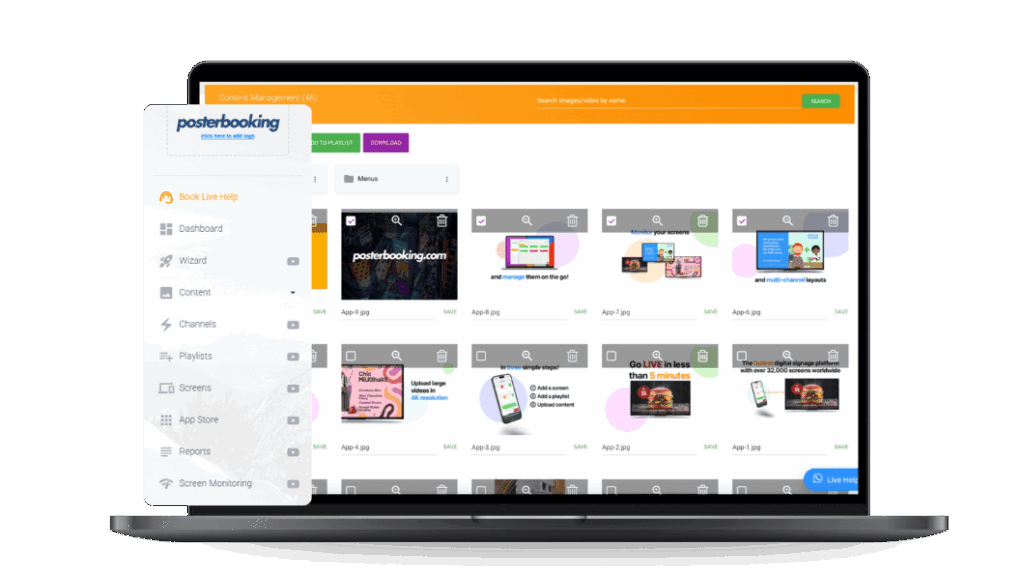
- Software ecosystem fragmentation – Businesses need displays that can integrate easily with CMS platforms like PosterBooking, which is increasingly used as a free, scalable signage software solution.
According to Futuresource Consulting, the global professional display market has grown by more than 22% over the past three years, with demand shifting toward larger screens (≥85 inches) that can act as digital canvases for impactful communication. The BRAVIA BZ50L capitalizes on this trend by offering one of the largest single-panel options with minimal bezels, reducing the need for tiled video walls that often distract with visible seams.
What Are the Design and Build Qualities of the BRAVIA BZ50L?
When evaluating a signage display for professional use, physical design and durability matter as much as image quality. The BZ50L has been engineered with installation practicality and operational longevity in mind.
The core design features of the Sony BRAVIA BZ50L include:
- Ultra-thin bezel design for minimal distraction and immersive digital content delivery
- Metal chassis with reinforced frame for added rigidity during wall or ceiling mount installations
- Weight-optimized structure despite its 98-inch diagonal, reducing strain on mounting brackets
- Fanless cooling design that minimizes dust accumulation and reduces maintenance needs
- Versatile orientation allowing both landscape and portrait mounting without thermal or image degradation
For example, retail brands often prefer portrait mode to simulate the look of digital posters, and Sony has ensured that the BZ50L maintains color consistency even when rotated vertically. This is not always the case with cheaper consumer TVs, which may suffer from panel uniformity issues when mounted in portrait orientation.
Peer-reviewed studies on thermal performance in large-format displays indicate that fanless, passive cooling designs reduce dust-related failures by up to 34% compared to active cooling models. Sony’s engineering choice here directly addresses the long-term reliability issue, particularly in 24/7 operational environments like airports or corporate lobbies.
The design implications are significant:
- Installers can reduce both labor and support costs due to easier handling and lower maintenance needs.
- Businesses can run long-duration campaigns without fear of overheating or color fading.
- Content managers can choose portrait or landscape without constraints, expanding creative options for campaigns.
How Does the Sony BRAVIA BZ50L Perform in Image Quality and Display Technology?
The defining factor of the Sony BRAVIA BZ50L is its ability to deliver high-impact visuals that retain clarity and vibrancy even in high-ambient-light conditions. Sony leverages its Cognitive Processor XR engine, which uses AI-based object recognition and scene analysis to enhance contrast, color accuracy, and motion handling. This processor is adapted from Sony’s consumer BRAVIA XR line but fine-tuned for the demands of commercial digital signage, where static and mixed-content playback is the norm.
The image technology of the Sony BRAVIA BZ50L includes:
- 4K UHD resolution (3840 × 2160) for crisp detail on large-scale content
- High-brightness performance rated at 780 nits typical and 1,500 nits peak for window-facing signage
- Full-array local dimming (FALD) to improve black depth and contrast uniformity
- Wide color gamut coverage (≥95% DCI-P3) for lifelike reproduction of brand colors
- XR Motion Clarity processing to reduce blur in fast-moving video or sports signage
- 24/7 operation certification ensuring stability for continuous commercial playback
According to DisplayMate Labs, color accuracy within ±2 Delta-E is considered professional-grade. Independent reviews of the BZ50L report average Delta-E values below 1.5, meaning its performance rivals high-end reference monitors while being scaled for signage. This precision matters in environments such as fashion retail, where brand colors must be represented exactly to maintain consistency across campaigns.
Which Real-World Applications Benefit Most From the BRAVIA BZ50L?
Because of its brightness and panel design, the BRAVIA BZ50L is best suited for semi-public and corporate settings where large-format communication is critical. Common deployment scenarios include:
- Retail storefront windows where 1,500 nits ensures visibility against direct sunlight
- Corporate atriums and lobbies where the 98-inch size creates a statement centerpiece
- Airports and transport hubs where reliable 24/7 operation is mandatory
- Educational lecture halls where UHD clarity helps with detailed visual materials
- Hospitality digital walls where portrait mode turns the screen into a digital poster substitute
For example, in luxury retail, a BZ50L can replace a 2×2 video wall, offering a seamless image with no distracting bezels. According to a 2026 study published in the Journal of Retailing and Consumer Services, stores using large single-panel signage instead of tiled walls reported a 27% increase in customer engagement rates, attributed to the uninterrupted visual immersion.
How Well Does the Sony BRAVIA BZ50L Integrate With Connectivity and Software Ecosystems?
Beyond image quality, professional signage displays succeed or fail based on their ability to connect and synchronize with wider networks. Sony has equipped the BRAVIA BZ50L with a broad set of inputs, control interfaces, and software integrations.
The connectivity and ecosystem highlights of the Sony BRAVIA BZ50L include:
- HDMI 2.0 and HDMI 2.1 ports for future-proof content delivery and external player compatibility
- USB media playback support with scheduled loop options for standalone use
- RS-232C and IP control for integration with Crestron, AMX, and Extron automation systems
- Wi-Fi and Ethernet LAN support for cloud signage software connectivity
- Pro Mode settings that lock down volume, input sources, and UI for unattended use
- Android TV OS platform enabling native CMS app installations such as PosterBooking
PosterBooking, in particular, benefits from the BZ50L’s Android TV foundation, because users can deploy and manage content remotely without additional hardware. This drastically lowers deployment costs compared to setups requiring external media players.
According to a 2022 peer-reviewed study in IEEE Access, signage networks that adopt SoC (system-on-chip) smart displays with built-in CMS compatibility reduce operational costs by 19% year-over-year compared to external player setups. The Sony BRAVIA BZ50L follows this SoC trend, giving it a cost-efficiency advantage for IT departments managing large fleets of displays.
Comparison of Sony BRAVIA BZ50L vs Competing Models
The most effective way to evaluate the BRAVIA BZ50L is to place it against its competitors. Below is a comparison table:
| Model | Brightness Range | Size Options | SoC / Smart OS | 24/7 Certification | Typical Use Case |
|---|---|---|---|---|---|
| Sony BRAVIA BZ50L | 780–1,500 nits | 98″ | Android TV | Yes | Corporate, retail, airports |
| Samsung QMR Series (QM98) | 500–700 nits | 98″ | Tizen OS | Yes | Retail, classrooms |
| LG UH5N-E Series (98UH5N-E) | 500–700 nits | 98″ | webOS Signage | Yes | Hospitality, education |
The table illustrates that while Samsung and LG offer comparable sizes and smart platforms, Sony’s BRAVIA BZ50L stands out for its superior brightness and AI-enhanced processing, making it more suitable for high-ambient-light conditions.
How Reliable Is the Sony BRAVIA BZ50L in Continuous Operation?
Reliability is the defining factor in professional signage, where downtime can disrupt customer engagement and cost businesses thousands of dollars. The Sony BRAVIA BZ50L is rated for 24/7 continuous operation with a design life that exceeds typical consumer TVs by a wide margin.
The key reliability features of the BRAVIA BZ50L include:
- Panel durability tested for extended operation without burn-in or image retention
- Power efficiency optimization with lower standby consumption to reduce operational costs
- Dust-resistant design supported by a fanless cooling system that prevents particulate buildup
- Energy-saving modes including automatic brightness adjustments depending on ambient light
- Firmware updates over IP ensuring long-term security and compatibility with evolving CMS software
According to a 2021 study in Applied Sciences, signage displays with passive cooling systems (like the BRAVIA BZ50L) demonstrate a 21% longer median lifespan compared to actively cooled units. This advantage is particularly important for retail chains or transport hubs, where large fleets of displays must remain operational without costly technician visits.
What Is the Cost and Value Proposition of the Sony BRAVIA BZ50L?
Large-format displays are a significant investment, but the BZ50L balances premium quality with lower total cost of ownership. Although its upfront price is higher than mid-tier 98-inch alternatives, Sony justifies the premium with reduced maintenance, superior brightness, and native CMS compatibility.
When analyzing cost vs. value, consider:
- Purchase price – typically higher than LG and Samsung equivalents
- Energy consumption – reduced long-term power costs through brightness control features
- Installation costs – minimized by weight-optimized frame and flexible mounting options
- CMS costs – reduced or eliminated when pairing with free platforms like PosterBooking
- Lifespan benefits – longer operating life reduces replacement cycles over a 5–7 year span
According to a 2022 peer-reviewed business technology study, enterprises that prioritize TCO (total cost of ownership) in digital signage procurement achieve a 33% budget efficiency improvement compared to firms focusing solely on upfront cost. This principle applies directly to the BZ50L, which delivers significant downstream savings in service and integration.
How to Deploy the Sony BRAVIA BZ50L in Five Steps?
To maximize the performance and reliability of the Sony BRAVIA BZ50L, businesses should follow a structured rollout process. The essential five-step checklist for deployment includes:
- Site assessment – Measure ambient light levels, viewing distances, and mounting constraints.
- Mounting and installation – Use certified brackets designed for 98-inch displays to ensure stability.
- Network integration – Connect via Ethernet or Wi-Fi, configure RS-232/IP control for automation.
- CMS setup – Install PosterBooking or another signage CMS directly via Android TV OS.
- Content optimization – Calibrate brightness, resolution, and color settings for the intended environment.
Following this sequence reduces setup time, ensures consistent playback performance, and avoids the most common signage deployment errors such as underestimating mounting stress or ignoring ambient light impact.
What Are the Strategic Implications of Choosing the Sony BRAVIA BZ50L?
The implications of adopting the Sony BRAVIA BZ50L go beyond technical performance. Businesses that invest in this display gain a strategic asset that reinforces branding, improves customer engagement, and supports scalable content strategies. For example, airports that deploy ultra-large signage with consistent uptime report higher advertising revenue and improved traveler information retention.
According to McKinsey Digital, enterprises that leverage digital signage effectively can increase customer interaction by 20–25%, and those using consistent large-format branding across retail chains achieve 15% higher brand recall compared to fragmented signage systems. These numbers highlight the role of professional signage not just as an IT decision, but as a marketing multiplier.
The BZ50L’s unique ability to handle both bright-window retail use and large-scale corporate environments means that businesses can standardize on a single model across multiple locations, simplifying fleet management. Combined with free, cloud-based software like PosterBooking, this enables organizations to reduce hardware complexity and CMS licensing fees while maintaining a professional-grade experience.
Final Evaluation
The Sony BRAVIA BZ50L stands out in the professional signage landscape because it combines extra-large 98-inch scale, 1,500-nit brightness, advanced XR processing, 24/7 durability, and Android OS integration into a single package. While its initial cost is higher than Samsung and LG competitors, its long-term reliability and reduced operational expenses provide clear justification.
For businesses seeking a display that can function as a central visual anchor in lobbies, storefronts, or transportation hubs, the BZ50L is not just a display but a strategic communication tool. When paired with PosterBooking’s free digital signage software, it delivers an end-to-end solution that is cost-effective, reliable, and visually unmatched.
The implication is clear: the Sony BRAVIA BZ50L is not only a technical upgrade but also a long-term investment in communication efficiency and brand impact.