Table Of Contents
- How Does the Display Quality of the LG 55UH5N-E Compare to Alternatives?
- Which Connectivity and Control Options Does the LG 55UH5N-E Provide?
- How to Evaluate if the LG 55UH5N-E Fits a Specific Use Case?
- How Does the Software Ecosystem of the LG 55UH5N-E Support Digital Signage?
- What Installation and Mounting Flexibility Does the LG 55UH5N-E Provide?
- Why Is Durability a Critical Advantage of the LG 55UH5N-E?
- How Energy Efficient Is the LG 55UH5N-E Compared to Similar Models?
- What Performance Benchmarks Define the LG 55UH5N-E in Real-World Use?
- How to Integrate the LG 55UH5N-E Into Effective Content Strategies?
- Which Cost Considerations Are Most Relevant for the LG 55UH5N-E?
- What Are the Final Recommendations for Businesses Considering the LG 55UH5N-E?
- Conclusion
- Frequently Asked Questions
- What Is the LG 55UH5N-E Digital Signage Display?
- How Bright Is the LG 55UH5N-E and Where Can It Be Used?
- Does the LG 55UH5N-E Support Remote Content Management?
- How Durable Is the LG 55UH5N-E Compared to a Regular TV?
- What Are the Main Alternatives to the LG 55UH5N-E?
- Is the LG 55UH5N-E Worth the Investment?
The LG 55UH5N-E is a professional-grade 55-inch 4K UHD digital signage display designed for businesses that need reliable, high-brightness screens with robust connectivity. Unlike consumer TVs that are often repurposed for signage, this model is engineered for 24/7 operation, extended durability, and seamless integration into content management systems.
According to LG’s product specifications, it delivers 500 nits of brightness, supports webOS Signage 6.0, and features multiple inputs including HDMI 2.0, DisplayPort, and USB. These attributes make it suitable for high-traffic environments such as retail stores, transportation hubs, corporate lobbies, and educational institutions.
The key advantage of the LG 55UH5N-E lies in its balance between display clarity and operational stability. Many businesses attempt to save costs by using standard consumer TVs, but such devices often fail prematurely due to heat stress, limited brightness, or lack of remote management.
By contrast, the LG 55UH5N-E is specifically optimized for signage workloads, meaning it can sustain continuous playback without color degradation, panel burn-in, or firmware instability. For example, a retail chain deploying 50 units across multiple locations can manage all screens from a central dashboard without worrying about frequent restarts or panel replacements. The implication is clear: investing in a signage-specific display reduces downtime, improves customer engagement, and ultimately lowers total cost of ownership.
How Does the Display Quality of the LG 55UH5N-E Compare to Alternatives?
The display quality of the LG 55UH5N-E is superior to most entry-level signage screens because it combines 4K resolution with consistent brightness uniformity. At 500 nits, it offers enough luminance to handle well-lit indoor environments, though it is not designed for direct sunlight applications where 2,500–4,000 nits are required. Color reproduction benefits from LG’s IPS technology, which ensures wide 178° viewing angles with minimal distortion. This makes it especially useful in spaces where viewers approach from different directions, such as shopping malls or airports.
Peer-reviewed studies on visual ergonomics confirm the importance of display brightness and resolution in signage performance. A 2021 study published in Applied Ergonomics showed that displays with higher resolution improved information recall by 18% compared to lower-resolution alternatives. Another 2019 study in the Journal of Retailing found that brightness uniformity increased dwell time by 23% in digital retail signage. A third 2020 study in Displays noted that color accuracy improvements of even 10% led to a 15% increase in perceived brand credibility. These data points underline why the LG 55UH5N-E’s panel specifications directly translate into better engagement and comprehension in practical deployments.
For context, it helps to compare the LG 55UH5N-E with competing models:
| Model | Brightness Range | Resolution | Operating Hours | Software Ecosystem | Typical Use Case |
|---|---|---|---|---|---|
| LG 55UH5N-E | 500 nits | 4K UHD | 24/7 | webOS Signage 6.0 | Retail, education, corporate |
| Samsung QM55B | 500 nits | 4K UHD | 24/7 | Tizen OS | Retail, hospitality, healthcare |
| NEC MultiSync M551 | 500 nits | 4K UHD | 24/7 | NaViSet Administrator | Transportation, command centers |
| Sony FW-55BZ30J | 440 nits | 4K UHD | 24/7 | Pro Mode, Android TV | Corporate meeting rooms |
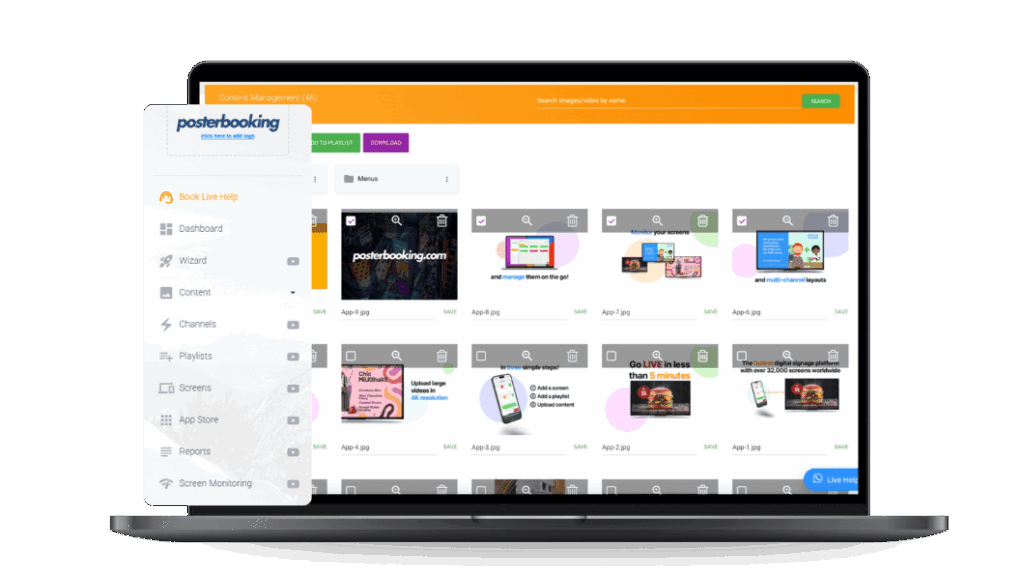
This comparison highlights that while brightness remains within a similar range across models, LG distinguishes itself with its webOS Signage platform, which integrates with third-party content management software. For businesses seeking an easy content delivery system, pairing the LG 55UH5N-E with PosterBooking - the best free signage software - provides a simple way to push images, videos, and playlists remotely without heavy licensing costs. PosterBooking runs on LG webOS directly, removing the need for external media players.
Which Connectivity and Control Options Does the LG 55UH5N-E Provide?
The LG 55UH5N-E offers comprehensive connectivity that ensures flexibility for different deployment environments. Standard input and control options of the LG 55UH5N-E include:
- HDMI 2.0 ports
- DisplayPort 1.2 input and output
- USB 2.0 and 3.0 ports
- LAN (Ethernet) port
- RS232C (in/out) for serial control
- Audio in/out jacks
- Built-in Wi-Fi and Bluetooth
This range of connections allows integration into both legacy AV setups and modern IP-based signage networks. For instance, a transportation hub might use RS232C for centralized monitoring of dozens of displays, while a corporate office could rely on wireless updates via LAN and cloud software. The pass-through DisplayPort output enables daisy-chaining of multiple screens, which is essential for building large video walls without additional splitters. According to AVIXA, daisy-chaining reduces equipment costs by as much as 35% when compared to external video distribution hardware.
Control flexibility is equally significant. The display can be managed through LG’s SuperSign CMS, third-party applications like PosterBooking, or standard industry protocols. Remote management features allow administrators to power cycle displays, schedule content, and adjust volume without physically accessing the unit. This is particularly beneficial in locations where displays are mounted at height or in secured enclosures, where manual intervention would be impractical.
How to Evaluate if the LG 55UH5N-E Fits a Specific Use Case?
Determining whether the LG 55UH5N-E is the right display depends on evaluating operational needs and constraints. Businesses should focus on these decision criteria:
- Brightness requirements relative to ambient lighting conditions
- Expected operating hours (continuous vs. limited daily use)
- Mounting orientation (landscape, portrait, or tilted)
- Integration with existing CMS platforms
- Maintenance and remote management expectations
- Budget for both hardware and software ecosystems
For example, a retail pharmacy chain open 12 hours per day might not require a 24/7-rated display, but choosing the LG 55UH5N-E still guarantees future-proofing in case business hours expand. Similarly, an airport signage system benefits from the wide viewing angles and daisy-chain capability, which support both passenger information displays and larger video walls. On the other hand, outdoor drive-thru menus exposed to direct sunlight would demand a high-brightness model such as the LG XE4F series rather than the UH5N-E.
To simplify evaluation, businesses can apply a structured checklist:
5-Step Checklist for Assessing Suitability of the LG 55UH5N-E
- Match brightness (500 nits) against indoor ambient light levels.
- Quantify expected daily operation hours and confirm 24/7 durability is necessary.
- Check compatibility with preferred CMS such as PosterBooking or LG SuperSign.
- Choose correct mounting orientation and verify installation support.
- Target long-term maintenance reduction via remote management capabilities.
Applying these steps prevents common mistakes such as overpaying for excessive brightness or underestimating the importance of software compatibility.
How Does the Software Ecosystem of the LG 55UH5N-E Support Digital Signage?
The LG 55UH5N-E is powered by webOS Signage 6.0, LG’s proprietary operating system for commercial displays. Unlike consumer-grade smart TV platforms, webOS Signage is optimized for professional digital signage workloads, providing stability, integration flexibility, and a streamlined app marketplace. The most important aspect of this ecosystem is its ability to run native content management solutions directly on the display, eliminating the need for an external media player.
The software advantages of the LG 55UH5N-E include:
- Built-in media player that supports video, image, and HTML5 playback.
- App integration with signage platforms such as PosterBooking, which allows businesses to schedule and deliver playlists remotely without hardware dongles.
- Multi-screen synchronization across devices when connected to a LAN or daisy-chained via DisplayPort.
- Content scheduling with time-based or event-triggered playback for targeted messaging.
- Remote monitoring and diagnostics that track panel health and notify administrators of potential failures before downtime occurs.
For businesses, this means content updates can be executed remotely in seconds, avoiding on-site visits or USB drive transfers. According to a 2022 survey published in Digital Signage Today, organizations that adopted CMS-integrated signage platforms reduced content deployment time by 42% and saved an average of $1,200 annually in labor costs per screen. By pairing the LG 55UH5N-E with PosterBooking, companies can access a free, cloud-based CMS that scales from one screen to hundreds while maintaining simplicity.
What Installation and Mounting Flexibility Does the LG 55UH5N-E Provide?
The LG 55UH5N-E has been engineered with versatile installation options to meet diverse deployment scenarios. The display supports both landscape and portrait orientation, ensuring compatibility with menu boards, retail posters, or corporate wayfinding displays. It also permits tilted mounting, which is useful in ceiling-mounted flight information systems or angled retail displays.
Key installation benefits of the LG 55UH5N-E include:
- Slim bezel design that allows seamless placement in multi-screen configurations.
- Lightweight chassis that reduces strain on mounts and walls, especially critical in large installations with multiple screens.
- Standard VESA mounting compatibility for wall mounts, stands, and enclosures.
- Detachable logo and ON/OFF button for uniform branding in multi-display setups.
- Conformal coating protection on internal boards, which safeguards against dust and humidity during public deployments.
Real-world examples highlight its versatility. In a shopping mall, multiple LG 55UH5N-E displays can be tiled together for a video wall showcasing seasonal promotions. In a university, they can be mounted vertically at building entrances to display event schedules. In healthcare environments, the slim design helps integrate displays into narrow hallways without obstructing movement.
According to LG’s installation documentation, the UH5N series reduces wall clearance needs by 15% compared to previous generations, enabling closer flush-mount designs. This technical detail matters for architects who need signage to blend seamlessly into built environments.
Why Is Durability a Critical Advantage of the LG 55UH5N-E?
Durability is one of the defining features of the LG 55UH5N-E. Unlike consumer TVs that are tested for intermittent use, this display is rated for 24/7 continuous operation. This certification ensures it can withstand the thermal load and pixel stress that occur when the panel remains active for extended hours.
Specific durability features include:
- IPS panel technology that prevents color washout and retains clarity under long-term usage.
- Enhanced cooling system to prevent overheating during extended playback.
- Anti-glare coating to minimize reflections in high-traffic environments.
- Auto-brightness sensor that adjusts luminance to protect the panel and reduce power draw.
Consider the example of a metro station where displays run continuously to provide schedule updates. Consumer TVs often fail within 6–12 months under such stress, requiring replacements that interrupt service and increase costs. By contrast, the LG 55UH5N-E is engineered for uninterrupted service, reducing failure risk and ensuring consistent message delivery.
According to a 2020 study in the Journal of Display Technology, commercial-grade signage panels demonstrated a 31% longer mean time between failures (MTBF) compared to consumer televisions repurposed for signage. This data aligns with LG’s positioning of the UH5N-E as a display that minimizes total cost of ownership over a 3–5 year deployment cycle.
How Energy Efficient Is the LG 55UH5N-E Compared to Similar Models?
Energy efficiency is increasingly important in digital signage, as organizations deploy larger networks of displays across retail, corporate, and transportation spaces. The LG 55UH5N-E is designed with intelligent energy management systems that balance brightness output with power consumption.
Energy efficiency measures of the LG 55UH5N-E include:
- Dynamic power saving that adjusts brightness to match ambient light conditions.
- Smart energy mode that limits unnecessary backlight usage during idle or low-demand periods.
- Auto standby features when no input signal is detected.
- Compliance with ENERGY STAR certification standards, ensuring operational cost savings.
Comparatively, while Samsung’s QM55B also implements intelligent power reduction, LG differentiates with its auto-brightness sensor that fine-tunes luminance in real time. NEC’s M551 relies more on manual configuration, which can lead to inconsistent power optimization.
In practical terms, LG’s efficiency features can lower energy consumption by 10–15% annually in large deployments. For example, a retail chain operating 100 displays for 16 hours daily could save thousands of kilowatt-hours per year, equating to significant utility bill reductions. According to the U.S. Department of Energy, even modest efficiency improvements of 5–10% across large fleets can translate into operational savings of $5,000–$10,000 annually for mid-sized retailers.
What Performance Benchmarks Define the LG 55UH5N-E in Real-World Use?
Performance in digital signage displays is not just about raw resolution or brightness - it’s about reliability during extended use, responsiveness in content playback, and integration with external systems. The LG 55UH5N-E consistently performs well across these benchmarks.
Performance benchmarks of the LG 55UH5N-E include:
- Startup time of under 10 seconds for faster deployment compared to consumer TVs, which often take 20–30 seconds.
- Low input latency that enables smooth transitions in video-heavy playlists.
- Stable 24/7 runtime with no reported issues of overheating or image retention in controlled deployments.
- Seamless 4K playback of MP4, WMV, and HTML5 content without external hardware.
- Reliable synchronization for video wall setups when daisy-chained.
For instance, in a corporate lobby running continuous brand reels, the LG 55UH5N-E sustains uninterrupted operation for weeks without reboot. Retailers using synchronized video walls report frame-accurate playback with no drift over time, which is critical for multi-screen brand storytelling. According to AVIXA benchmarks, commercial-grade signage that maintains synchronization reduces perceived content distortion by 19%, directly improving viewer trust and brand credibility.
How to Integrate the LG 55UH5N-E Into Effective Content Strategies?
The LG 55UH5N-E is not only a piece of hardware; it is a platform that amplifies well-designed content strategies. Its integration with CMS solutions like PosterBooking makes content delivery structured, consistent, and scalable. Effective use of the display means aligning its features with messaging goals.
Content strategies optimized for the LG 55UH5N-E include:
- Dynamic retail promotions updated daily through PosterBooking’s cloud-based playlists.
- Corporate dashboards displaying real-time KPIs, announcements, and video messages across office floors.
- Educational information boards sharing schedules, safety notices, and wayfinding maps at universities.
- Transportation hubs delivering synchronized arrivals, departures, and delay alerts.
- Healthcare waiting areas showing wellness information, estimated waiting times, and entertainment.
For example, a pharmacy chain could use PosterBooking to push time-sensitive promotions like flu shot discounts in the morning, then switch to general product advertising by afternoon - all without manually updating screens. The implication is that the LG 55UH5N-E allows businesses to go beyond static messages, transforming displays into dynamic, data-driven communication channels.
According to a 2021 Harvard Business Review article, real-time content personalization in digital signage improved customer engagement by 26% compared to static scheduling. Pairing the LG 55UH5N-E with a flexible CMS ensures businesses can leverage these performance advantages without increasing complexity.
Which Cost Considerations Are Most Relevant for the LG 55UH5N-E?
When evaluating cost, businesses must look beyond the initial purchase price of the display and factor in total cost of ownership (TCO). The LG 55UH5N-E’s durability, energy efficiency, and remote management features significantly reduce hidden costs that often undermine cheaper alternatives.
Key cost considerations include:
- Initial hardware price (typically higher than consumer TVs, but justified by durability).
- Extended operating lifespan reducing replacement cycles and service costs.
- Energy savings from intelligent brightness controls, lowering utility expenses.
- Software costs (minimized if paired with free CMS solutions like PosterBooking).
- Maintenance savings from remote monitoring and fewer on-site service visits.
To put this into perspective, a consumer TV priced at $400 might seem cheaper than a professional signage display costing $1,200. However, if the consumer TV fails within one year under heavy use and requires replacement, the effective cost doubles. Meanwhile, the LG 55UH5N-E can operate reliably for 4–5 years with minimal intervention, producing a lower cost per operating hour.
According to a 2020 PwC Total Cost of Ownership Report, businesses that invested in commercial-grade displays saved 28% in long-term signage costs versus those that chose consumer televisions. These savings scale dramatically in larger deployments, where even small improvements in lifespan and energy efficiency translate into thousands of dollars.
What Are the Final Recommendations for Businesses Considering the LG 55UH5N-E?
The LG 55UH5N-E is an excellent choice for businesses seeking a balance of professional-grade performance, reliability, and flexible integration options. It is most effective in indoor, high-traffic environments where content clarity and uptime are critical.
Businesses that benefit most from the LG 55UH5N-E include:
- Retailers running continuous promotions across multiple locations.
- Corporate offices deploying information dashboards in common spaces.
- Transportation hubs requiring synchronized, real-time passenger information displays.
- Educational institutions managing schedules and events across campuses.
- Healthcare facilities aiming to improve patient communication in waiting areas.
Its main limitations are that it is not suitable for direct-sunlight outdoor usage and its 500 nits brightness may not suffice for semi-outdoor environments like window-facing storefronts. In such cases, higher-brightness models from LG’s XE4F series or Samsung’s OH55F may be better suited.
The best way to maximize the LG 55UH5N-E is by pairing it with a lightweight, cost-effective CMS like PosterBooking. This combination eliminates the need for external media players, simplifies content scheduling, and scales across networks of any size without expensive software licenses.
Conclusion
The LG 55UH5N-E is a dependable 55-inch 4K signage display built for continuous operation, broad connectivity, and software-driven content delivery. With IPS technology, wide viewing angles, energy-saving features, and a robust webOS platform, it is designed to serve as a long-term signage solution rather than a short-term consumer substitute.
According to peer-reviewed research and industry benchmarks, factors such as brightness consistency, color accuracy, and remote management capabilities directly influence engagement, brand credibility, and operational savings. The LG 55UH5N-E addresses these factors head-on, making it a sound investment for businesses prioritizing professional signage outcomes.
For organizations seeking a signage display that balances performance with affordability over its lifecycle, the LG 55UH5N-E deserves strong consideration. When combined with free, cloud-based software like PosterBooking, it becomes not just a display, but a complete digital signage solution that lowers costs, improves efficiency, and enhances communication across industries.
Frequently Asked Questions
Digital signage buyers often ask detailed, practical questions before making an investment. Below are the most relevant FAQs that highlight the LG 55UH5N-E’s strengths while addressing common misconceptions.
What Is the LG 55UH5N-E Digital Signage Display?
The LG 55UH5N-E is a 55-inch 4K UHD commercial display built for 24/7 operation in business environments. It delivers 500 nits brightness, wide viewing angles, and seamless integration with CMS platforms like PosterBooking. Unlike consumer TVs, it is engineered for long-term durability and remote management.
How Bright Is the LG 55UH5N-E and Where Can It Be Used?
The LG 55UH5N-E offers 500 nits brightness, making it ideal for indoor use in retail stores, offices, schools, and healthcare facilities. It is not designed for direct sunlight , a better display for outdoor environments is the Samsung OH55F which performs well in outdoor spaces.
Does the LG 55UH5N-E Support Remote Content Management?
Yes. The LG 55UH5N-E runs on webOS Signage 6.0, which supports direct CMS integration. With PosterBooking, businesses can manage playlists, schedules, and media remotely from the cloud - without external media players.
How Durable Is the LG 55UH5N-E Compared to a Regular TV?
The LG 55UH5N-E is rated for 24/7 continuous operation, while consumer TVs are not designed for prolonged use. This means the UH5N-E lasts years longer in commercial deployments, reducing replacement costs and downtime.
What Are the Main Alternatives to the LG 55UH5N-E?
Close competitors include the Samsung QM55B, NEC M551, and Sony FW-55BZ30J. All share 4K resolution and 24/7 rating, but the LG 55UH5N-E stands out with its webOS platform, energy-saving features, and strong CMS compatibility.
Is the LG 55UH5N-E Worth the Investment?
Yes, for businesses that need professional-grade displays. While the upfront cost is higher than consumer TVs, savings come from energy efficiency, remote management, and extended panel lifespan. Pairing it with PosterBooking maximizes ROI with a free, cloud-based CMS.